

Accepting USDT Is Easy - Moving It Is Where Businesses Get Stuck
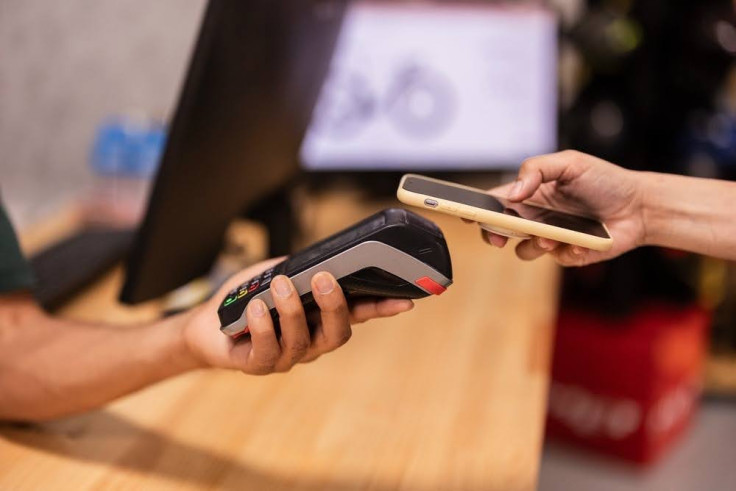
Every payment method that has ever gone mainstream has had an unglamorous plumbing problem to solve first. Card payments had terminals that cost more than the counter they sat on. Online payments had fraud, chargebacks, and merchant accounts that took weeks to get approved. In each case customer demand arrived long before the infrastructure was ready to serve it.
PayPal's launch in 1998 was the first real answer to that problem online - Taking what had been a clunky, largely phone-based process and moving settlement entirely onto the internet. By the time eBay acquired the company in 2002, sending money to a stranger on the other side of the world had gone from a technical project to something you could do in a few clicks.
Stripe did much the same thing a decade later for a different audience. Where merchant accounts had once meant paperwork, underwriting, and a long wait, Stripe turned the whole thing into a handful of lines of code. Opening up online payment acceptance to developers and small operators who had previously been priced or paperworked out of the market.
The pattern in both cases is identical - and neither company invented a new way to pay. What they did was absorb the complexity sitting between the customer's intent and the merchant's bank account, so that business owners could get back to selling.
Cryptocurrency Payments Are Now a Mainstream Expectation
Over the last decade, an unlikely candidate has joined the list of payment options customers now expect to see - Cryptocurrency. Once treated purely as a speculative asset, it is increasingly requested at checkout, particularly in SaaS, tech, and cross-border service businesses.
A January 2026 survey by the National Cryptocurrency Association and PayPal found that almost 4 in 10 US merchants now accept crypto at checkout. Among those merchants already taking it, crypto accounts for over a quarter of total sales volume, and 72% reported year-on-year growth in crypto transactions. eMarketer, meanwhile, projects that nearly 1 in 5 cryptocurrency holders will use it for payments by the end of this year - An 82% jump on 2024.
The brand adoption backs the numbers up. Shopify built crypto acceptance into its platform back in 2020, opening the door for thousands of independent merchants at once. AT&T became the first major US carrier to take crypto for bill payments. Twitch accepts it for subscriptions, Newegg has taken Bitcoin for years, and at the luxury end Gucci now accepts twelve different cryptocurrencies across its US stores.
What does that information tell us? Simply that this is no longer a technology company experiment. It's a consumer preference - and increasingly a stablecoin one - Because a merchant taking a us-dollar linked coin like USDT is taking something that behaves like a dollar, rather than something that can move 8% while they're asleep, and that's attractive for consumers.
Where Businesses Actually Get Stuck
So how does accepting crypto work in practice? Simply put, merchants have two routes - Processor-led, or self-managed.
The processor-led option works much like card acceptance. The customer sends funds to a gateway, and invoicing, confirmation and payout are all handled on the merchant's behalf. It's the simpler of the two, but it comes at a cost - with processing margins typically running between 1.5% and 3%, which for a business fighting on price is not a rounding error.
Self-settlement cuts that out entirely. The business sets up its own wallet, publishes its address, and receives payment directly from the customer with nothing taken in between. On paper it's the obvious choice - The problem is what happens next, and receiving USDT is easy. Moving it is where complexities arrive and many businesses abandon the setup process.
On the TRON network, where a very large share of USDT settlement takes place, sending a transfer requires the sending wallet to hold TRX - An entirely separate token - To cover the network fee, commonly known as "gas". In practice, the customer's payment lands without issue. But the moment the business wants to pay a supplier, sweep funds to treasury, or issue a refund, there needs to be TRX sitting in that wallet to pay the gas fees or nothing moves at all.
This setup means a business that thought it was adopting one new asset has now adopted two. One it takes payment in, and a second it has to keep permanently in stock purely to be able to use the first.
Simplifying the Process
Thankfully, that requirement is now being engineered out. Rather than the merchant holding TRX themselves, the gas cost is covered on the backend and settled in USDT out of the transfer itself - So the business never needs to acquire, hold, or account for the second token at any point.
Mesh Wallet is one of the services now offering this to businesses accepting USDT on TRON. Mesh wallet completely does away with gas fees, meaning that businesses can accept USDT payments simply without needing a complex setup of two tokens.
The real benefit for a business, though, is on the administrative side. A TRX float is a volatile asset held for purely operational reasons, which means it has to be purchased, tracked, and valued at each reporting date, topped up when it runs low, and explained to whoever prepares the accounts. With gas free setups, businesses have access to a one asset in, one asset out setup.
Onboarding is correspondingly short. There's no exchange account to open and no second token to source before the business can operate - It receives USDT and it sends USDT. The interface supports a single asset and a single function, which means staff can be handed it without training, and the failure mode where a payment can't go out because a token nobody was watching ran dry simply doesn't arise.
On the due diligence side, keys are generated and stored on the user's own device, so funds stay under the business's control rather than a third party's. The code base is published openly on GitHub, and two independent audits are pending - Both of which are points a business owner can hand straight to their accountant or IT advisor rather than asking them to take a marketing page on trust. Mesh is now available on the Play Store and on Apple Store.
What's Next for the Industry?
The direction of travel here is fairly clear. As more suppliers, contractors and platforms accept USDT directly, the need to convert back to traditional currency at every step falls away, and businesses begin holding and spending in the same currency they were paid in.
Fee abstraction will follow the same path every other payment complication has - From differentiator, to standard, to something nobody thinks about. Nobody paying with a card considers interchange routing, and within a few years nobody sending a stablecoin will consider gas.
That leaves a gap between crypto and conventional checkout that is closing fast. Settlement is already faster, the fees are already lower, and the operational overhead is now approaching parity. For business owners still weighing up whether crypto payments are worth the hassle, the honest answer is that the hassle is being removed - And the ones who move early will be the ones who keep the margin it frees up.
For more information, visit Mesh Wallet's website or keep up to date with them on their X.
© Copyright IBTimes 2026. All rights reserved.