

AI Can Now Launch Cyberattacks Faster And For Less. Bank Of England Chief Says Financial Markets Could Pay The Price.
UK regulators say some frontier models can already outperform skilled cyber professionals on certain tasks, while financial firms are being told to patch vulnerabilities faster and prepare for simultaneous attacks.

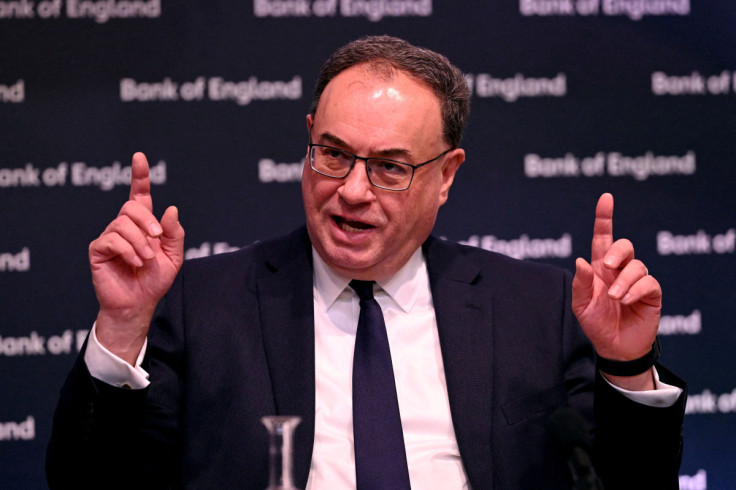
Bank of England Governor Andrew Bailey has warned that rapidly improving artificial intelligence models could sharply increase cyber threats to the global financial system, allowing attackers to find and exploit vulnerabilities faster and on a much larger scale.
Bailey issued the warning in his role as chair of the Financial Stability Board, which coordinates financial regulation among major economies. In a letter to G20 finance ministers and central bank governors, he described the effect of frontier AI on cyber risk as the financial system's most immediate AI-related concern.
The most advanced models are displaying greater autonomy and problem-solving capabilities, potentially changing the speed, scale and economics of cyberattacks, Bailey said. Heavy reliance on a relatively small number of technology providers could make the financial sector particularly vulnerable if several firms depending on the same supplier were disrupted simultaneously.
The Bank of England as a whole raised similar concerns in its July Financial Stability Report, saying recent frontier models can conduct multi-stage attacks against vulnerable systems with little human input. In one test conducted by Britain's AI Security Institute, a frontier model completed an advanced reverse-engineering task in 10 minutes and 22 seconds. A human expert required about 12 hours.
The central bank said faster vulnerability discovery could leave companies with less time to identify, test and deploy security fixes before attackers act. In a severe scenario, similar weaknesses could be exploited simultaneously across financial firms or third-party suppliers, disrupting services including payments, trading, clearing and settlement.
British regulators have already told companies to adjust their defenses. In May, the Bank of England, Financial Conduct Authority and UK Treasury said the cyber capabilities of current frontier models were exceeding those of skilled practitioners in some areas while operating faster, at greater scale and at lower cost. Firms were urged to strengthen detection, containment, response and recovery systems.
Bailey has also called for international coordination on testing advanced models before they are widely deployed. In a July speech, he said governments could not isolate themselves from cyber threats that cross national borders and argued that frontier models should undergo coordinated testing against critical infrastructure.
His latest warning extended beyond AI. The Financial Stability Board also identified vulnerabilities in sovereign debt markets, private credit and highly leveraged equity investments, along with stretched asset valuations, as factors that could contribute to a disorderly market correction.
Bailey's letter was sent ahead of G20 finance ministers' and central bank governors' meetings on Aug. 31 and Sept. 1, where the FSB said authorities should consider further steps to support the safe release and deployment of advanced AI models worldwide.
© Copyright IBTimes 2026. All rights reserved.