

Bank of England Faces Inflation Above 3%. Economists Predict No Rate Change in 2026.
Of the 64 economists surveyed, 56 expect the Bank of England to make no change in rates this year.

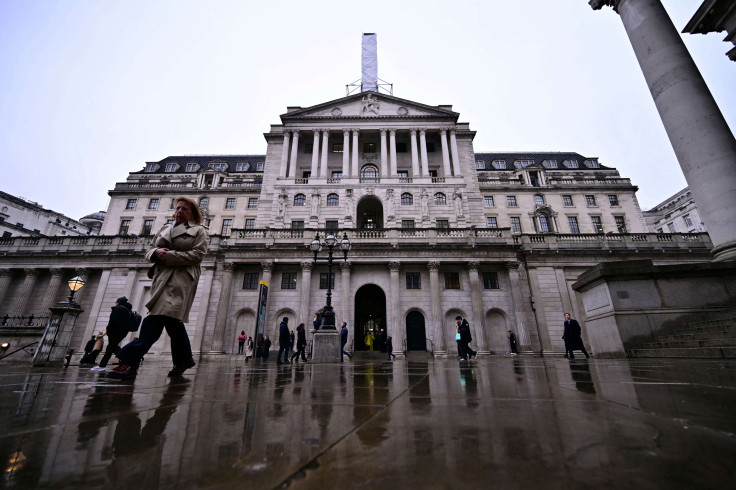
The Bank of England is expected to keep interest rates unchanged for the rest of 2026, even as inflation climbs further above its target and financial markets continue to bet that another rate hike could be coming.
Nearly 90% of economists surveyed by Reuters expect the Bank of England to hold its benchmark Bank Rate at 3.75% through the end of the year, according to a poll conducted from August 13 to 18.
Of the 64 economists surveyed, 56 forecast no change in rates this year. Six expect the central bank to raise borrowing costs, while only two predict a cut. The consensus has strengthened since July, when 83% of respondents expected rates to remain unchanged.
Not a single economist surveyed expects a change at the Monetary Policy Committee's next meeting in September. Markets are currently pricing in one quarter-point rate increase before the end of the year. So far, however, Britain's economy has shown relatively little evidence that the energy shock is spreading broadly through wages and domestic prices, giving policymakers room to wait.
Inflation likely accelerated to 2.9% in July from 2.6% in June, according to a separate Reuters poll ahead of official figures due Wednesday. That would move inflation further above the Bank of England's 2% target.
The central bank itself expects inflation to rise above 3% later this year. Pressure inside the Monetary Policy Committee is nevertheless building. Three of its nine members voted to raise rates immediately to 4% at the July meeting, compared with two members at the previous meeting.
Energy remains the biggest potential threat to the economists' relatively stable rate outlook. "A big rebound in energy prices would certainly change things. But the real game changer for the MPC, I think, is around second-round effects," Elizabeth Martins, UK economist at HSBC, told Reuters.
Crude oil is trading around $91 a barrel, approximately 25% above levels seen before the war, while the Strait of Hormuz, one of the world's most important oil shipping routes, remains closed.
Recent labor market data has offered policymakers some reassurance. Hiring remains weak, while wage growth has stayed within levels the central bank appears willing to tolerate.
Bruna Skarica, chief UK economist at Morgan Stanley, described the labor market as sufficiently loose to act as a "firm barrier to second-round effects from the energy shock. "That could allow the majority of the MPC to treat the expected inflation spike as temporary rather than something requiring another increase in borrowing costs.
Skarica said the committee can continue signaling that inflation driven by higher fuel and gas prices is unlikely to persist beyond the 18-to-24-month period most relevant to monetary policy decisions.
The longer-term outlook also leaves open the possibility that the Bank of England's next move could ultimately be lower rather than higher. Although inflation is expected to remain above the 2% target until late 2027, a narrow majority of economists surveyed by Reuters forecast at least one rate cut by the middle of next year.
© Copyright IBTimes 2026. All rights reserved.