

AI Is Getting Better At Doing College Work, MIT Says. Claims Most Classes May Now Need To Change.
The university also wants every class to spell out when students can, and cannot, use AI, while putting more emphasis on hands-on learning and face-to-face interaction.

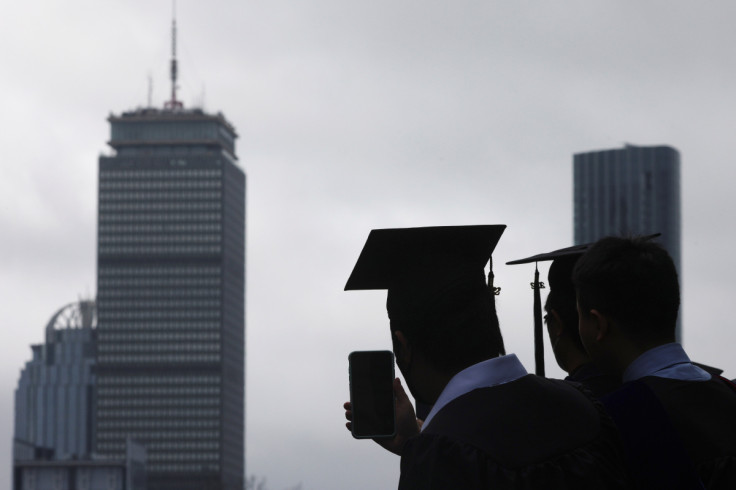
Artificial intelligence has become capable of credibly completing most undergraduate assignments, prompting the MIT to call for a broad review of how college students are taught and tested.
A committee formed by the Massachusetts Institute of Technology said most classes should be reviewed and many will require substantial changes as a result. Instructors should reconsider learning goals and assessments, including greater use of oral exams, portfolios and in-person conversations about work completed outside class, The Washington Post reported.
MIT President Sally Kornbluth described AI's impact on education and research as a "watershed" for the university and higher education. In a message to the MIT community, Kornbluth said the technology is advancing rapidly enough that universities need to reconsider assessment, emphasize hands-on education and establish clear expectations for how students use AI.
The committee, co-chaired by professors Eric Klopfer and Samuel Madden, was created in January to examine how students and instructors were using AI and recommend policies for the technology. Its final report said AI was affecting not only assignments but also parts of campus life that have traditionally been central to learning, including office hours, study groups and undergraduate research.
AI use is already widespread among university students. A 2026 survey by the Higher Education Policy Institute found that 95% of more than 1,000 full-time U.K. undergraduates surveyed used AI in at least one way. About 94% used generative AI to help with assessed work, while 12% said they had directly included AI-generated text in assignments, up from 8% in 2025 and 3% in 2024.
The rapid adoption has pushed educators to reconsider assessments that students can easily complete with generative AI. MIT's committee recommended that instructors determine which skills students should be able to demonstrate without AI and which tasks can appropriately involve the technology. It also called for every course to have a clear AI policy tailored to its learning objectives rather than imposing a single university-wide rule.
Other educators are experimenting with similar approaches. An Association for Computing Machinery report based on responses from more than 750 computing educators across 49 countries found instructors increasingly using oral exams, code reviews, debugging exercises and project-based assessments as AI coding tools improve.
MIT's committee also recommended creating more physical spaces for students and faculty to meet and making it faster for professors to modify courses as AI capabilities change. The university said instructors teaching this fall would receive new guidance on course-level AI policies, with additional resources for implementing the recommendations expected in the coming weeks.
© Copyright IBTimes 2026. All rights reserved.