Canada Could Become EU’s First Associate Member. Ottowa Gets The Invite As Its Trade War With Trump Remains High.
The proposal, unveiled Wednesday during Usrula von der Leyen's annual State of the European Union address in Strasbourg, represents a significant shift in the EU's approach to external partnerships.

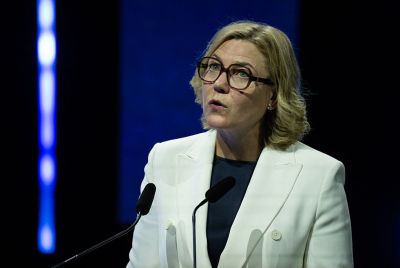
European Union leaders are opening the door to a new kind of partnership with Canada, with European Commission President Ursula von der Leyen announcing that Brussels wants Ottawa to become the bloc's first associate member as tensions between Canada and the United States escalate over trade.
The proposal, unveiled Wednesday during von der Leyen's annual State of the European Union address in Strasbourg, France, represents a significant shift in the EU's approach to external partnerships. While Canada would not become a full EU member, the associate status would create a deeper economic and strategic relationship between Ottawa and the 27-nation bloc.
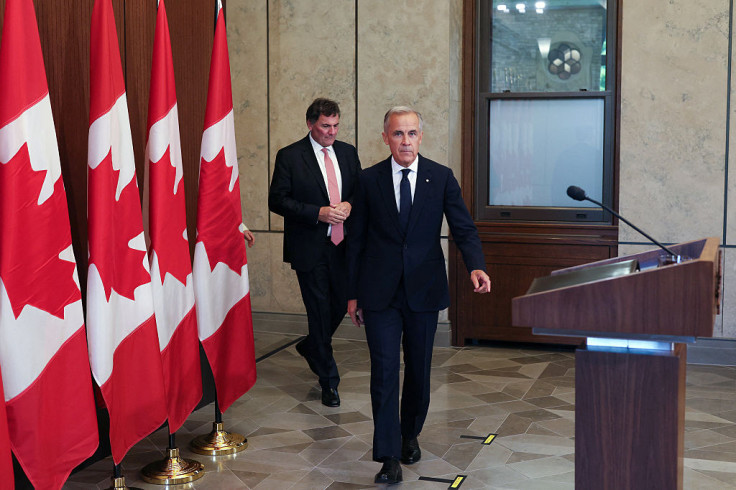
Addressing Canadian Prime Minister Mark Carney, who attended the speech, von der Leyen said the EU wants to elevate ties with Canada "to the highest level possible."
"And, dear Mark, I said we must urgently reimagine our partnerships so I would like to work with you on opening the door for Canada to being the first associate member of the European Union," she said.
The announcement comes as Canada faces a growing trade dispute with the United States. Ottawa is responding to President Donald Trump's tariffs with matching measures, intensifying economic tensions between the two historically close allies.
Carney has previously argued that Canada should build a "unique security and economic alliance" with Europe while maintaining its independence from both Washington and Brussels. He has promoted cooperation among so-called "middle powers," democratic countries that seek greater influence in an increasingly competitive global environment.
The proposed EU-Canada relationship would build on existing economic ties. The two sides already have the Comprehensive Economic and Trade Agreement, known as CETA, which entered into force provisionally in 2017 and eliminated 99% of tariff lines between Canada and the European Union.
Von der Leyen said the goal now is to move beyond traditional trade cooperation.
"We will move from CETA to an alliance for the future, to create a common prosperity and economic security space," she said.
The expanded partnership could include cooperation on artificial intelligence, climate policy, geopolitical challenges and Arctic security. The Arctic has become an increasingly important strategic region as countries compete over resources, shipping routes and military influence.
European officials said the initiative reflects a broader effort to strengthen relationships with countries that share similar political and economic priorities.
Earlier this year, Finnish President Alexander Stubb suggested that the EU should consider a broader framework that could eventually include countries such as Canada, the United Kingdom, Turkey, Norway and Iceland. "Wouldn't it be lovely if Canada was the 28th state of the European Union rather than the 51st state of the United States?" Stubb said in June, referencing Trump's previous comments about Canada.
Associate membership would create a new category between full EU membership and traditional partnerships. The European Union has historically been cautious about introducing flexible membership arrangements, particularly as debates continue over possible future expansion.
The proposal also reflects Canada's effort to diversify its international relationships. At the World Economic Forum in Davos earlier this year, Carney argued that middle powers needed to cooperate more closely amid uncertainty in global trade and security.
"We have a situation where it is totally unpredictable what the United States are doing and there is aggressive industrial policy by China," Carney said, calling for stronger ties among democratic nations.
Bernd Lange, chairman of the European Parliament's trade committee, said Canada could be part of a broader strategy to deepen economic links with other major democracies, including Brazil, Indonesia, Japan and South Korea. "It's so important that we work together and build a bloc," Lange said, adding that countries need greater cooperation to maintain influence in global affairs.
© Copyright IBTimes 2026. All rights reserved.
- Recommended For You