

Canada’s Trade Fight With Trump Is Getting Costlier. Nearly 90,000 Jobs Could Be At Risk In The Country.
Ottawa is preparing dollar-for-dollar retaliation after trade negotiations with Washington collapsed, while a new threat to raise tariffs on Canadian vehicles could widen the dispute further.

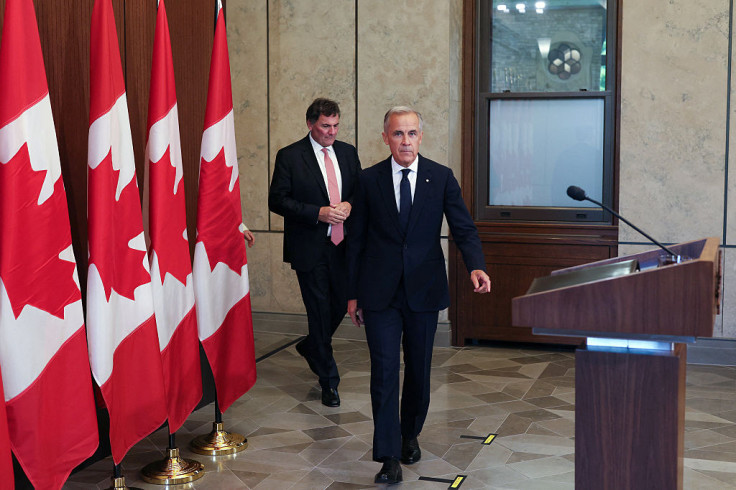
New U.S. tariffs on Canadian goods could put nearly 90,000 jobs at risk across the latter, with losses extending beyond the manufacturers and exporters directly exposed to the 50% duties.
University of Calgary economics professor Trevor Tombe estimates that more than 52,000 jobs are directly at risk if sales of affected Canadian goods to the U.S. fall sharply, while another 35,000 positions could be lost among suppliers and service providers. His analysis, published by the Macdonald-Laurier Institute, puts the total at just over 87,000 jobs and estimates Canada's unemployment rate could rise from 6.4% to about 6.8%.
The tariffs took effect after negotiations between Washington and Ottawa collapsed Friday, ending weeks of talks aimed at reaching a new trade agreement. Prime Minister Mark Carney's office said the duties apply to roughly C$28 billion worth of Canadian goods, while Reuters reported that the products account for about 5% of Canada's exports to the U.S.
Machinery and electronics, plastics and rubber, furniture, wood products, chemicals, food products and clothing are among the sectors with the greatest exposure, according to Tombe's analysis. Ontario could lose roughly 36,000 jobs, followed by Quebec with 18,000 and British Columbia with 11,000. Alberta could lose about 9,000 despite its exports facing relatively little direct exposure because businesses there provide transportation and other services to exporters elsewhere in Canada.
The employment estimate assumes affected exports to the U.S. decline in proportion to the 50% tariff and that the duties remain in place long enough to affect companies' hiring decisions. Tombe said the overall hit to Canada's economic growth could be limited to a couple tenths of a percentage point, even as the employment losses spread through trucking, wholesale trade and professional services.
Ottawa is preparing its own tariffs after Carney suspended negotiations and recalled Canada's trade team. The Prime Minister's Office said Canada would match the U.S. measures "dollar for dollar," targeting sectors including steel, dairy, appliances, agricultural equipment, pulp and paper, and electronics. The counter-tariffs are scheduled to take effect Sept. 8, with details expected before then.
The dispute could widen further after Trump said Monday that tariffs on all Canadian cars, trucks and automotive parts would rise to 50% beginning Jan. 1. The planned increase followed the failed negotiations and sent shares of automakers with extensive Canadian operations lower, according to Reuters.
The auto threat carries additional risks because Canadian and U.S. factories operate through closely connected supply chains, with components frequently crossing the border during production. Canada's Automotive Parts Manufacturers' Association warned that U.S. vehicle production could be disrupted without Canadian-made components, Reuters reported.
Carney said his government would also introduce additional assistance for businesses and workers affected by the trade dispute, building on nearly C$25 billion in support provided over the previous 18 months. The Prime Minister's Aug. 21 statement said further measures would be announced in the coming days.
© Copyright IBTimes 2026. All rights reserved.