

The Hidden Afterlife of Global Trade: How Shipping Containers Are Powering Germany’s Circular Economy
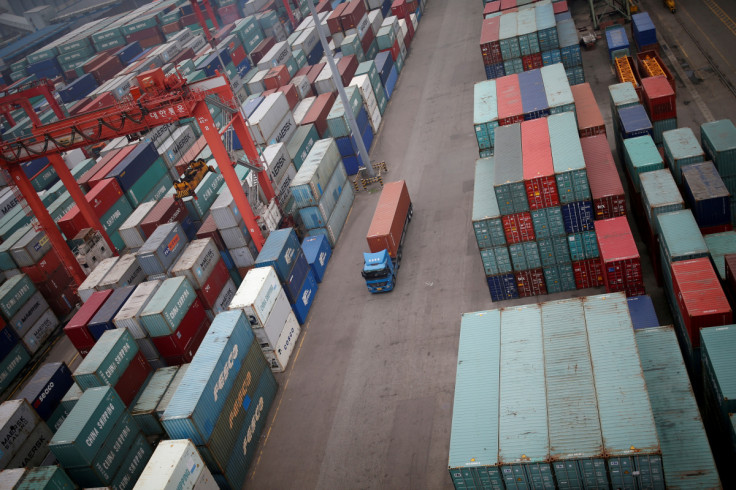
Imports far exceed exports in Europe, and as the continent's single biggest importer, this imbalance is arguably at its most acute in Germany.
For every full shipping container that leaves Germany for Asia, the manufacturing powerhouse sends four back – a trade asymmetry that leaves Germany with an abundance of containers.
While some of these surplus units are repositioned to the export-focused regions that need them, such as back to East Asia, moving empty containers halfway around the world often doesn't make economic sense, particularly for those nearing the end of their service life.
In a nation seeking to create a circular economy, the shipping container surplus presents a sustainability problem. But there is a solution, and it's found not on water, but on land.
Industrial and commercial utility
Containers are an incredible building material, and a sustainable one too, particularly units that are no longer rated for ocean transport.
They are designed to be durable and weatherproof, and are large and customisable enough to form the basis of everything from generous storage areas to comfortable living/working spaces. Their abundance, cost-effectiveness and inherent portability only makes the argument for containers as infrastructure more compelling.
Intermodal units are increasingly forming the basis of secure storage, temporary offices, workshops and permanent structures on industrial sites across Germany. There are a wealth of commercial use cases too: units repurposed as pop-up storefronts, event spaces, market stalls and overflow storage.
The public sector is particularly sustainability-focused, so municipalities now utilise containers in a range of infrastructure projects, from temporary offices to emergency storage. Their rapid deployment capabilities also make them ideal for disaster response command centres.
The truth about container sustainability
'Sustainable' is an often loosely used term, so it's important to define precisely what it means for shipping containers as a building material.
Germany has strict rules that prohibit untreated municipal, industrial and organic waste from going to landfill. Happily containers are built from corten steel, which is 100% recyclable with zero quality loss. As a result, over 90% of the country's steel waste is recycled.
This means that the act of repurposing a container at the end of its service life isn't necessarily a more sustainable choice than recycling the raw materials – though the steel recycling process can be carbon-intensive.
If a container is converted into a tiny home, for example, but is badly sealed and fitted with low-grade insulation, this 'eco-friendly' conversion can ultimately prove far more energy-hungry (i.e. less sustainable) than a traditional residential build.
The environmental benefits of container conversion must therefore be assessed according to the condition of the unit, the distance it must be transported, the environmental impacts of any necessary modifications, its intended use, the energy efficiency of the resulting structure, and the operational lifespan of the build.
All that said, a carefully planned container conversion will almost always be more sustainable than a traditional build with virgin materials, given the structure itself is being repurposed in its entirety.
Sourcing and procurement in the German market
The secondary container market has evolved dramatically in recent decades. Shipping containers in Germany are now simple to procure from container marketplaces and are available in a range of sizes, types and conditions.
If the country is to continue to chart a path toward a circular economy, the focus must be on repurposing the used shipping containers that have reached the end of their service lives. These are available in two grades that are suitable for container conversion projects: cargo-worthy (CW) and wind and watertight (WWT). While lower quality containers can be fixed, the cost-benefit analysis begins to sway away from conversion and toward recycling.
Organisations procuring a container need to consider more than just the costs of purchasing and modifying a unit. Transport, site access, on-site positioning, foundation works and access to utilities must also be factored in.
A circular solution to an inherent trade imbalance
Germany's trade asymmetry is unlikely to change anytime soon, and the country's ports will continue to be left with structural container surpluses. But far from a problem, this situation instead presents a solution.
As energy standards tighten and material costs remain high, traditional construction methods face ever-growing scrutiny across both the public and private sectors.
In secondary shipping containers, German industries and municipalities have an asset that addresses both problems at once. By prioritising structural longevity, smart insulation and localised procurement, converted containers offer a practical path forward, and one that turns a byproduct of global logistics into the foundation of a truly circular economy.
© Copyright IBTimes 2026. All rights reserved.