

China Is Testing Satellites That Can Chase Other Spacecraft. The US Is Building Its Own Countermeasures.
Washington has deployed new electromagnetic warfare equipment and is testing spacecraft that can respond quickly to threats in orbit as military competition extends beyond Earth.

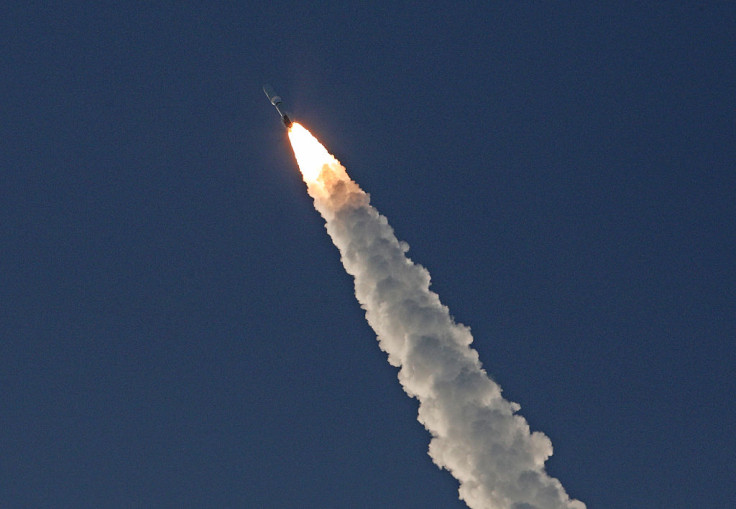
China is testing increasingly sophisticated spacecraft capable of pursuing, approaching and manipulating other satellites, while the United States is building systems designed to protect its orbital assets and disrupt those of an adversary as the two powers prepare for the possibility of conflict extending into space.
A secretive Chinese unmanned spaceplane released a small satellite in June that later looped around another Chinese spacecraft before moving back toward the spaceplane, according to Reuters. The news agency also found patent documents, procurement notices and academic research showing Chinese institutions linked to the military pursuing technologies for chasing and potentially capturing spacecraft, as well as extending their operating lives through in-orbit refueling.
The U.S. Space Force said in its July threat assessment that China had more than 1,500 payloads in orbit and more than 510 intelligence, surveillance and reconnaissance-capable satellites. It said Beijing has developed systems that could restrict U.S. access to space during a conflict, including anti-satellite missiles, lasers, jammers and spacecraft capable of close approaches to other satellites.
China demonstrated one such capability in 2022 when its Shijian-21 spacecraft moved a defunct BeiDou navigation satellite into a different orbit. The Pentagon said Shijian-21's robotic technology could potentially be used to manipulate other spacecraft and degrade their ability to operate. The Defense Department also assessed that China was developing counterspace capabilities specifically aimed at restricting American use of space during a conflict.
The Space Force operationally accepted its Meadowlands system in June, adding a mobile ground-based electromagnetic weapon that uses radio-frequency units to disrupt satellite communications to Washington's growing counterspace arsenal. The service said the equipment can be deployed to combatant commands around the world.
The U.S. is also expanding its ability to maneuver and conduct operations in orbit, with its reusable X-37B spaceplane beginning its eighth mission in August 2025. The Space Force described the spacecraft as a platform for testing next-generation technologies and operational concepts. The service separately launched its VICTUS HAZE mission in June to test rapid responses to threats through realistic rendezvous and proximity operations in orbit.
U.S. allies are becoming more directly involved in military operations in orbit, with American and British forces maneuvering a U.S. military satellite close to a British spacecraft last year as China's Shiyan 12-01 passed about 83 kilometers beneath them, according to Reuters. U.S. Space Command later identified the U.S.-U.K. mission, known as Op Prajna, as a successful on-orbit operation conducted under the multinational Operation Olympic Defender framework.
U.S. Space Command is also pushing for more weapons capable of operating in orbit. Gen. Stephen Whiting has called for kinetic and non-kinetic systems, including orbital interceptors, saying American forces need the ability to deter attacks and fight if deterrence fails. In July, U.S. Space Command released a new 2040 warfighting framework aimed at preserving U.S. military superiority in space as rival capabilities expand.
© Copyright IBTimes 2026. All rights reserved.