

The Dollar Has Stayed Strong In 2026. Strategists Say The Risks Are Starting To Build.
The U.S. dollar is still up for the year, but currency strategists are questioning whether its recent strength can last.

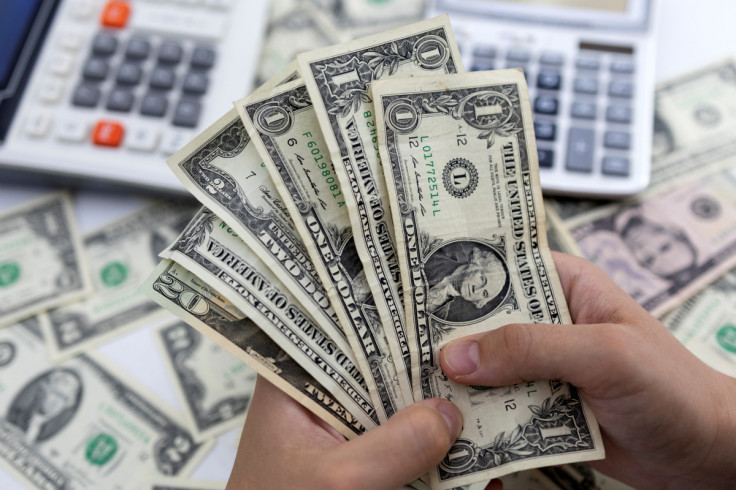
The U.S. dollar has remained relatively strong in 2026, but softer economic data, fiscal concerns and uncertainty over Federal Reserve policy are giving investors more reasons to question whether those gains can continue.
The U.S. Dollar Index, which measures the greenback against six major currencies, is up about 1.15% this year after reaching a 52-week high of 101.80 on June 24. It was trading around 99.4 early Wednesday.
Higher Treasury yields have helped support the dollar by making U.S. assets more attractive to investors. But currency strategists say the reason yields are rising is becoming increasingly important.
CNBC reported that yields driven higher by concerns over government borrowing, inflation or fiscal risks may not provide the same support for the dollar as yields rising because of stronger economic growth.
Charu Chanana, chief investment strategist at Saxo, said investors should increasingly focus on why U.S. yields are moving higher.
"A higher yield generated by stronger economic fundamentals is not necessarily equivalent to a higher yield generated by a larger risk premium," Chanana said.
That distinction has become more relevant after a global bond sell-off pushed the 30-year Treasury yield to its highest level since 2007 this week.
For years, international investors have benefited from both returns on U.S. assets and a strong dollar. Chanana said a weaker relationship between Treasury yields and the currency could make geographical diversification more important for investors.
Recent U.S. economic reports are also affecting the dollar outlook. Softer readings on consumer spending, inflation and employment have led markets to reassess expectations for Federal Reserve interest rates and prompted some investors to reduce bullish positions on the dollar.
Uncertainty over how the Fed will respond to inflation is another factor being watched by currency markets.
The Fed last month kept its benchmark interest rate unchanged at a range of 3.50% to 3.75%, with policymakers divided over whether another increase would be necessary to bring inflation back toward the central bank's 2% target.
Recent softer consumer and producer inflation readings have reduced expectations for an immediate rate increase, although inflation remains above the Fed's target.
Currency markets are also watching developments involving the Japanese yen after the U.S. and Japan recently intervened to support the currency.
Not all of the risks identified by investors would necessarily weaken the currency, however.
One concern has been that a correction in U.S. stocks could prompt foreign investors to sell American assets, reducing demand for dollars. Elias Haddad, global head of markets strategy for foreign exchange at BBH, said that outcome is not certain.
BBH's analysis of U.S. Treasury data found that foreign investors purchased about $920 billion of U.S. equities during the 12 months through June, compared with $294 billion of Treasuries.
Haddad said foreign investors could respond to a stock market decline by moving money from equities into U.S. government bonds rather than withdrawing from American assets altogether. That could preserve some of the dollar's traditional safe-haven support.
The Dollar Index remains positive for 2026, but its outlook now depends on several factors, including upcoming economic data, Treasury yields and the Fed's next policy decisions.
© Copyright IBTimes 2026. All rights reserved.