

U.S. Pressuring France And Germany To Release Diesel Stocks. A Retaliatory Export Ban Is Reportedly On The Table.
Global diesel markets remain tight and U.S. prices stay well above year-ago levels.

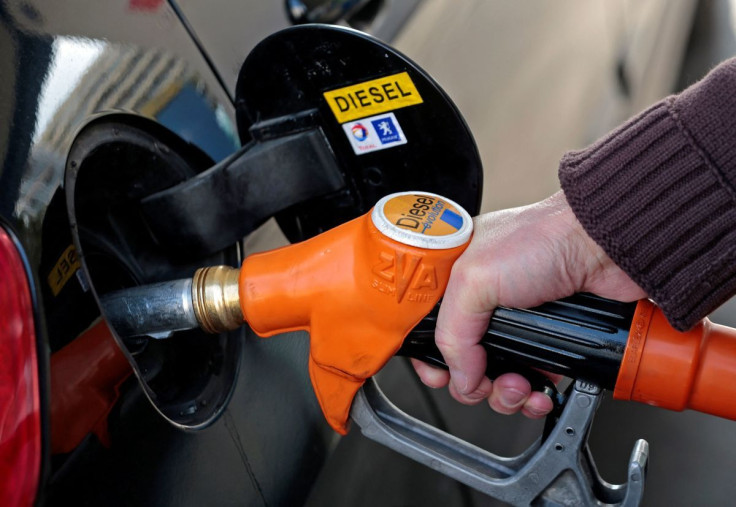
The Trump administration has pressed France and Germany to release diesel from emergency reserves as Washington seeks additional supplies to ease elevated fuel prices, warning that a U.S. diesel export ban could be considered if Europe does not act, according to a new report.
Three people close to the talks told Reuters that U.S. officials had specifically urged Germany and France to draw down emergency diesel inventories. One person based in a European capital said Washington had asked the European Union to release 120 million barrels of diesel over the next six months.
The discussions represent the latest U.S. effort to get allies to tap emergency energy supplies as diesel prices remain elevated and disruptions have tightened global markets.
The U.S. Department of Energy said Sept. 29 that it had opened an exchange of up to 40 million barrels of crude oil from the Strategic Petroleum Reserve, part of a previously announced 172 million-barrel U.S. release coordinated with International Energy Agency members. The broader IEA commitment totals 400 million barrels.
Energy Secretary Chris Wright said the United States and Japan were delivering on their commitments but several European members had released only a fraction of the crude oil and petroleum products they had pledged.
The administration's pressure is particularly focused on France and Germany, which together hold more than a third of the European Union's strategic diesel reserves, according to a separate Reuters report.
European governments are already discussing whether additional stocks should be released.
The European Commission, Germany, France, Italy, Britain and Ireland held a call Thursday to discuss the possible need for diesel stock releases, two EU officials told Reuters. Germany's economy ministry said the International Energy Agency had not yet asked Berlin to release stocks.
The talks come only days after the European Commission said EU oil supplies remained stable but acknowledged that diesel and jet-fuel prices were high because of tight global markets.
Commercial stocks in the Amsterdam-Rotterdam-Antwerp hub were below their five-year average, although they had stabilized in recent weeks, the Commission said after a Sept. 29 meeting of its Oil Coordination Group. European refineries were also operating at close to maximum capacity.
The Commission said emergency stocks remained at high levels and were available if a market disruption required their use.
Earlier in September, the European Commission said there was no immediate oil-supply problem within the EU, with demand for diesel and jet fuel being met through higher European refinery output and alternative global supplies. It cautioned that instability in the Middle East and seasonal demand could further tighten markets.
European countries also maintain emergency inventories under international stockholding rules. The International Energy Agency requires member countries that are net oil importers to maintain stocks equal to at least 90 days of net imports and to be prepared to participate in coordinated responses to major supply disruptions. Those reserves can include both crude oil and refined products such as diesel.
The push for European releases comes as U.S. diesel prices remain substantially above levels recorded a year ago.
The national average retail price for on-highway diesel was $6.382 a gallon on Sept. 28, down from $6.529 a week earlier but more than double the $3.754 recorded a year earlier, according to the U.S. Energy Information Administration.
Prices were particularly high on the West Coast, averaging $7.357 a gallon, while California's average stood at $8.181, EIA data showed.
The discussions are taking place against a backdrop of disruptions affecting several major sources of refined fuel.
Energy Secretary Wright said Wednesday that the United States had lost some diesel exports from the Middle East and China, although some Middle Eastern supplies were being restored, according to the original reporting by Reuters.
Chinese refiners also suspended October fuel exports outside Hong Kong and Macau as they sought to bolster domestic supplies, according to people familiar with the matter cited by Reuters. The move added pressure to a fuel market already affected by disruptions in the Middle East and constraints on Russian supply.
© Copyright IBTimes 2026. All rights reserved.