How Hedge Funds Made Billions From Forced Buying of SpaceX Shares By Index Funds

KEY POINTS
- Inclusion into the Nasdaq 100 forced passive index funds to automatically SpaceX shares regardless of price.
- Hedge funds anticipated index rebalancing and positioned ahead of mandatory buying by passive index funds to monetize a predictable surge in demand.
- Because index-rebalancing opportunities occur within narrow trading windows, large hedge funds used prime-broker leverage to build outsized positions and maximize returns from predictable market flows.
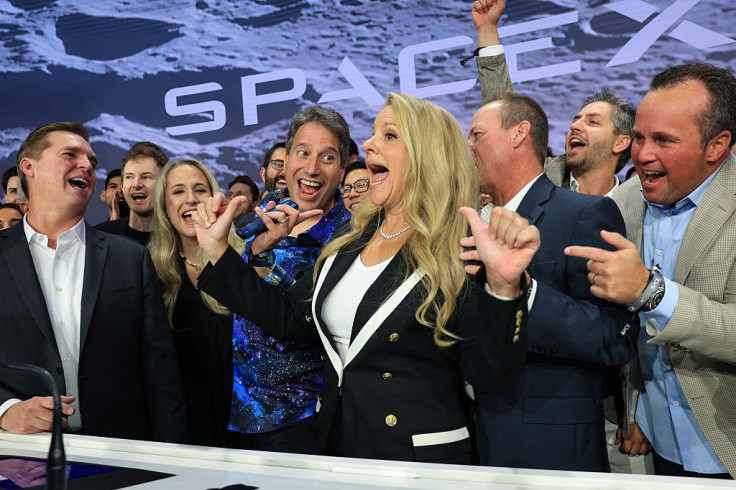
Hedge funds reaped billions in profits by taking positions following SpaceX's IPO ahead of forced buying from passive index funds, turning index-rebalancing into one of Wall Street's biggest trades of the year.
Following SpaceX's IPO, major index providers introduced rule changes that paved the way for the company to be added to their benchmarks more quickly. The changes created a predictable wave of demand. Passive mutual funds and exchange-traded funds (ETFs) that track indexes cannot choose whether to purchase newly added companies. Instead, they are required to buy shares in proportion to an index's weighting, regardless of valuation, creating substantial demand on scheduled rebalancing dates.
JPMorgan analysts estimated that SpaceX's inclusion in the Nasdaq 100 alone required passive index-tracking funds to purchase approximately $4.3 billion worth of shares.
Hedge funds capitalized on those mandatory inflows by establishing large, often leveraged, positions before the scheduled index changes took effect. They then unwound those positions as passive investors completed their purchases, profiting from the predictable demand generated by the rebalancing process.
According to the Financial Times, index rebalancing generated roughly $1.3 trillion in trading volume during the second quarter, about twice the average quarterly level recorded over the previous year and the highest quarterly total on record.
"You just landed heads four times in a row," an executive at a multi-manager hedge fund told the Financial Times. Five developments in June created an unusually lucrative opportunity for the strategy: the quarterly rebalancing of the S&P 500, the Nasdaq 100's quarterly changes, Russell's annual reconstitution, quarter-end multi-asset rebalancing, and rule changes by Nasdaq, Morningstar CRSP, and Russell that fast-tracked SpaceX's inclusion in major indexes.
Millennium Management emerged as one of the biggest beneficiaries of the trade, Bloomberg reported. Two teams at the $92 billion hedge fund—the New York-based SRBL group led by Glen Scheinberg and another led by Pratik Madhvani in Dubai—generated a combined $3.7 billion in profits during a single month.
The gains marked a sharp reversal from last year, when heightened market volatility reportedly cost those same Millennium teams $900 million, and caused rivals Citadel and ExodusPoint to scale back their index-rebalancing operations.
© Copyright IBTimes 2026. All rights reserved.
- Recommended For You