

Iceland Votes No on EU Accession Talks in Knife-Edge Referendum, Dealing Blow to Brussels
Icelanders narrowly rejected restarting suspended EU membership talks, as fears over fishing rights and sovereignty outweighed security anxieties driven by Trump's threats toward Greenland.
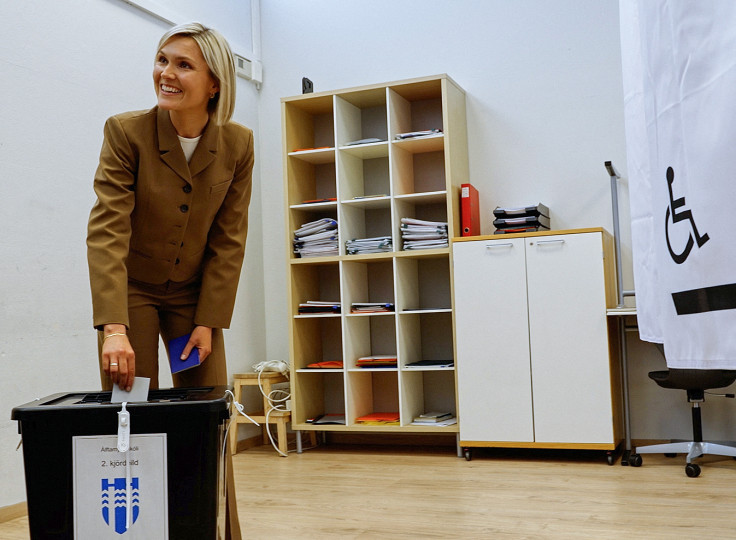
Iceland's voters delivered a narrow but unambiguous verdict Saturday, rejecting by a margin of 52.5 percent to 47.5 percent a government proposal to resume European Union accession negotiations that have been frozen since 2013. National broadcaster RÚV called the result, reporting that the No campaign secured its majority with rural constituencies swinging the final verdict after a night of vote-counting during which the lead changed hands repeatedly — early tallies had briefly shown the Yes camp ahead before the balance tipped decisively toward No as results arrived from outside the capital. A No vote will disappoint Brussels, which had cast Iceland as a low-risk case that could help ease skepticism toward EU enlargement and strategically strengthen the bloc when Arctic security is in focus.
Around 272,000 individuals were eligible to vote, and voter turnout was higher than, or at least comparable to, the 2024 parliamentary elections, when it reached 80 percent. The closeness of the count meant that reliable final figures were not expected until the morning, with ballots from remote towns and rural polling stations requiring transport by plane, boat, or car before counting could begin. That geography — Iceland's vast, sparsely populated hinterland reliably skeptical of EU commitments — ultimately shaped the result.
The vote was not a decision on EU membership itself. Had the Yes side prevailed, Iceland's government would only have been authorized to return to the negotiating table. Any actual accession agreement would have required a second referendum, potentially as early as 2028. The referendum result is non-binding, but the government had vowed to respect it. Instead, the result closes off that path for the foreseeable future. Prime Minister Kristrún Frostadóttir, who has led a pro-EU coalition government since late 2024, had framed the referendum as a "now or never" moment, telling voters that a No result would effectively set aside the EU question for a generation. After casting her ballot Saturday, Frostadóttir told reporters: "This is a great day. We've been waiting for this for years to be able to have a vote," adding that her government would continue its work regardless of the outcome. The government scheduled a press conference for 1 p.m. local time to present its plans following the result.
The fisheries question proved decisive. Iceland's fishing industry accounts for roughly 8 percent of GDP and occupies a central place in national identity, shaped by the Cod Wars of the 1970s — a series of confrontations with Britain over access to Icelandic waters that the country won and still celebrates as evidence that a small nation can defend its interests against larger powers. The EU's Common Fisheries Policy, which requires member states to open their waters to fishing fleets from other member nations, has long been the central obstacle to Icelandic public support for membership. Voters who came of age during those confrontations with Britain framed Saturday's choice in existential terms — not an abstract question of geopolitics, but a direct continuation of the sovereignty battles their generation had already fought and won.
Despite signals from Brussels that it was prepared to offer Iceland an unusually flexible arrangement on fisheries — European Commission officials had acknowledged in background discussions with Icelandic counterparts that a bespoke solution would be required — that assurance proved insufficient to carry the undecided electorate. Iceland's legal system is already so deeply aligned with EU legislation through the European Economic Area that analysts had estimated formal negotiating talks could have been completed within 12 to 18 months, far faster than a typical candidate country. That compressed timeline had been a central selling point for the Yes campaign, which argued the practical disruption to Iceland's regulatory framework would be minimal. It was not enough.
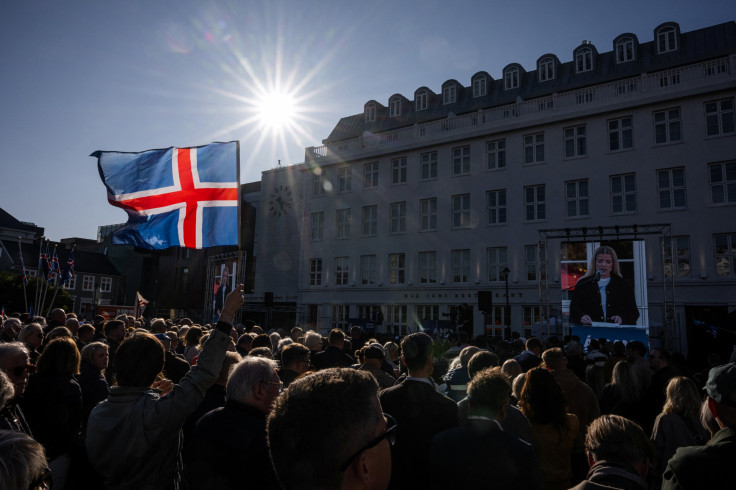
The geopolitical backdrop that gave Frostadóttir's government the political opening to call the referendum — Donald Trump's repeated threats to acquire Greenland, Iceland's neighbor just 290 miles across the Denmark Strait — ultimately proved less powerful at the ballot box than domestic economic and sovereignty concerns. Trump had described Greenland at various points as a matter of "absolute necessity" for American national security and, on at least four occasions, appeared to confuse it with Iceland itself — producing immediate and lasting anxiety in Reykjavik about the durability of the transatlantic security order. Iceland is a NATO founding member with no standing military of its own, a country whose defense has depended almost entirely on the credibility of the U.S. security guarantee since 1949.
Yet that anxiety did not translate cleanly into Yes votes. Eirikur Bergmann, a politics professor at Bifröst University and one of Iceland's most widely cited political analysts, had cautioned throughout the campaign that the vote was "ultimately being fought over economics, sovereignty, and above all, control of Iceland's fishing grounds," noting that fisheries, agriculture, energy policy, and the euro dominated parliamentary debate time over Trump's Greenland threats at a ratio of roughly ten to one. During three Althing debates spanning more than 21 combined hours, Trump's territorial ambitions were mentioned in only four interventions.
The economic case for Yes had rested on the argument that EU membership — and with it adoption of the euro — would bring Iceland's interest rates, which have run significantly above the eurozone average in recent years, down toward levels enjoyed by continental European borrowers, reducing costs for Icelandic households and businesses. But many in the country worried they would be drowned out by the 27 other EU member nations, and the No campaign countered the economic argument by pointing to Iceland's current prosperity: a flourishing economy, full employment, and living standards ranked among the highest in the world, as evidence that the existing EEA arrangement is working and that the risks of full membership outweigh its marginal benefits.
The polling trajectory through the campaign illustrated just how volatile the race was. A Gallup survey in late June put the Yes side at 52 percent against 48 percent No among those with a preference. A Maskína poll completed in late July found 43.8 percent Yes, 38.9 percent No, and 17.3 percent still undecided — a bloc large enough to determine the outcome in either direction. The final pre-vote Gallup survey gave the No side a narrow lead of 51.6 percent to 48.4 percent, a margin within the statistical margin of error. More than 63,000 Icelanders — nearly a quarter of the eligible electorate — had cast early ballots by Friday evening, an unusually high figure that made reading the result from demographic patterns alone unreliable. The final tally confirmed the direction of that last poll, but by a margin wider than many analysts had predicted.
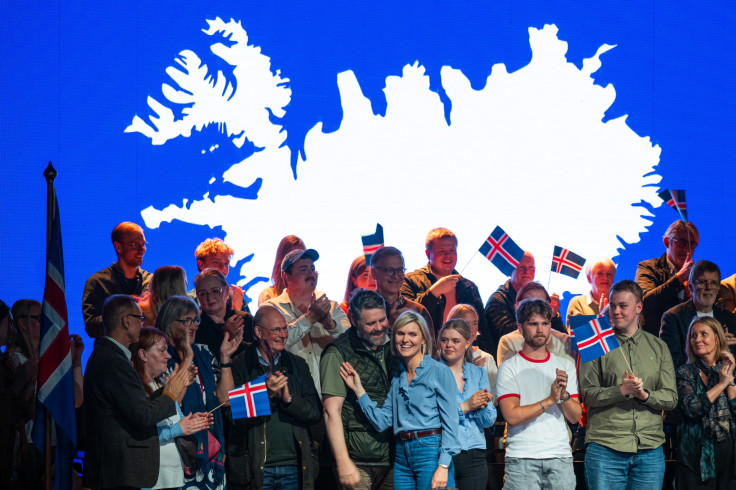
Iceland's existing ties to the EU through the European Economic Area and the Schengen free-movement zone remain unchanged. Even if the Yes vote had won, the country would not automatically have become a member of the EU — negotiations would have had to reopen with Brussels, and if an agreement was reached, there would have had to be a second referendum on whether Iceland should join. Frostadóttir had argued before the vote that the country already adheres to approximately 75 percent of EU rules and that joining would not fundamentally alter every aspect of the Icelandic economy. The No campaign's reply — implicit in the result — was that the 25 percent of rules Iceland does not currently apply is precisely the 25 percent that matters most.
The result will be read closely in Brussels and in the three European countries — Norway, Switzerland, and the United Kingdom — that maintain close but non-membership arrangements with the EU. For Brussels, the verdict forecloses what officials had described as a strategically significant opportunity: adding a wealthy, high-compliance Nordic nation at a moment of intensified Arctic competition and transatlantic uncertainty, without the political complications that typically attend the admission of larger or less-aligned candidate states. The government had framed its membership plan as a "now or never" moment, and the voters took it at its word — choosing the status quo over an uncertain negotiating process, even with geopolitical winds that had not blown in this direction for more than a decade.
Whether Saturday's result settles the question for a generation, as Frostadóttir warned it might, or whether a future government finds grounds to revisit it sooner, will depend in part on how the factors that animated the Yes campaign — Trump's behavior toward Iceland's neighbors, the evolution of European security architecture, Iceland's own economic conditions — develop in the years ahead. For now, the Cod War generation's answer holds.
Originally published on HNGN