U.S. President Joe Biden, facing congressional resistance to his proposals, will announce more than 50 executive actions on Tuesday aimed at advancing free preschool and expanding care for children, older Americans and those with disabilities.
Reuters
Apr 18, 2023
House Speaker Nancy Pelosi, D-Calif., has expressed her disappointment in Democrats being forced to cut the price tag of President Biden's agenda
Ben Scheffer
Oct 12, 2021
The video has sparked discussions about the childcare choices available for working mothers.
Suneeta Sunny
Oct 05, 2021
President Biden announced Thursday he will raise taxes on those making $400,000 or more, as well as increase the corporate tax rate, and the capital gains tax, to benefit middle-class families and pay for his ambitious economic agenda.
Ben Scheffer
Sep 16, 2021
Sens. Bernie Sanders, I-Vt. and Joe Manchin, D-W. Va, have been at odds over the price tag of President Biden's biggest legislative agenda item to date.
Ben Scheffer
Sep 10, 2021
Biden wants to unite Democrats to pass the $3.5 trillion reconciliation bill aimed at establishing paid leave, universal pre-K, free community college, combating climate change, and expanding Medicare.
Ben Scheffer
Sep 07, 2021
Chuck Schumer and Bernie Sanders have agreed on a $3.5 trillion infrastructure bill Democrats are expected to pass the Senate through reconciliation.
Ben Scheffer
Jul 14, 2021
The Biden campaign will unveil a plan to allow Americans to access affordable daycare and eldercare, boosting the economy and adding workers to the labor force.
Wesley Dockery
Jul 21, 2020
The president't daughter made a bizarre-sounding statement during a discussion on tax reform, leading to mockery on Twitter.
Pritha Paul
Nov 07, 2017
Did McDonald’s urge a worker to take food stamps and apply for Medicaid?
Angelo Young
Oct 23, 2013
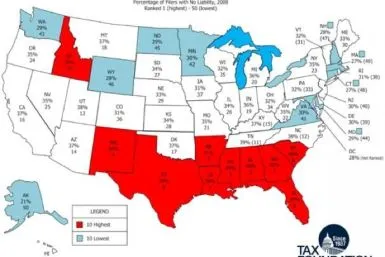
They're not dodging the taxman. Most of them are too poor to qualify.
Ashley Portero
Sep 18, 2012
A professor at American University has found herself in the middle of a controversy after she decided to breast-feed her child while teaching her class. Adrienne Pine, who teaches “Sex, Gender, and Culture” at the Washington D.C. school, is being criticized for breast-feeding her baby in front of 40 students.
Jeff Stone
Sep 12, 2012
Chancellor Angela Merkel's conservatives suffered a crushing defeat Sunday in Germany's most populous state, which could embolden the left opposition to step up its criticism of her European austerity policies.
Eric Linton
May 13, 2012
South Korea's inflation declined to a 21-month low as the exports declined for the second consecutive month in April.
Sreeja VN
May 01, 2012
At his presentation of the his budget proposals for the remaining fiscal year and for Fiscal Year 2013, Mayor Michael Bloomberg warned of the increasing cost of the pension system that, as he said, is in dire need of reform. Right now, our pension system is fairly described as a ticking time bomb, he said during the presentation.
Tom Dworetzky
Feb 03, 2012
Men may be helping more in the home but working women still do more multitasking in U.S. families than their partners and are finding it stressful, according to a new study.
keep for now
Dec 01, 2011
According to the study done by the researchers of Northwestern University, men’s testosterone level falls at the time when their partners gives birth to their child, and a more caring and loving side of a man’s personality comes into view as level of hormones lowers down.
Aditi Mathur
Sep 13, 2011
Most doctors opt for screening women for cervical cancer more often than guidelines suggest, according to a new study.
keep for now
Aug 18, 2011
A new study incorporating interviews with more than 89,000 people in 18 nations revealed that 15 percent of people in high-income countries reported having been depressed, compared with 11 percent of those in low- or middle-income countries.
Jeremy White
Jul 27, 2011
A new study incorporating interviews with more than 89,000 people in 18 nations revealed that 15 percent of people in high-income countries reported having been depressed, compared with 11 percent of those in low- or middle-income countries.
Jeremy White
Jul 26, 2011
Depression rates are consistently higher in more affluent countries than in low income countries, according to researchers who correlated socioeconomic data with depression levels.
Jeremy White
Jul 26, 2011
Congressional lawmakers looking for ways to reduce spending could look to the tax code, economists say.
Jeremy White
Jul 02, 2011