

Larry Fink Says the Bitcoin Bottom Is In, While His Own Fund Just Bled $3 Billion.

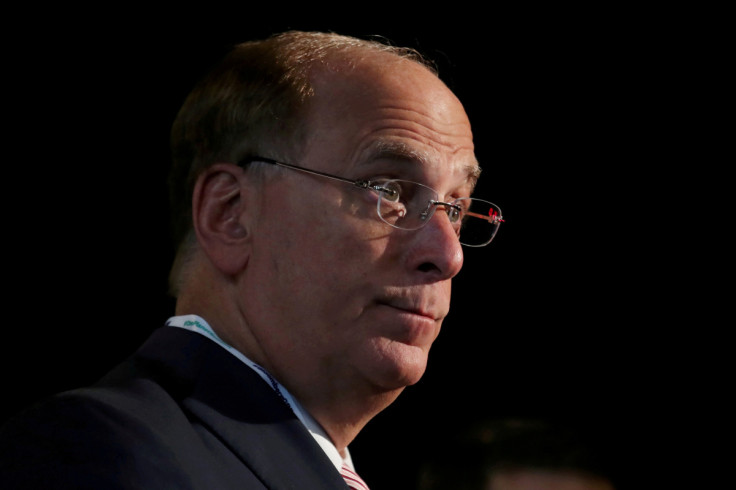
When the CEO of a $15.3 trillion asset manager goes on television and says he's "very bullish," markets stop scrolling.
On July 15, BlackRock's Larry Fink told CNBC that the brutal crypto selloff, which knocked Bitcoin from a $126,000 October 2025 record to the low $60,000s, was a leverage problem, not a fundamental one, and that the worst is now behind it.
"There were too many leverage players in it. That's why we had the washout, and I think there's more stability at these levels. I'm very bullish on the markets over the next 12 months." — Larry Fink, CEO, BlackRock
That last clause did numbers online, but the stability comment is the one that actually matters. When the man who once called Bitcoin an "index of money laundering" reframes its crash as a finished cleanup, he's handing investment committees a sentence they can paste straight into a board memo.
Why a Leverage Washout Is Bullish, Not Bearish
Here's the framework worth understanding. When over-leveraged traders get liquidated, forced selling snowballs and the chart looks apocalyptic from the outside. But that same cascade acts like a reset. It clears out the borrowed positions that made the market fragile, leaving a cleaner base underneath.
For retail, the distinction is everything. A crash driven by forced liquidations is structurally different from one driven by collapsing fundamentals. The first rebuilds. The second rots. Fink is betting this was the first kind, and he's not alone at his firm.
Roughly $9 trillion in cash is sitting on the sidelines, ready to be redeployed into markets. — Rick Rieder, global fixed income CIO, BlackRock

Now the part the victory-lap headlines skip. Fink is talking his book, and the book took a hit. BlackRock's digital asset funds bled $3.1 billion in the second quarter, while falling prices erased another $8.7 billion in value. Even IBIT, the flagship, shed $138.9 million the day before his interview.
So the same week Fink declared the leverage problem solved, his own crypto products were still hemorrhaging. That's not hypocrisy, it's positioning. He's calling the turn before the flows confirm it, which is exactly what you'd expect from someone who wants allocators buying while it's cheap. The rest of BlackRock's quarter was a monster: record $15.3 trillion in assets, $192 billion in net inflows, revenue up 31% to $7.1 billion.
There's already a flicker of confirmation. On July 15, spot Bitcoin ETFs logged $107.7 million in net inflows with zero outflows across the entire category, a rare clean sweep that suggests allocators are adding, not rotating.
Bitcoin Price Today: The Level That Decides Everything
On July 17, Bitcoin trades near $63,200, up about 2.4% on the day after bottoming around $58,000 in mid-June. The problem is stubborn overhead. The $64,000 to $65,000 zone has capped every bounce for weeks, and the pattern of lower highs since the May peak near $84,000 is still fully intact.
The map is simple. A daily close above $65,000 that holds is the first real signal, opening $68,000 and then $72,000. Below, $58,000 to $60,000 is the floor where the last capitulation wick found buyers. Lose it and there's very little support before multi-year lows.
So the setup is a standoff between the loudest institutional bull on earth and a chart that keeps making lower highs. Fink says the washout is done and the next 12 months are up. The tape says prove it above $65,000. So who's early here, the CEO calling the bottom, or the traders still selling every bounce into it?
© Copyright IBTimes 2026. All rights reserved.