

Most Americans Don’t Want A Trade War With Canada, Poll Shows. 14 Percent Support ‘Lake America’ Renaming.
Most Americans do not support President Trump's tariffs on Canada or his order to rename Lake Ontario as "Lake America," according to a new poll.

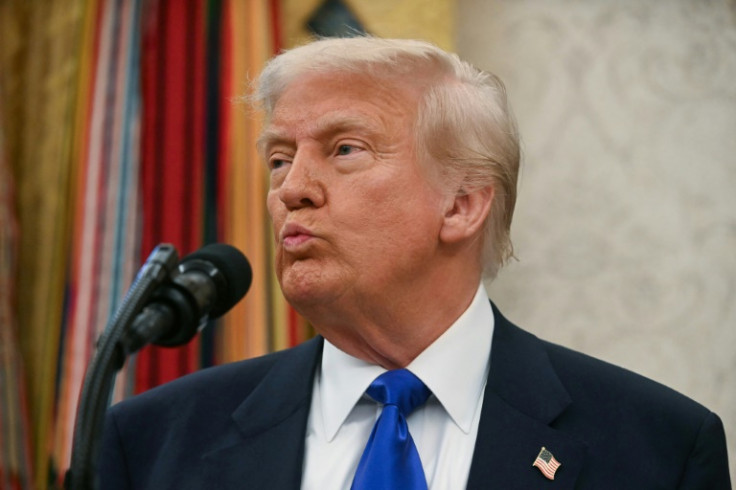
Most Americans do not support President Trump's tariffs on Canada or his order to rename Lake Ontario as "Lake America," according to a new survey.
The Reuters/Ipsos poll, which was conducted over three days and concluded on Sunday, found that the vast majority of respondents did not think a trade war with Canada was a good idea.
Only 20 percent of respondents supported Trump's tariff hikes on Canadian goods, while 57 percent opposed them. Another 27 percent were uncertain about the policy.
Trump's order to change the name of Lake Ontario to Lake America was also unpopular. Only 14 percent of Americans said they support the action, which only applies to U.S. federal usage and has no bearing on what Canada, other organizations, or international bodies call the lake.
The Reuters/Ipsos poll surveyed 1,023 U.S. adults and had a margin of error of 4 points.
Last month Trump imposed 50 percent tariffs on $20 billion worth of Canadian goods. Foreign countries do not pay the tariffs; domestic importers pay them when the goods arrive. The costs usually are recouped through higher prices passed along to consumers.
A study by the Federal Reserve Bank of New York found that 90 percent of the cost burden of Trump's 2025 tariffs was passed along to U.S. companies and consumers.
Canada has promised retaliatory tariffs on U.S. goods, such as steel and electronics, headed to Canada. Those measures are expected to go into effect Sept. 8.
In response, Trump posted on social media: "Canada wants the benefits of being a State, without being one!!! They have also charged our great farmers, for many years, massive amounts of Tariffs. No more!!!"
Ottawa could quickly feel the impact, with tariffs potentially jeopardizing 90,000 jobs. University of Calgary economics professor Trevor Tombe estimates that more than 52,000 jobs are directly at risk if sales of affected Canadian goods to the U.S. fall sharply, while another 35,000 positions could be lost among suppliers and service providers. His analysis, published by the Macdonald-Laurier Institute, puts the total at just over 87,000 jobs and estimates Canada's unemployment rate could rise from 6.4% to about 6.8%.
Machinery and electronics, plastics and rubber, furniture, wood products, chemicals, food products and clothing are among the sectors with the greatest exposure, according to Tombe's analysis. Ontario could lose roughly 36,000 jobs, followed by Quebec with 18,000 and British Columbia with 11,000. Alberta could lose about 9,000 despite its exports facing relatively little direct exposure because businesses there provide transportation and other services to exporters elsewhere in Canada.
© Copyright IBTimes 2026. All rights reserved.