

Nepal-Tibet Flood Toll Rises to 750 as Rain Stops Rescue for Trapped Workers
The Nepal-Tibet flood death toll reached 750 on Sunday as monsoon rain flooded hydropower tunnels where more than 100 workers are believed to be alive.
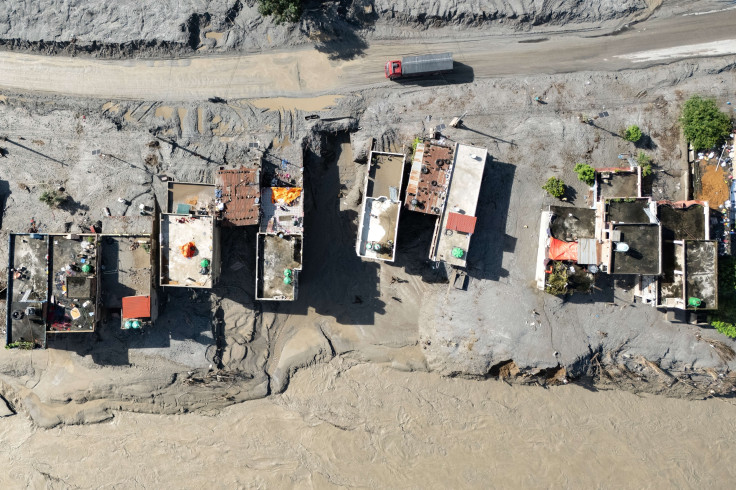
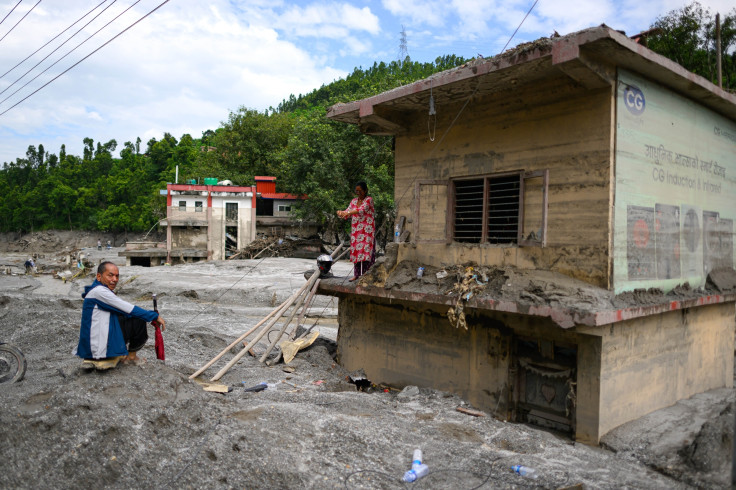
The death toll from last week's catastrophic glacier collapse and flood along the Nepal-Tibet border climbed to at least 750 on Sunday — 734 confirmed in Nepal and 16 in China's Tibet region — as monsoon rain swelled the Trishuli River overnight and forced rescue teams to temporarily abandon efforts to reach more than 100 workers believed alive in flooded hydropower tunnels, now the single most urgent focus of a disaster operation entering its fifth day.
Nepal's National Disaster Risk Reduction and Management Authority reported 2,498 people still missing on the Nepali side as of Sunday, including 589 foreign nationals. Chinese authorities separately confirmed 546 missing in the Tibet region, among them 261 foreigners from 23 countries — including 18 Americans and 15 Britons. The combined toll across both sides of the border stands at more than 3,000 missing.
Nepal's disaster authority said 7,514 people had been rescued overall, including 227 foreign nationals, with at least 219 injured treated or discharged. The most critical thread in Sunday's operations was the race to reach workers trapped inside tunnels at the Trishuli 3A and 3B hydropower sites in Rasuwa district. The government said more than 100 workers may still be alive and sealed inside multiple tunnels swamped by flood debris, among the 933 hydropower workers missing since the wall of mud and ice swept down Wednesday morning.
In a breakthrough late Saturday, army rescue teams using drills broke through into the upper section of a mud-swamped tunnel at Trishuli 3A and began pumping air inside and feeding a camera through to assess conditions. Home Minister Sudan Gurung confirmed the pipe insertion and said excavation work was set to follow immediately. But heavy rainfall after around 2:00 a.m. local time caused the water level in the river to rise and fill in the excavation area, the Nepal Army said Sunday morning, halting the operation before conditions eased enough to resume. Indian and Chinese tunnel rescue experts, who arrived in Nepal on Saturday at the government's request, rejoined the effort once the water receded.
The recurrence of flooding conditions illustrated the compounding difficulty of operating in a monsoon-saturated disaster zone. The same weather system that triggered the initial collapse on Wednesday continues to threaten both survivors and rescuers. Water levels in the Trishuli River rose again on Sunday after fresh rain, prompting residents and rescue workers to seek higher ground. Helicopter operations, which have been the primary means of reaching the most isolated communities in the disaster zone, were grounded overnight by darkness and wet conditions, with the Nepal Army noting the rising water filled excavation areas before teams could make meaningful progress. The pattern — advance when the weather allows, stand down when it does not — has defined the operation since its first hours and shows no sign of breaking while the monsoon season, which runs through September, remains active.
The six-year-old girl found alive and alone in the debris field of Rasuwa district on Saturday — identified only as Manisha, discovered four days after the disaster by Armed Police Force rescuers — remained in treatment at a rescue camp as of Sunday morning. She had spoken for the first time Saturday after resting and eating, telling rescuers her name and age. The whereabouts of her parents remained unknown. Her survival, past the 72-hour window that emergency responders treat as the practical threshold of likely survival, was among the few signs of life emerging from a search operation that has increasingly shifted from rescue to recovery.
Scores of bodies recovered along the banks of the Trishuli and Narayani rivers have been brought to Pokhara for identification, where families have gathered outside the Western Regional Hospital as photographs of recovered victims are displayed in hopes of enabling identification. Some bodies recovered days after the initial flood have decomposed beyond visual recognition, and authorities have begun collecting DNA samples. Nepal's Foreign Minister Shisir Khanal warned that remains at risk of rapid decomposition required refrigerated storage — equipment he said he had requested from foreign governments without yet receiving commitment.
The American dimension of the disaster remained acute. Around 90 U.S. citizens were still unaccounted for on the Nepali side as of Friday, while Chinese authorities listed 18 Americans among the 261 foreign nationals missing in Tibet.
Among those missing from the Nepali side are Deepak Ahuja, 60, and Madhu Ahuja, 57, of Texas, who were returning from the Kailash Mansarovar pilgrimage when security camera footage captured the Gyirong crossing being engulfed by debris within seconds. Ramesh Sharma, 65, and Neelam Sharma, 64, of New York City were also on the route when contact was lost. Their daughter Radhika said she had contacted the State Department and U.S. embassies in New Delhi, Kathmandu, and Beijing without receiving concrete answers. "I am just trying to find them. I don't have any answers," she said. Siddarth Venkatachalam, 30, said he had spoken with his mother just two or three hours before she went missing — it was her birthday, and she was traveling with his father and aunt, all three now among the missing. "They were excited for this trip," he said. "It was a spiritual, religious trek they'd been looking forward to and preparing for."
The United States announced Saturday that it was expanding its humanitarian commitment to $3.6 million — up from the $500,000 announced two days earlier — including up to three months of emergency food assistance for up to 10,000 flood-affected households. The State Department said U.S. embassies in Nepal and China were working to assist missing Americans and support disaster relief efforts. Nepal's Foreign Ministry said the country did not need foreign assistance for general rescue operations but had specifically requested help with tunnel rescue expertise, DNA testing capability, refrigerated storage for decomposed remains, and forensic identification of bodies. Britain, Canada, Australia, and the European Commission have all offered support. China mobilized over 2,100 rescue workers on its side of the border and committed substantial financial and logistical support to Nepal, with Beijing and Kathmandu coordinating to identify missing citizens and foreigners and to strengthen cooperation in disaster prevention and climate-change response.
The disaster originated before dawn on Wednesday, August 26, when a massive glacier collapse in the Langtang-Lirung range sent a wall of water, ice, rock, and mud through mountain valleys on both sides of the Nepal-Tibet border. The debris flow traveled nearly 100 kilometers downstream through the Bhote Koshi, Trishuli, and Narayani river systems. The Trishuli rose by as much as nine meters in 30 minutes. The U.S. Geological Survey, which initially identified a seismic signal consistent with an earthquake trigger, revised its assessment, concluding the signal came from the landslide itself rather than tectonic activity. The Gyirong Port complex — the primary land crossing between Nepal and China, handling nearly a third of bilateral trade — was completely destroyed, along with at least 35 bridges and roughly 40 kilometers of road. Nepal's Electricity Authority confirmed 431 megawatts knocked off the national grid from damage to five major hydropower stations, a grid disruption that has compounded the difficulty of sustaining rescue operations in areas already cut off by destroyed roads and washed-out bridges.
The timing compounded the human toll. The Kailash Mansarovar pilgrimage route peaks in August, drawing tens of thousands of pilgrims through Rasuwa district and across the Gyirong crossing into Tibet each year. The flood struck at the height of morning border-crossing activity, with pilgrims, traders, and hydropower workers all concentrated in the affected zone simultaneously. The missing span dozens of countries. The Chinese breakdown of foreign nationals missing in Tibet identified 104 Nepali citizens and 49 Indians, alongside the 33 Latvians, 18 Americans, and 15 Britons. The scale of the foreign-national toll has drawn responses from governments across Asia, Europe, and North America, and has complicated identification efforts given the number of nationalities involved, the condition of recovered remains, and the limited connectivity in the affected border zone.
More than 9,000 Nepali Army personnel were deployed across the disaster zone, conducting 78 helicopter flights in the operation's first days alone. A total of 4,451 people had been brought out of the disaster zone in the operation's early phase, 129 of them foreign nationals. The Red Cross estimated more than 90,000 people had been affected by the disaster overall. UNICEF said at least 17,000 children had been impacted, with 18 schools destroyed and 20 more damaged. World Vision estimated more than 30,000 households would ultimately be affected. Nepal Prime Minister Balen Shah, addressing the nation, said 15,431 security personnel had been deployed for search and rescue operations in affected areas, including Rasuwa and the Bhote Koshi-Trishuli corridor, comprising 6,755 personnel from the Nepali Army and 4,473 from Nepal Police.
The broader scientific context has sharpened since Wednesday. The International Centre for Integrated Mountain Development's glacier monitoring data shows the Langtang Valley has lost more than 40 percent of its glacier volume since 1815, with the rate of loss accelerating sharply in recent decades. The high-mountain region above 4,000 meters is warming significantly faster than the global average, increasing both the frequency and severity of glacial collapse events. The Lhende Khola has now flooded catastrophically twice in 14 months. Last August's event killed nine people. This one has killed at least 750, with more than 3,000 still unaccounted for across both sides of the border. The pattern is not incidental. Scientists working in the region have documented a sustained acceleration in glacial melt across the Himalayas, and the concentration of hydropower infrastructure, pilgrimage routes, and cross-border trade in high-altitude valleys that sit directly downstream from unstable glacial formations means that the exposure of human activity to this category of event has grown alongside the frequency of the events themselves.
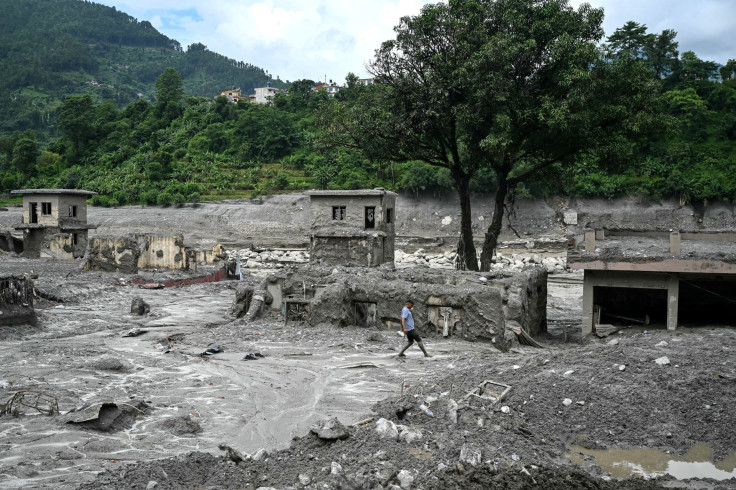
A second, smaller lake of approximately 14,000 square meters identified upstream from the primary barrier lake — which Nepali authorities confirmed had emptied by Saturday evening, removing the most acute threat of a second surge — remained under monitoring as of Sunday. Officials assessed its probability of overflow as low, but Nepal's Flood Forecasting Division kept alerts active along the Bhotekoshi and Trishuli river systems. The primary barrier lake's drainage had offered the first sign of stabilization in the disaster zone since Wednesday. Sunday's renewed rain and river rise made clear that stabilization remains conditional, dependent on weather that the monsoon season does not reliably provide.
On the Chinese side of the border, rescuers near the Tibet border port were moved to a safe location Sunday after a new lake formed by a secondary landslide, state media reported. Chinese hydrological authorities continued monitoring via remote sensing data, coordinating with Nepali counterparts on the downstream risk picture. The border port at Gyirong, described by officials on both sides as completely washed away, will require reconstruction that officials have not yet put a timeline on, leaving the primary land trade corridor between the two countries closed for an indefinite period.
Whether the tunnel operations at Trishuli 3A and 3B will yield survivors depends on conditions that rescuers cannot control: the rate of rainfall, the stability of the debris field, and whether air pumped into the tunnels has been reaching workers in time. The government has said more than 100 may still be alive. The excavation that broke through Saturday evening, then flooded overnight, then resumed Sunday morning, is the clearest thread connecting that possibility to an outcome. For the families gathered at hospitals in Pokhara and Kathmandu, and for the daughter in New York who has contacted three embassies and received no concrete answers, that thread is what remains.
If you or someone you know needs emergency consular assistance, U.S. citizens may contact the State Department's 24-hour hotline at 1-888-407-4747 (from abroad: +1 202-501-4444).
Originally published on HNGN