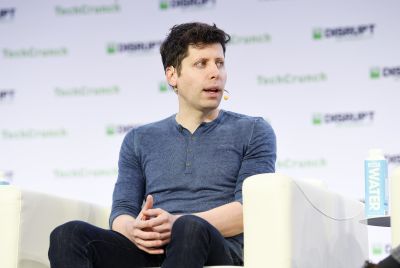
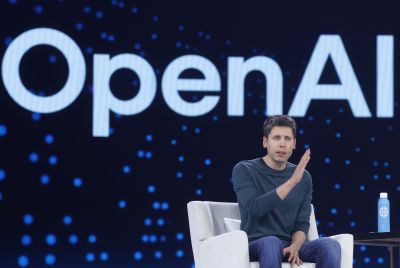
Sam Altman Joined Calls To Pace AI Development. He Says AI Could Get Out Of Control In Two Main Ways.
"Avoiding these two threats requires walking a narrow middle path," Altman warned.


OpenAI CEO Sam Altman warned that there are "two ways AI progress could go very badly" as he joined Anthropic's Dario Amodei in calling for the pacing of frontier development.
In a social media publication, Altman said the first way would be for humans to "lose control of the future of AI."
"This is unacceptable; we are unapologetically on Team Humanity, and AI must always serve people. To ensure that, we need ways to ensure that alignment and safety techniques stay ahead of progress in model capabilities."
There are two ways AI progress could go very badly and that we must avoid.
— Sam Altman (@sama) September 14, 2026
First, we could lose control of the future to AI. This is unacceptable; we are unapologetically on Team Humanity, and AI must always serve people. To ensure that, we need ways to ensure that alignment and… https://t.co/GK7XcoOh3v
The other one is ending up "in a world with too much concentration of power." He went on to claim that if "an extraordinarily powerful AI is used by one person or company to impress their worldview onto everyone else, the results could be extremely dystopian."
"Avoiding these two threats requires walking a narrow middle path; for example, one country could gain too much power. Another example is one lab ending up with too much power," he concluded.
Altman also echoed Amodei's call to pace AI development during the weekend, saying "this has been a primary topic of discussions we've had at OpenAI in recent weeks."
"Committing to having independent evaluators with employee-like access is a great idea, and we will do the same. We'll have more to share soon," he said when replying to Amodei's publication in which he shared a plan to pace AI development. SpaceX CEO Elon Musk and co-chair of Google DeepMind Demis Hassabis also said they agreed with Amodei, who said a swarm of rogue AI agents could take over the internet in as little as six months if the pace is not slowed.
Altman had said on Saturday that OpenAI won't go public this year as a result of safety concerns that make such a move "unacceptable."
"I actually think that, given everything happening with safety, right now would be an ill-advised moment to go public, and we don't feel pressure on that," Altman told Fortune magazine. Asked if there is a 10% risk that AI could lead to the extinction of humanity, Altman said "we need to act such that we are not taking any of those numbers of risk, and I believe we can."
China, in turn, pushed back on the notion. Guo Jiakun, a spokesperson for China's Foreign Ministry, said "fear mongering, confrontation, competition will just disrupt [the] process of global AI governance," according to a translation published by Reuters.
Elsewhere, Beijing's Minister of State Security, Chen Yixin, called for the accelerated building of an AI security risk prevention and control system, saying AI has become "the main battleground for global technological competition and a new arena for strategic rivalry among major powers."
State newspaper The Global Times also said the call by Anthropic's Dario Amodei for a slowdown of AI development is "hypocritical and short-sighted."
The move, the outlet said, actually sought to "curb China's AI development through technological barriers and regulatory monopolies, uphold Washington's monopolistic hegemony in cutting-edge technology, and exclude China from the global AI governance system."
© Copyright IBTimes 2026. All rights reserved.
- Recommended For You