

Sam Altman Says Demand For ChatGPT’s New Sol Model is Surging. It May Be Causing Some Issues
OpenAI's chief executive warned that surging demand for GPT-5.6 Sol is placing pressure on the computing infrastructure needed to operate the company's most advanced model.

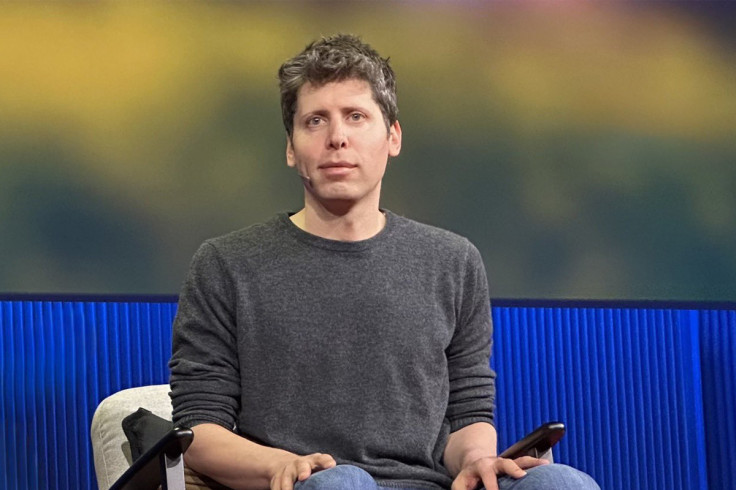
OpenAI CEO Sam Altman has warned that users of the company's newly released GPT-5.6 Sol model may encounter problems as demand for the flagship system puts pressure on OpenAI's infrastructure.
The warning came less than a week after OpenAI made Sol broadly available through ChatGPT, Codex and its developer platform. The model sits at the top of the company's new GPT-5.6 family and is designed to handle complex reasoning, coding and multistep tasks.
"5.6 Sol growth is insane," Altman wrote Tuesday in a post on X. "The inference team has done heroic work to be able to support demand."
"We are going to move mountains to continue to scale, but it is possible there are some hiccups soon," he added, according to Axios.
5.6 sol growth is insane.
— Sam Altman (@sama) July 14, 2026
the inference team has done heroic work to be able to support demand.
we are going to move mountains to continue to scale, but it is possible there are some hiccups soon.
Altman did not identify a specific outage or describe which services might be affected. His remarks focused on the difficulty of expanding the computing capacity used to run the model after it has been trained, a process known as inference.
OpenAI publicly released GPT-5.6 Sol on July 9 alongside two smaller models, Terra and Luna. The company had announced the model family in June but initially restricted access to a limited group of partners while U.S. officials reviewed its capabilities.
The Trump administration had asked OpenAI to conduct a staggered release because of concerns about the model's advanced cybersecurity capabilities. The administration later disputed descriptions of the review as formal government approval, saying OpenAI did not legally require federal permission to release the models.
OpenAI worked with Commerce Secretary Howard Lutnick, Treasury Secretary Scott Bessent and National Cyber Director Sean Cairncross during the testing process, Altman told CNBC before the broader launch.
Altman described the discussions as a "collaborative back and forth" in which government officials tested the models and identified issues for OpenAI to address.
"If you want broad access, which we do, and you have powerful models, you really want to be able to be confident in your safety claims, because otherwise the world is going to get uncomfortable very fast," Altman told CNBC.
The company said Sol uses 54% fewer tokens than earlier OpenAI models when carrying out agentic coding tasks. Token efficiency affects the cost of running models because companies generally charge developers according to the amount of text and data processed during a request.
"Every enterprise now is thinking about spend and the value they're getting in exchange for AI, and this is what we really want to do," Altman said in the CNBC interview.
The efficiency gains have not removed the need for substantial computing resources. Large numbers of users sending prompts simultaneously require data centers equipped with specialized chips, networking equipment, cooling systems and large electricity supplies.
U.S. electricity consumption is expected to reach record levels in 2026 and again in 2027, driven partly by the expansion of power-intensive data centers supporting artificial intelligence and cryptocurrency services, the U.S. Energy Information Administration said in figures reported by Reuters.
Data center demand has already contributed to higher power costs in parts of the United States. Electricity demand from U.S. data centers is expected to increase from 31 gigawatts in 2025 to 66 gigawatts in 2027, citing a Goldman Sachs research note, Reuters reported in June.
Altman described Sol as "the best model in the world right now" during an exchange with Musk on X following the releases, according to Forbes. He said there were "a lot of benchmarks" supporting the claim after Musk accused him of misleading OpenAI's customers.
OpenAI's latest release follows rapid growth across its consumer, coding and workplace products. The company became a leading force in generative artificial intelligence after releasing ChatGPT in 2022, prompting competing investments and product launches from Google, Microsoft, Amazon, Meta, Anthropic and Musk's companies.
The company is now valued at $852 billion by private investors, according to CNBC. OpenAI and Anthropic have also confidentially filed documents for potential public offerings, although neither company has announced a timetable.
© Copyright IBTimes 2026. All rights reserved.