These Are 10 Careers That May Be Harder For AI To Replace
Occupations considered most resistant to AI disruption depend heavily on physical abilities.

As artificial intelligence transforms workplaces and raises questions about which jobs could eventually be replaced by the technology, a new report suggests some of the safest careers may be far away from a computer screen.
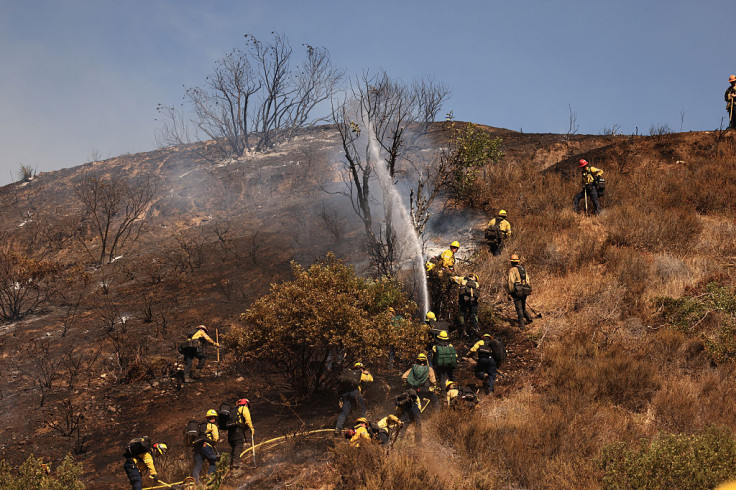
Firefighters, pilots, tree trimmers and construction workers are among the occupations considered most resistant to AI disruption because they depend heavily on physical abilities, real-time judgment and decision-making in unpredictable or dangerous environments, according to a Resume Now analysis.
Resume Now analyzed data from the U.S. Department of Labor's Occupational Information Network, or O*NET, focusing on stamina, static strength, reaction time, spatial orientation, time sharing and problem sensitivity.
Firefighters ranked No. 1. With a median annual wage of $59,280, the job requires a combination of physical strength, stamina, quick reflexes, spatial awareness and the ability to recognize danger during rapidly changing emergencies.
Airline pilots, copilots and flight engineers came in second and were the highest-paid occupation on the list, with a median annual wage of $232,140. Their work depends on navigation, multitasking, reflexes, and identifying potential risks during flight.
Manufactured building and mobile home installers ranked third, with median annual pay of $45,990, followed by tree trimmers and pruners at $50,960, as well as structural iron and steel workers at $62,780.
Rounding out the top 10 were oil and gas derrick operators, with a median wage of $58,620, mining roof bolters at $78,540, commercial pilots at $123,220, fishing and hunting workers at $61,130, and tree fallers at $52,100.
An August 2025 FlexJobs survey found that 62% of professionals would consider switching to a blue-collar job if it offered better pay and stability than their current position. But physical labor alone does not make an occupation resistant to AI, Resume Now career expert Keith Spencer told CNBC Make It.
Many of the jobs on the ranking require workers to assess situations that can change without warning, recognize emerging problems and decide what to do next. Workers in these occupations "have to be able to recognize problems, interpret changing conditions and make decisions" in unpredictable environments, Spencer said. The stakes can also be unusually high.
Firefighters, pilots, miners and other workers on the list routinely operate in situations where a mistake can endanger themselves or others. That means they need to react immediately when conditions change and ultimately take responsibility for their decisions. In a life-or-death situation, Spencer said, "you don't necessarily want an AI agent making that final call."
That does not mean workers need to pursue physically demanding or hazardous careers to protect themselves from AI disruption. Instead, Spencer said employees across industries can focus on developing capabilities that remain distinctly human, including creativity, versatility, critical thinking, adaptability, judgment and problem-solving.
At the same time, learning to use AI effectively could become an increasingly important complement to those abilities. "Regardless of the environment and the type of work that you want to be doing," Spencer said, adaptability, judgment and problem-solving "are going to continue being valuable."
© Copyright IBTimes 2026. All rights reserved.
- Recommended For You