

Trump Says Iran’s Economy Is Collapsing. The Rial, Inflation And Oil Revenues Paint The Picture.
Iran's currency has fallen to a record low while the IMF expects the economy to shrink 5.4% this year and inflation to approach 70%.

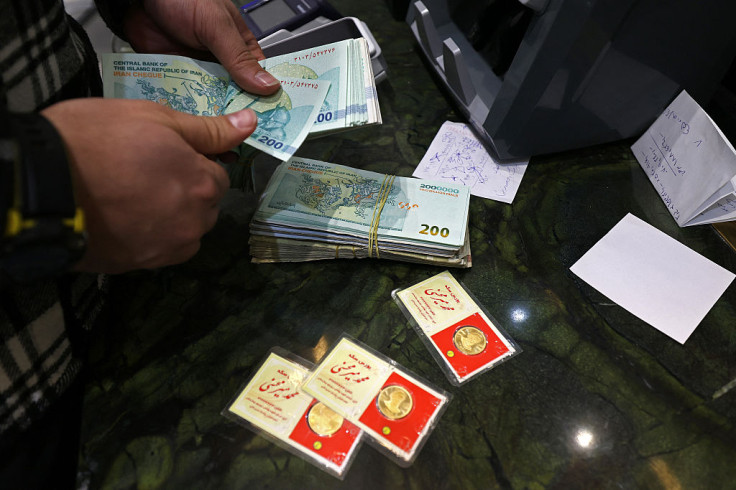
Iran's economic crisis continues to deepen after six months of war and mounting U.S. pressure, with its currency hitting a record low, inflation approaching 70% and oil revenues sharply reduced as President Donald Trump intensifies efforts to isolate Tehran.
The rial fell to about 2.02 million to the U.S. dollar on Monday, compared with roughly 1.65 million immediately before the war, according to the Associated Press. Treasury Secretary Scott Bessent also announced sanctions against nearly 60 Iran-linked individuals, entities and vessels and warned foreign governments and companies that continuing financial ties with Tehran could expose them to U.S. penalties.
Washington has spent months targeting the networks Iran uses to move money and export energy. The U.S. Treasury Department said earlier this month that sanctions had disrupted shadow-banking networks moving hundreds of millions of dollars for Tehran, while previous actions targeted shipping companies, digital-asset exchanges and businesses accused of helping Iran evade restrictions.
Oil, traditionally one of Iran's main sources of foreign currency, has been hit badly. The U.S. blockade imposed during the war sharply curtailed exports through the Strait of Hormuz, and Iranian Central Bank Governor Abdolnaser Hemmati said this month that the country was essentially no longer exporting oil, Axios reported. Iran has increasingly relied on taxes, non-oil exports and revenue accumulated before the war to finance government spending.
Ordinary Iranians are also dealing with rapidly rising prices. The International Monetary Fund projects average consumer-price inflation of 68.9% in 2026 and unemployment of 9.2%. Iran's Statistical Centre reported even sharper increases in July, with consumer prices up 87.9% from a year earlier and food and beverage prices rising more than 128%, according to Axios.
The IMF now expects Iran's economy to contract 5.4% this year, a dramatic reversal from expectations before the war. Its July World Economic Outlook update attributed the contraction partly to disruptions affecting oil exports and regional trade.
The deterioration is showing up in household spending as wages fail to keep pace with prices. Tehran taxi driver Ahmad Karimi told the Associated Press that his family had cut fruit, protein and leisure spending and was working weekends to cover basic expenses.
Iranian President Masoud Pezeshkian said last week that it might be better to end the war while Iran remained in a position of "strength and dignity," according to Axios. Tehran has nevertheless given no indication that it is preparing to accept Washington's terms.
© Copyright IBTimes 2026. All rights reserved.