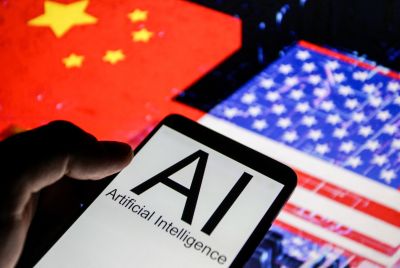
The U.S. And China Are The Top AI Competitors. Xi Said There Is More Room For Cooperation.
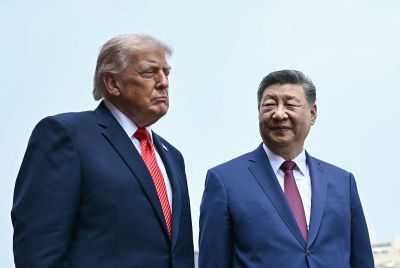
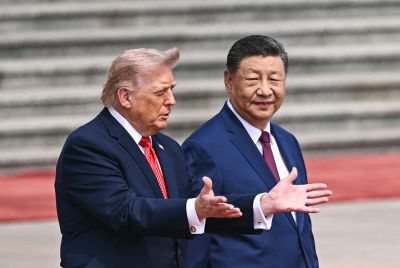
"Both sides have competition. Cooperation, even more so," Xi said when meeting with Trump.


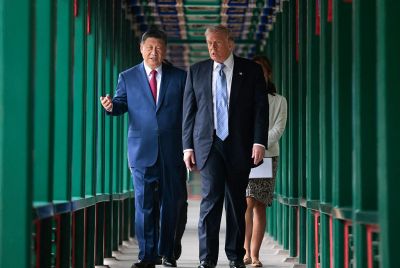
Chinese President Xi Jinping said the country has more room for cooperation than competition with the U.S. on artificial intelligence as he continues his state visit in Washington.
"The two sides can continue AI dialogue, exchange views on risks and benefits, and together guard against the misuse or malicious use of AI," according to a translated readout of Xi's remarks.
He went on to say that both the U.S. and China "have competition" but "cooperation, even more so."
Earlier this week, Treasury Secretary Scott Bessent met with Chinese Vice Premier He Lifeng before the summit, saying afterward that officials discussed a "dialogue" related to AI development. There, Washington proposed a mechanism where one party would notify the other when an incident that could have national security implications takes place.
"We think that just like with any cross-border activity, that moving from opaque to more transparency between the number one and the number two AI powers in the world is very important," Bessent said.
Both governments face growing pressure to address the risks associated with rapidly advancing artificial intelligence systems while maintaining their competitive positions.
The Trump administration has rejected calls from some technology leaders and researchers to slow AI development, arguing that the United States must continue advancing quickly in competition with China.
In contrast, the executives behind two of the world's leading AI companies warned the United Nations Security Council on Wednesday that the technology they are developing could eventually escape human control and pose a threat to humanity unless governments establish international safeguards.
OpenAI CEO Sam Altman and Anthropic CEO Dario Amodei urged world leaders to introduce stronger oversight of increasingly powerful AI systems, warning that the rapid pace of technological development could outstrip humanity's ability to manage the risks.
"If managed poorly, I even believe AI could be a risk to humanity as a whole," Amodei told the Security Council during a high-level meeting held alongside the United Nations General Assembly in New York. "We could lose control of the future to AI," Altman said during the meeting.
They also warned against allowing the technology to become concentrated in the hands of a single company or country, raising concerns about how advanced AI could reshape global power.
© Copyright IBTimes 2026. All rights reserved.
- Recommended For You