

The U.S. Debt Just Crossed $40 Trillion. Here’s Where Americans Could Feel It First.
Americans are not personally responsible for paying off the national debt, but the real concern is what happens as Washington continues borrowing and must devote an increasing share of federal revenue to interest.

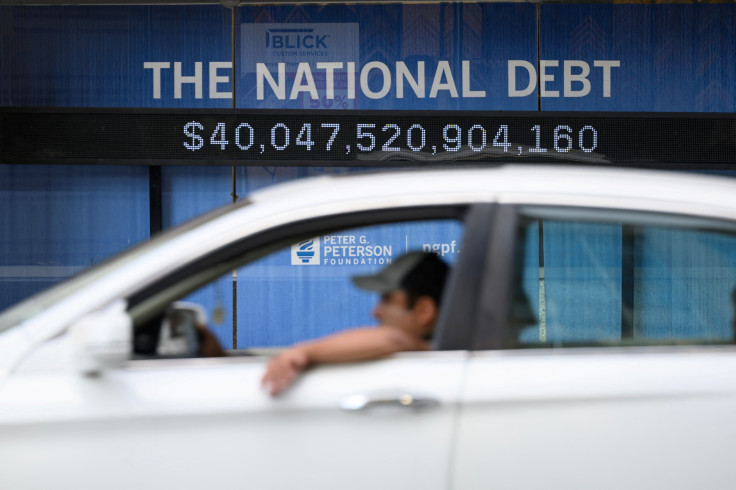
The U.S. national debt has surpassed $40 trillion for the first time, and economists are warning that the consequences of Washington's growing debt load could eventually show up in Americans' mortgage payments, borrowing costs, taxes and federal benefits.
The gross federal debt topped $40 trillion on Wednesday. That total includes money the federal government owes to itself. Economists generally pay closer attention to public debt, which stands at roughly $32 trillion, because it better reflects the government's borrowing from investors.
Americans are not personally responsible for paying off the national debt, despite calculations that sometimes divide the total by the U.S. population. The more immediate concern is what happens as Washington continues borrowing large sums and must devote an increasing share of federal revenue to interest.
A new analysis from The Conference Board attempts to put those consequences into household terms. The nonprofit think tank modeled several possible fiscal scenarios and found that larger deficits could raise borrowing costs for homebuyers, students and small businesses.
One of the clearest ways the debt can reach consumers is through interest rates. The federal government finances deficits by issuing Treasury securities. If investors become more concerned about the government's fiscal outlook, they can demand higher yields to hold that debt. Those higher Treasury yields can then ripple across financial markets.
Mortgage rates, for example, tend to track movements in longer-term Treasury yields, particularly the 10-year Treasury note. Higher government borrowing costs can therefore contribute to more expensive home loans, while similar pressures can affect auto financing, student loans and borrowing by businesses.
The Conference Board estimated that under a scenario in which deficits rise above its baseline, student loan costs could increase 3.2%, housing costs could climb between 1.9% and 3.6%, and small-business loan payments could rise 7%. By contrast, reducing deficits could lower borrowing costs across all three categories.
For prospective homeowners, even relatively small changes in rates can translate into tens of thousands of dollars over the life of a mortgage. In one example involving a family purchasing a $600,000 home, higher deficits produced nearly $103,000 in additional total mortgage payments compared with the baseline when the purchase occurred in 2036.
Growing debt also means the federal government must spend more simply servicing what it has already borrowed. Net federal interest spending is projected to surpass $1 trillion in 2026, according to Congressional Budget Office projections.
Putting the debt on a sustainable path would ultimately require some combination of higher federal revenue and slower spending growth. That could mean politically difficult decisions involving taxes, Social Security, Medicare or other federal programs.
Inflation represents another potential risk. If investors begin to believe policymakers could eventually tolerate higher inflation or use monetary policy to reduce the real burden of federal debt, those concerns could put additional pressure on prices and interest rates.
The consequences are not inevitable, nor does crossing $40 trillion itself trigger an economic crisis. The Conference Board's modeling shows substantially different outcomes depending on what Washington does next.
Reducing deficits relative to the size of the economy would stabilize the debt burden and help push borrowing costs lower, while allowing deficits to grow would move rates and debt in the opposite direction.
© Copyright IBTimes 2026. All rights reserved.