

U.S. Intelligence Believed Iran’s Former Supreme Leader Opposed Nuclear Weapons. His Successor May Not
Mojtaba Khamenei took power after his father and predecessor Ali was killed by an Israeli strike aided by U.S. intelligence.

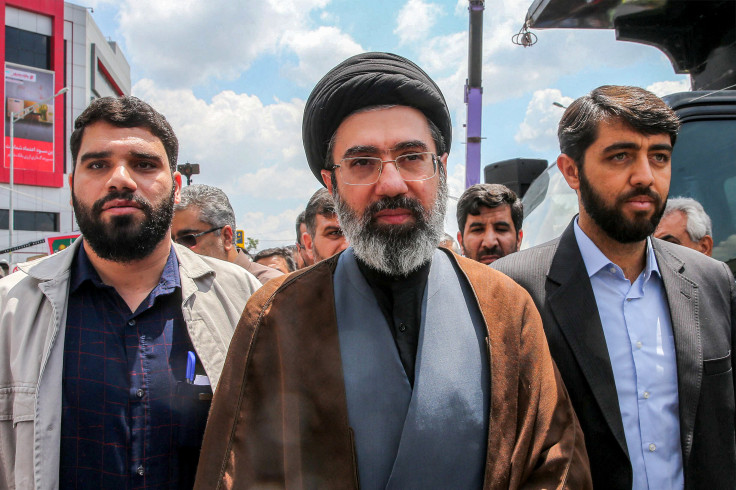
U.S. intelligence agencies believe Iran's new Supreme Leader, Ayatollah Mojtaba Khamenei, is significantly more willing to pursue nuclear weapons than his father and predecessor, Ayatollah Ali Khamenei.
According to a report by The New York Times, American intelligence officials assess that Mojtaba, who took power after his father, Ali, was killed during an Israeli strike aided by U.S. intelligence, has shown greater openness to developing advanced nuclear weapons, even though he has never publicly endorsed such a program.
The assessment comes at a pivotal moment, with the White House considering additional military action against Iran amid renewed tensions in the Middle East. Officials believe the younger Khamenei's views could strengthen the case for further pressure if intelligence continues to indicate Tehran may eventually revive its nuclear ambitions.
For decades, U.S. officials maintained that while Iran sought the capability to build a nuclear bomb, Ayatollah Ali Khamenei's long-standing religious prohibition, or fatwa, against nuclear weapons represented a genuine obstacle to crossing that final threshold. That position now appears far less certain under the country's new leadership.
According to officials familiar with the intelligence assessments, Mojtaba Khamenei has privately demonstrated less hesitation about weaponization than his father. Most of the intelligence supporting that conclusion, however, predates the recent war between Israel, the United States, and Iran.
American officials say the new supreme leader was seriously injured during the opening phase of the conflict and has since kept a low public profile, limiting communications and public appearances out of concern he could become the target of another airstrike.
While intelligence agencies believe he remains Iran's ultimate political authority, they also assess that he has yet to consolidate the same level of influence his father exercised during more than three decades in power.
The report also highlights growing concern over Iran's efforts to preserve critical elements of its nuclear infrastructure despite repeated U.S. strikes. Officials told the newspaper that Tehran has relocated at least some centrifuges to a heavily fortified underground facility known to U.S. intelligence as Pickaxe Mountain, a site believed to be buried deeper than Fordo and beyond the reach of America's most powerful conventional bunker-busting bombs.
The movement of equipment was reportedly detected by Israeli intelligence and appears aimed primarily at safeguarding Iran's nuclear assets rather than immediately restarting uranium enrichment. U.S. officials stressed they have seen no evidence that Iran has resumed active enrichment or reconstruction efforts at this time.
President Donald Trump has repeatedly pointed to the success of U.S. strikes carried out in June 2025 against the Fordo, Natanz and Isfahan nuclear facilities, saying they devastated Iran's nuclear infrastructure. However, early intelligence assessments concluded the attacks delayed the country's program by only several months rather than destroying it entirely.
American intelligence also believes Iranian officials have deployed additional ground forces around Pickaxe Mountain to deter any potential U.S. commando operation targeting the underground complex. Trump recently referred to the facility as "a possible target," while noting that U.S. intelligence has not detected active nuclear work there.
According to U.S. officials cited by The New York Times, Iranian leaders who previously argued that only nuclear weapons could prevent future American or Israeli attacks now hold greater influence following the war.
Rosemary Kelanic, director of the Middle East program at the Defense Priorities think tank, told the newspaper that recent military actions could ultimately increase the likelihood of nuclear proliferation rather than reduce it.
"Iran now has a much greater incentive to weaponize to deter future U.S. or Israeli attempts at collapsing the regime or the Iranian state," Kelanic said, adding that the conflict could prove counterproductive to its stated objective of preventing Iran from obtaining nuclear weapons.
© Copyright IBTimes 2026. All rights reserved.