Yemen’s Houthis Reportedly Met With U.S. Officials After Making Key Gains. They Promised Not To Target U.S. Ships.
The Iran-backed group has taken key islands in the Red Sea and Yemen.


Washington officials met with Houthi officials, who told them that they won't target U.S. or Israeli ships, according to a new report.
Reuters detailed that the meeting took place at the U.S. Embassy in Oman, and that Muscat helped organize the meeting. It went on to note that Washington has held negotiations with the group despite designating it as a "foreign terrorist organization" in march 2025.
The parties signed a ceasefire in May of last year after after the U.S. conducted a two-months long campaign against the Houthis to prevent them from keep targeting ships in the Red Sea. In the Oman meeting, representatives told Washington that they intended to abide by the ceasefire and would only target Saudi ships.
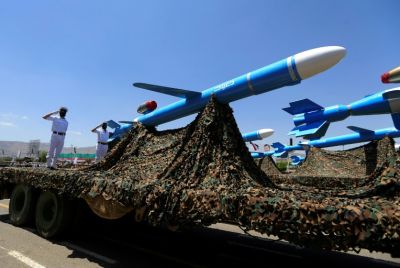
Hostilities between Saudi Arabia and the Houthis have continued in the meantime. Riyadh said on Wednesday that it intercepted and destroyed a Houthi drone before it could enter the airspace over Mecca, calling it a "deliberate act intended to provoke the feelings of millions of Muslims." A spokesperson for the Saudi-led coalition that has been clashing with the Houthis since 2015 said the holy city for Islam is a "red line." The Houthis rejected the claim, calling it a "worn-out lie that has been used before and no longer fools anyone."
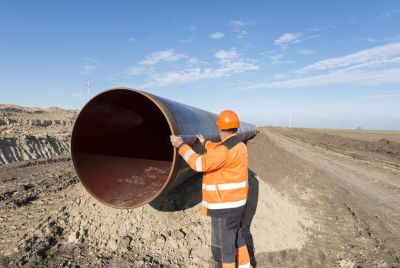
Riyadh's exports have been affected by the conflict. Reuters detailed that loadings at the port of Yanbu had been suspended and the country cancelled some deliveries to European customers. The country's key East-West pipeline has also been shut down since last Friday after sustaining multiple hits.
The development deepened concerns about oil flows through the Middle East, but they were somewhat eased by Riyahd's offer of ship-to-ship oil transfers off Oman's Sohar port. Also, U.S. Energy Secretary Chris Wright said the repair of the pipeline will take days, rather than weeks, to resume pumping.
Speaking to CNBC, Wright said "this will be a brief and temporary interruption" that will be "measured in days."
Riyahd's ability to reopen the pipeline will be key for the already strained global energy industry, considering that about 4% of the global oil supply flows through it.
Wright's assessment differs from a source familiar with the matter who earlier this week told Reuters that that Riyadh could take up to six weeks to fix the pipeline if it doesn't get hit again. Another estimate claimed that the work could take less and partial pumping could resume as well.
© Copyright IBTimes 2026. All rights reserved.
- Recommended For You