

GE's Immelt Overcoming Welch's Legacy
COLUMN: Immelt Didn't Want to Be Another Phil Bengston
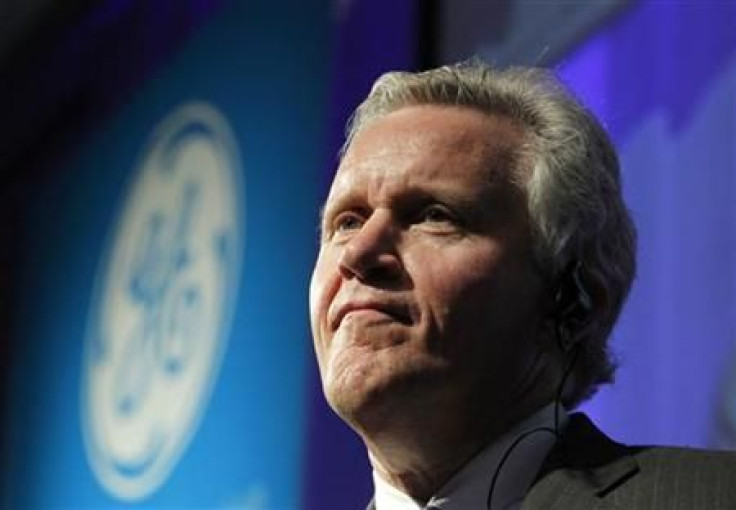
I once mentioned to GE chairman and CEO Jeff Immelt the coach of the Green Bay Packers who followed Vince Lombardi, without saying the name.
Phil Bengston, Immelt said, laughing.
He knew exactly where I was going.
Bengston followed Lombardi, a coaching legend. Immelt followed Jack Welch, a leadership legend.
Both inherited similar problems. By the time Lombardi retired as coach of the Green Bay Packers, after leading the team to a 33-14 win in Super Bowl II over the Oakland Raiders and building a dynasty, the franchise had aging players and was in need of a complete makeover. Fans were so used to Lombardi's winning ways when everything was right Bengston had little chance of survival.
He lasted three seasons.
By the time Jack Welch retired as GE's CEO in 2001 the company had maximized all it reasonably could from the stock price, trading at a price-to-earnings ratio of 34, and cash producing businesses that had been ridden hard into Welch's retirement party sunset.
Immelt knew in succeeding Welch he was potentially to GE what Bengston was to the Green Bay Packers, but he planned to get a different result. Immelt, knew, however, the process of winning would take time. He inherited, after all, a company and a stock that had peaked in most every way.
GE had some strategies established under Welch that were still working, like leverage in the companies financial arm which helped pump up earnings to surprise and delight investors.
Immelt knew that had to change, but he also knew it could not happen overnight, or even in the course of one year. The stock was having enough trouble keeping up with its lofting price-to-earnings ratio amid the end of a high-flying stock market and 9/11 repercussions that struck the company days after Immelt took over.
Immelt Inherited Peak Cycle Performance
Some of GE's once-stalwart cash producing business, like its plastics division, had tired legs at the finish line, Immelt said, and the conglomerate's mix needed to be changed first. So he went about a massive, long-term plan of reshaping GE the same way Welch had done when he had taken over two decades before.
But Welch had taken over when the company was in the bottom of an economic cycle. He took over GE in a recession, not the height of a bubble. Immelt got the job right after the end of the high-flying 1990s, a era which crowned CEOs with mythical, God-like crowns, and Welch was bestowed the biggest of them all.
Despite the challenges, Immelt was managing to get the plan done in many respects, one year at a time. The company's stock price was right-sizing according to the market's more measured gauge. But probably nobody could have avoided that, considering the lofty levels GE traded it upon Welch's retirement. -- not even Welch himself.
But Immelt made one big mistake, that might not have ever registered in a big way if not for a confluence of events. The Bear Stearns collapse. The fall of Lehman Brothers. The credit crisis. The global real estate meltdown.
Suddenly, GE held expensive global real estate and more than $100 billion in short-term commercial paper rolling over and nobody wanted to touch either of them. By over-leveraging GE's finance arm when the getting was good, GE was at the brink of major disaster when the global economic bubble burst.
Overcoming Mistakes
Immelt had known before the meltdown the company needed to ween off the leveraged risk from finance that was begun under Welch. They'd run that race for too long, jeopardizing GE's coveted AAA credit rating. But Immelt had tried to build up the company's infrastructure business first, so the transition could happen more seamlessly.
Fate does not always play according to our best laid plans, however. If not for the U.S. government's commercial paper backstop established during the meltdown, GE might have been in real trouble. Since GE found a backstop for its commercial paper exposure, Immelt's challenge simply became executing the reshaping plan at a faster pace.
Some observers doubted, though, as GE's credibility got stained. They wondered if GE did not have some sort of black box in its finance arm that might clobber earnings for years to come.
Immelt argued GE had no black box. He admitted mistakes, as any good leader must do, and GE more quietly if not humbly went about its business in making the company a 21st century sustainable and reliable profit engine.
Immelt Optimistic Again
There's still a lot of work to be done on the plan, but Immelt's optimism given Friday along with the company's solid second quarter earnings is perhaps his most notable bullish sentiment we've heard in a couple of years. Finally, it seems the plan is taking hold and the economic forces beyond the company's control are subsiding.
GE's finance arm is faring well. And the company's global industrial businesses -- Immelt's signature -- are faring well. GE's stock is even making a push to cross the magical $20 barrier so many investors are looking for once again.
But the biggest story about GE's progress relates to Immelt himself. The company's second quarter earnings reveals GE is advancing along a solid and redeeming path, and Immelt is driving that car. Nearing his 10th anniversary as GE's leader, he's got the company well positioned for strong results throughout the rest of this decade.
Bengston never got the chance to show he could win at Green Bay. But Immelt has himself, and GE, in a position to show he can win, just like the legendary leader he followed.
David Magee is the author of 12 books, including Jeff Immelt and the New GE Way.
© Copyright IBTimes 2024. All rights reserved.
-
Panama Papers Law Firm Boss Ramon Fonseca Dead
-

Pandemic Agreement Talks Go To The Wire
-

Low-cost MRI Paired With AI Produces High-quality Results
-

School's Out: How Climate Change Threatens Education
-
Hong Kong Demands Online Platforms Remove Banned Protest Song
-
2023 'Year Of Record Climatic Hazards' In Latin America: UN
-
Crypto Community Buzzes As Grayscale Withdraws Ethereum Futures ETF Application
-

Mongolia's Wildlife At Risk From Overgrazing
-
Milking Venom From Australia's Deadly Marine Animals
-

TikTok Challenges Potential US Ban In Court


