

Obama Jobs Bill Seeks to Put Veterans to Work
For all the challenges the average unemployed American faces, returning veterans often have it worse.
The unemployment rate among veterans who have served since Sept. 11, 2001 stood at 13.3 percent in June, eclipsing the nation's unemployment rate by almost 4 percent. President Barack Obama has taken notice. A provision in the president's jobs bill would provide tax incentives for businesses that hire veterans and would establish a program to train veterans in the skills they need to re-integrate into a civilian workforce.
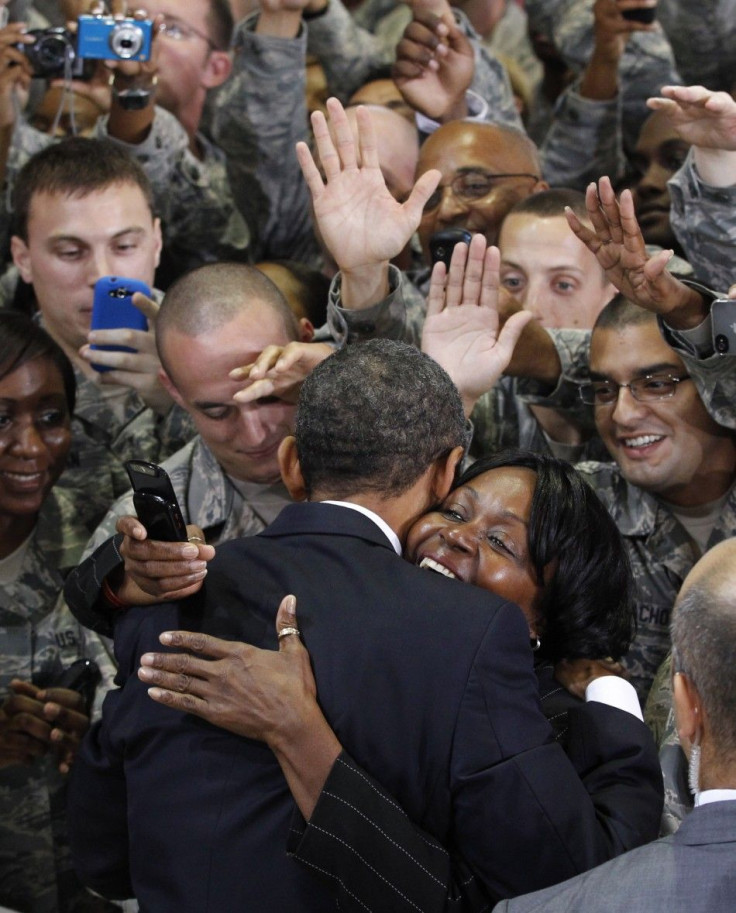
Standing up for our veterans is not a Democratic responsibility or a Republican responsibility. It is an American responsibility, the president told an audience at Joint Base Langley-Eustis in Hampton, Virginia on Wednesday.
Seeks Tax Credit Extension
The provision would extend an existing Wounded Warriors tax credit for hiring veterans with disabilities incurred during service and would add a new credit, the Returning Heroes tax credit. Both credits are worth more for veterans who have been without work for more than six months, an effort to diminish the burden of long-term unemployment. The Returning Heroes credit would be worth up to $2,400 for every short-term unemployed hire and $4,800 for every long-term unemployed hire, and the Wounded Warriors credit would have a ceiling of $4,800 for the short-term unemployed and $9,600 for the long-term unemployed.
Many small businesses are reluctant to hire veterans who might have to redeploy, particularly those in the National Guard or in the reserves. The tax incentive could help lure these businesses back by offsetting the cost of losing employees, according to Joe Sharpe, director of the American Legion's economic division.
Many of these individuals come from rural areas and they work for small companies, and when you're deployed a lot of times that brings financial hardship to that company, Sharpe said. That's a financial burden and some companies are beginning to shy away from hiring individuals these individuals.
Many returning veterans are also at a disadvantage compared to the rest of the workforce - while they were leading patrols in Afghanistan, their civilian peers were networking, gaining experience or attending school. The GI bill offers an opportunity for veterans to obtain an education, but for the high proportion of soldiers returning to a spouse or children finding a job can take precedence over getting a degree.
There are issues, especially with the young veterans of Iraq and Afghanistan, of being behind their peers in education and civilian employment experience, said Nathan Smith, executive director of the organization Hire Heroes USA. The education piece is big because with the economy the way it is it's a more competitive job market, so a lot of times companies will post a job that requires a certain academic attainment level.
Losses in Key Sectors Hurt Veterans' Job Prospects
A report by the Senate's Joint Economic Committee noted that prior to the onset of the recession, veterans were more likely to be employed in industries such as construction, manufacturing and transportation that were decimated by job losses.
These veterans also were less likely to be employed in education and health services, the only major sector that added jobs during the Great Recession, the report read.
That's not to say that veterans lack skills that make them employable. Often, the issue is relaying to employers how their experience in the military would serve a company well. That can be more abstract skills like leadership or risk management, or it can be something more concrete. Mike Haynie, executive director of the Institute for Veterans and Military Families at Syracuse, recalled talking to a young man who had operated a tank in the Marines. His resume said simply tank driver, making no mention of his experience with the complex hydraulic and electronic systems that allow a tank to function.
Operating a tank is about as high tech as high tech gets, Haynie said. But that young man didn't see a path to represent the skills he had in that way.
In addition the tax credits, Obama's legislation includes a directive for the Department of Labor, Department of Defense and Department of Veteran Affairs to develop job readiness programs, what the president has called reverse boot camp. Haynie said that while the tax credits have gotten more coverage, the job training piece is absolutely critical.
The idea of being able to help veterans understand how to socialize themselves, if you will, into a civilian work culture is absolutely central, Haynie said. The idea is helping them understand how to assimilate into civilian corporate culture so they can be successful. We don't want to just get veterans jobs; we want them to be able to retain them. Not just a six month experiment with a job but a career.
Many employers also have skewed perceptions of what military service involves, according to Lisa Rosser, a military recruiting expert at The Value of a Veteran.
It's a difficulty with the military veterans translating what they did in the military, especially guys who served in the combat divisions and have a lot of trouble relaying how that has any practical application to civilian position, Rosser said. On the flip side, the civilian employers don't have any real appreciation for what we do and assume all we do is shoot and blow up things. They don't realize we have accountants and HR professionals and anything else you could need.
You can contact the reporter at [email protected]
© Copyright IBTimes 2026. All rights reserved.