

How Sauvignon Blanc Saved a Nation

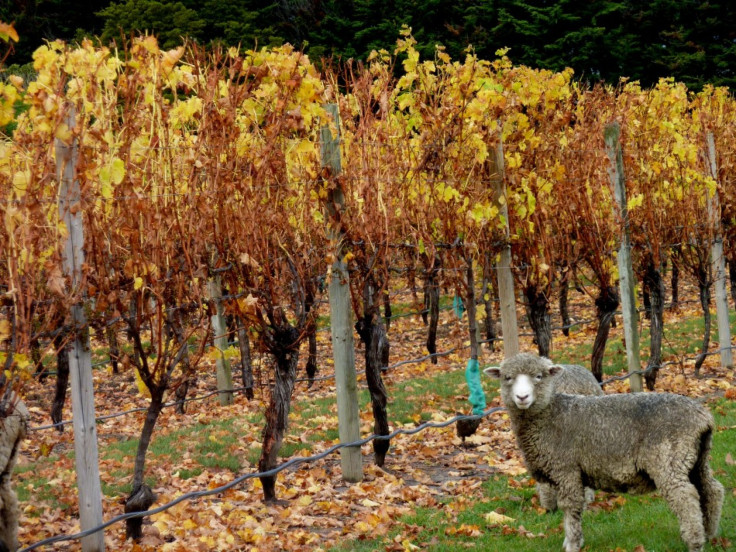
Ask any old farmer about the state of New Zealand agriculture and the conversation will inevitably trickle back to '73, the year the Brits abandoned us. New Zealanders love to talk about the betrayal of their mother country and the crisis that followed.
The Kiwis blindly followed the English for years. As one farmer put it, my grandfather survived WWI fighting for the Brits, and then I practically starved because of them.
It's a little known fact that New Zealand suffered more casualties per capita than any other country fighting in the war, as the Brits deployed Anzacs to the murky fringes of Europe. While there's no definitive proof of this, the amount of casualties suffered by Kiwi soldiers in WWI is certainly astounding.
In 1973, when the United Kingdom entered into the European Economic Committee and effectively ended longstanding trade terms with New Zealand, the Kiwis were left with their jaws open and their pockets empty.
The effect on the meat and dairy industry was devastating. Farmers were left feeding racks of lamb, destined for the finest restaurants in London, to their dogs. Changes were needed. A restructuring of the farming and agricultural landscape led to a diversification of the land tending towards crops with potentially higher returns. Thus out of these hard times, New Zealand's viticulture industry was born.
A wine region is like a brand. When you order a Chardonnay, you're thinking Napa. When it's Riesling you're after, something Alsace would be nice. When you're going for a Sauvignon Blanc, you had better hope it's from Marlborough.
Sauvignon Blanc is an earthy, grassy, white wine originating in the Bordeaux region of France. In the Marlborough region, sandy soils over slate shingles became the most desirable locations for plantings due to good drainage of the soil and poor fertility, encouraging vines to concentrate flavors in lower yields.
Like Napa Valley's Chardonnay that opened critic's eyes to American vines, so too did Marlborough's Sauvignon Blanc for New Zealand twenty years later. The Kiwi wine industry had its eureka moment in the mid-nineties with an audacious claim from British wine critic Oz Clark that Sauvignon Blanc from this small island nation on the far side of the earth was arguably the best in the world.
Oz later wrote in his Wine Atlas of the impact of New Zealand's Sauvignon Blanc: No previous wine had shocked, thrilled, and entranced the world before with such brash, unexpected flavors of gooseberries, passion fruit, and lime, or crunchy green asparagus spears ... an entirely new, brilliantly successful wine style that the rest of the world has been attempting to copy ever since.
Thus, the New Zealand wine industry commenced its steady growth as the nation embraced a wine culture.
New Zealand's hallmark wine region lies on the northern plains of the South Island, just below the Marlborough Sounds. The Sounds are one of the country's most charming natural features. Marble water meets the bunchy, bushy hills of the sounds' isthmuses and islands as tiny ducks break through reflections below, leaving delicate wakes in the placid water.
It's a landscape of daze-inducing serenity. The protected terrain, virtually inaccessible by car, is home to the country's most posh hike, the Queen Charlotte Track. The Queen Charlotte Drive, a scenic road on the edge of the Sounds to the port town of Picton, is the perfect preview of the region and an ideal gateway from the flat expanse of the nearby vineyards - a mere thirty minutes south.
Most vineyards in Marlborough pattern the sides of New Renwick, Old Renwick or Middle Renwick Roads, connecting the agricultural city of Blenheim with the picturesque township of, you guessed it, Renwick. If not entirely based here, most internationally marketed wines in New Zealand at least grow a portion of their grapes in Marlborough.
The big guys like Montana, Villa Maria, Cloudy Bay, and Saint Clair all have plots scattered throughout the land. Their cellar doors for tastings loom at the end of winding roads whose manicured entry gates and sleek signs are vaguely reminiscent of the headquarters of a Fortune 500 Company.
With a new vineyard offering complementary tastings around every corner, one quickly becomes drowsy and overly enchanted with the region. Be it a short day trip or a week in the region, one thing becomes abundantly clear in New Zealand's premiere wine region:
Winos in Marlborough hate Sauvignon Blanc.
They're over it. Try the Riesling! Try the Chardonnay! Try our Pinot Noir! Nobody wants to talk about Sav Blanc. Sauvignon Blanc may be what draws people to Marlborough - the grape that saved the nation - but it's the Riesling and Chardonnay that will bring them back.
Sauvignon Blanc is bottled and exported to pay the bills and, although these wines remain critically lauded, some experts point to a drop in quality due to the dramatic rise in demand. The other wines rounding out each Marlborough vineyard's selections seem to give the winemakers a chance for their own creative expressions - and there's something to be said for a grape that's grown out of necessity, and a grape that's grown out of passion.
In 1996 there were 238 vineyards in New Zealand. In 2011 that number has almost tripled with Sauvignon Blanc representing more than 50% of the wine production in the country. Production is increasing, but so too is the quality of many labels thanks to greater vine maturity and adaptation of new viticultural and winemaking methods to bring out the best in the country's flagship wine.
So go to your supermarket and try some New Zealand Sauvignon Blanc, but if you're lucky enough to find a Riesling or Chardonnay, give it a swirl.
READ ALSO:
The Best Kept Secrets of New Zealand's South Island
The Best of New Zealand's North Island
The City of Blue Ice: Exploring New Zealand's Franz Josef Glacier
© Copyright IBTimes 2024. All rights reserved.
-

Senate Prevents Potential Air Travel Chaos, Reauthorizes FAA For Five-Years
-

Panama Papers Law Firm Boss Ramon Fonseca Dead
-

Pandemic Agreement Talks Go To The Wire
-

Low-cost MRI Paired With AI Produces High-quality Results
-

School's Out: How Climate Change Threatens Education
-

Hong Kong Demands Online Platforms Remove Banned Protest Song
-
2023 'Year Of Record Climatic Hazards' In Latin America: UN
-

Crypto Community Buzzes As Grayscale Withdraws Ethereum Futures ETF Application
-
Mongolia's Wildlife At Risk From Overgrazing
-
Milking Venom From Australia's Deadly Marine Animals


