

U.S. Auto Sales Grow for Third Year, with 'no Clunkers'
A large part of Jesse Toprak's job as the chief automotive industry analyst for TrueCar.com is to advise consumers on which cars to target -- and the clunkers to avoid.
In 2011, though, something changed within the U.S. automotive industry. There are very few, if any, clunkers.
This is not just a rosy statement, Toprak said in a phone interview with the International Business Times on Tuesday. The reality, I think, is that there are really no bad cars anymore.
I can't say there are any cars where I would tell you, 'Don't buy that. That's going to fall apart.' There's heightened competition, and the quality of cars has improved so immensely that there are no clunkers anymore.
Toprak's sentiments have translated into another modest yet solid improvement for the U.S. auto industry. TrueCar.com, an auto pricing site, said sales for the year will stand around 12.8 million. That's after adding December sales -- which will be fully released next week -- expected to be around 1.26 million new units.
Toprak and other analysts gave a few reasons for the industry's continued improvement, about two years after it hit rock bottom in 2009 and the U.S. government bailed out members of the industry. One is consumers' pent-up demand, which has finally reached some kind of breaking point. Another is key correlations with jumps in the Dow Jones Industrial Average, new housing starts and consumer confidence.
But chief among the reasons, analysts say, is the improved quality of the vehicles U.S. manufacturers have to offer.
You have to give a lot of credit to automakers here, Toprak said. They're producing great products that consumers are willing to buy. At the end of the day, it's the car that sells. It's the product that sells. The collection of cars offered in U.S. dealerships today is the best we've seen so far.
Automotive analysis Web site Edmunds.com forecasts a similar moderate but solid increase in 2012 new vehicle sales in the United States, jumping from about 12.8 million this year to 13.6 million in 2012.
That would mark the third year of increase in the auto industry since sales plunged to drastic levels and members of the Big Three in Detroit -- Chrysler, Ford and General Motors -- flirted with bankruptcy.
Sales will rise due to the continued release of pent-up demand from buyers who have delayed new vehicle purchases since the recession, supplemented by the recovery of deferred sales from this past summer when buying conditions were less favorable post-earthquake, wrote Lacey Plache, Edmunds.com's chief economist, referring to the March 11 Japanese earthquake and tsunami.
In 2009, sales in the U.S. reached the depths of around 10 million sold vehicles. From most estimates, it will have leaped to about 3 million more on an annual basis by the end of next year. Along with the more than 1.4 million jobs it saved, according to the Center for Automotive Research.
This rebound provides some sense of justification for the government's $80 billion bailout, said Aaron Bragman, an analyst at IHS Automotive. He echoed similar sentiments held by Steve Rattner, the former head of the U.S. auto task force, who called the bailout a sweeping success.
Bragman said the sales reflect the release of repressed demand that went hand in hand with a better overall attitude about the economy. Over the past two years, consumers didn't have the ability to take on the debt to buy new cars. They didn't have the credit, either. Now, though, lenders are starting to revert to drawing customers' attention with enticing offers.
We're all in a little bit better frame of mind, Bragman said of the economy in an IBTimes phone interview Tuesday. It's, 'How fast can it recover,' rather than, 'How much worse can it get?'
And attitudes about the economy go hand in hand with the auto industry. Each of the Big Three has gained in market share this past year. They have gotten to the point of pre-recession hiring levels. And they have revamped their offerings, refurbishing and refreshing newer models and introducing highly anticipated, high-quality models.
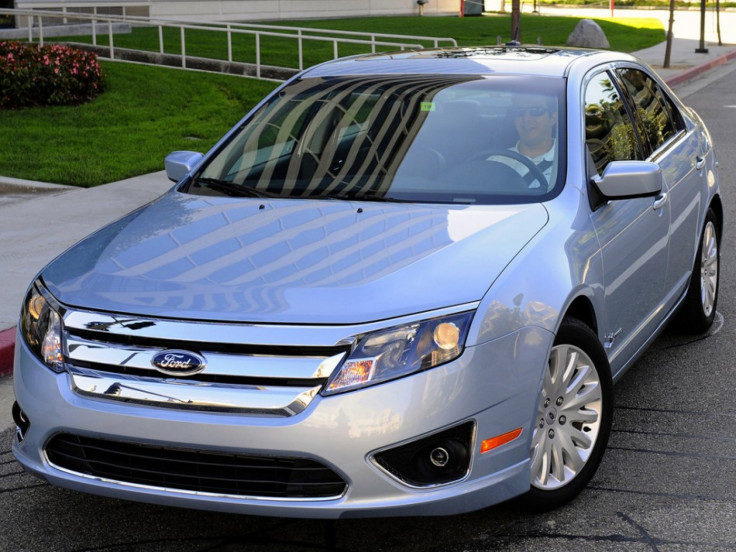
Bragman said the key for U.S. automakers lies in focusing on production of more compact cars. He cited the revamped Ford Fusion and Chevy Malibu as examples of a push.
There's been a big pushback for midsize, compact cars, using designs and platforms international in origin, Bragman said.
The success stories continue across the board, but the company with the most impressive rebound is Chrysler, which the auto task force said was not viable as a stand-alone company in 2009. In November, the company hit its best sales numbers since 2007 and sales grew nearly 45 percent from the year prior.
Chrysler, owned by Italian automaker Fiat SpA, will look to expand on the premise of better offerings that has gotten it back to respectability next month at the 2012 North American International Auto Show in Detroit. There, it will debut the highly anticipated Dodge Dart.
Bragman said the success of vehicles like the Dart will determine if U.S. automakers like Chrysler can move past the recovery stage and become major players in a global sense.
We're starting to see products that will determine whether Chrysler will have a future, Bragman said. Those will be ones that come in conjunction with Fiat.
© Copyright IBTimes 2024. All rights reserved.
-

Senate Prevents Potential Air Travel Chaos, Reauthorizes FAA For Five-Years
-

Panama Papers Law Firm Boss Ramon Fonseca Dead
-

Pandemic Agreement Talks Go To The Wire
-

Low-cost MRI Paired With AI Produces High-quality Results
-

School's Out: How Climate Change Threatens Education
-

Hong Kong Demands Online Platforms Remove Banned Protest Song
-

2023 'Year Of Record Climatic Hazards' In Latin America: UN
-

Crypto Community Buzzes As Grayscale Withdraws Ethereum Futures ETF Application
-

Mongolia's Wildlife At Risk From Overgrazing
-

Milking Venom From Australia's Deadly Marine Animals


