

As China Urbanizes, India Remains Overwhelmingly Rural
ANALYSIS
China just reached a historic demographic milestone – the vast country now has more people living in cities than in the countryside.
The Chinese National Bureau of Statistics (NBS) stated that about 691-million people – or 51.3 percent of the nation’s total population -- are now city-dwellers, versus 657-million people living in the rural regions.
The data underscores the massive shift in China's economy and society over the past two decades as millions of rural migrant workers abandoned their farms to flock to large cities in search of plentiful jobs. Without the participation of a huge army of cheap labor, China's economic emergence would likely not have occurred.
But what about India, China's principal rival in Asia and which is also acclaimed for its growing economic dominance?
India's story is far different from China.
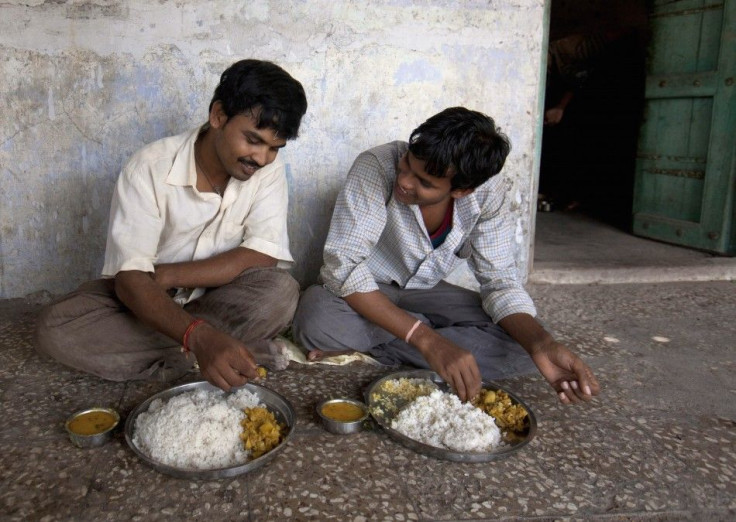
According to the latest Indian census data, the vast majority of the nation's population remains in rural villages.
The latest survey indicates that 69 percent of India's population (some 833-million people) still live in rural areas.
Still, rural Indians are indeed migrating towards cities, but not at the same rate as their Chinese counterparts. In 2001 (during the last census study), 72 percent of Indians lived in the countryside.
Moreover, the urban population growth rate exceeds the rural rate for the first time in decades, suggesting the migration toward large cities is irreversible.
In addition, literacy rates are increasing significantly in both rural and urban areas of India. As of 2011, 68.9 percent of rural folk can read and write, versus 58.7 percent just ten years earlier. Among city-dwellers, 85.0 percent are now literate, up from 80 percent in 2001.
India is nonetheless behind China in this respect – according to UNICEF, literacy among Chinese adults runs at an impressive 94 percent. China also has a higher life expectancy (73 years versus 64 for India).
However, Sophie Mitra, assistant professor of economics at Fordham University in Bronx, NY, counters that the higher percentage of Chinese living in urban settlements does not necessarily mean that India is falling behind its giant neighbor economically.
“It is now well established that development is a broad process, involving improvements in different aspects of people's lives, and not only in terms of increased income” she said
“The United Nations Human Development Index (HDI) reflects a broader understanding of development by measuring achievements in income as well as health and education. A country could be mostly urban and yet score low on the HDI. This is for instance the case of Gabon in Africa.”
Indeed, in Gabon, only 14 percent of the population live in rural areas, although the country ranks quite low in terms of the HDI.
Mitra further explains that urbanization often takes place as an economy develops and goes through a structural transformation with a move from farm to non-farm activities.
“The latter tend to be located in or near urban areas [industries],” she said.
“People migrate from rural to urban areas with the expectation of find higher wages in urban areas.”
However, urbanization can also happen without economic development, she adds.
“There is for instance some evidence in Africa that urbanization is sometimes residential in nature and not driven by economic development,” she explained.
“So it can be driven by factors other than a shift in production based activities to urban areas. For instance, it can be driven by migrant’s remittances.”
Meanwhile, regardless of their respective differences, China and India will surely continue to drive global economic growth for the foreseeable future. But they will, of course, take alternate paths toward prosperity – China is, after all, a Communist state where the government controls virtually all aspects of economic activity, while India is (more or less) a capitalist democracy.
Also, it is important to note that in Indian culture, the rural village remains the heart and soul of the country. Even is migrants leave their remote villages for the big city (or even emigrate out of India entirely), their emotional and cultural ties to their ancestral villages are unbreakable. It would be impossible to fathom the rapid disappearance of Indian rural life.
© Copyright IBTimes 2024. All rights reserved.
-

Panama Papers Law Firm Boss Ramon Fonseca Dead
-

Pandemic Agreement Talks Go To The Wire
-

Low-cost MRI Paired With AI Produces High-quality Results
-

School's Out: How Climate Change Threatens Education
-

Hong Kong Demands Online Platforms Remove Banned Protest Song
-
2023 'Year Of Record Climatic Hazards' In Latin America: UN
-

Crypto Community Buzzes As Grayscale Withdraws Ethereum Futures ETF Application
-

Mongolia's Wildlife At Risk From Overgrazing
-

Milking Venom From Australia's Deadly Marine Animals
-

TikTok Challenges Potential US Ban In Court


