Food Prices Keep Squeezing Americans. A New Report Says Groceries Affordability Is the Nation’s Biggest Challenge
Consumer prices eased in June overall, yet food costs still increased, leaving grocery prices about 3% higher than a year earlier.


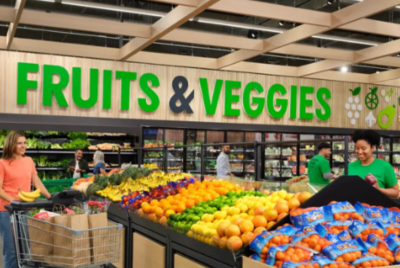
Rising grocery prices remain the biggest financial concern for Americans, outpacing housing and healthcare costs, as persistent inflation continues to squeeze household budgets across income levels, new research shows.
A report from the McKinsey Institute for Economic Mobility and the W.K. Kellogg Foundation found that affordability has become the "defining challenge" for economic mobility in the United States. The survey of 30,000 Americans across income groups showed that 90% of respondents identified groceries and food prices as one of their biggest financial worries.
"We face a common challenge, and that is the rising cost of living," John-Paul Julien, partner at McKinsey & Company and cofounder of the McKinsey Institute for Economic Mobility, told CNBC. "Although people are experiencing the economy differently, there is this shared feeling that rising costs are making it difficult to get ahead."
Inflation has moderated from its post-pandemic peaks, but food prices continue to climb. According to the latest Consumer Price Index, consumer prices eased in June overall, yet food costs still increased, leaving grocery prices about 3% higher than a year earlier.
The "food at home" index, which measures grocery store prices, also posted another annual increase. Investors and consumers are now awaiting the Bureau of Labor Statistics' July inflation report, scheduled for release on Aug. 12.
The pressure at supermarket checkout lines has become so persistent that many households are increasingly relying on borrowed money to pay for necessities. A separate analysis by the Urban Institute found that millions of Americans turned to credit cards and installment financing to cover grocery purchases in 2025.
The study, based on responses from more than 10,000 adults in the organization's December 2025 Well-Being and Basic Needs Survey, paints a picture of households balancing higher food costs with growing debt.
35% of adults said they paid for groceries using a credit card and then paid off the balance in full each month. Another 20% carried a balance while making at least the minimum monthly payment, while 8.7% acknowledged they did not consistently make even the minimum payment, increasing the risk of mounting interest charges.
Credit card balances have become especially costly as average annual interest rates on revolving debt remain above 20%. While consumers who pay their balances in full can earn rewards without paying interest, those carrying debt face significantly higher borrowing costs.
"There's no doubt that there's pressure in terms of affordability in this country," Marshall Lux, a visiting fellow at Georgetown University's Psaros Center for Financial Markets and Policy, told CNBC. However, he cautioned that determining exactly how much grocery spending contributes to credit card debt is difficult because food purchases are typically mixed with other household expenses.
Lux also pointed to another growing trend of the use of buy now, pay later financing for everyday purchases. The Urban Institute found that nearly one in 10 adults used buy now, pay later services to purchase groceries. Among those consumers, roughly 35% missed at least one installment payment, exposing them to late fees, deferred interest, or other penalties depending on the lender's policies.
The trend appears to be accelerating. A separate LendingTree survey conducted in March found that 29% of buy now, pay later users had financed grocery purchases using the service, more than double the 14% reported just two years earlier.
Researchers say these borrowing habits reflect years of steadily increasing food prices rather than a temporary spike. Food-at-home prices have climbed approximately 25% over the past five years, according to the Urban Institute, creating cumulative financial pressure for households.
"Families experience this as a cumulative increase," Kassandra Martinchek, a public policy expert at the Urban Institute and co-author of the report, told CNBC. She said many households are facing "sustained pressure," forcing them to rely more heavily on credit while making it increasingly difficult to reduce existing debt.
Martinchek added that while access to credit can provide a critical financial safety net, prolonged dependence on borrowing for essential expenses may create longer-term financial instability.
Although lower- and moderate-income households reported the greatest repayment difficulties, the report also found that higher-income families are increasingly struggling to keep up with payments.
© Copyright IBTimes 2026. All rights reserved.
- Recommended For You