

Another AI Leader In The Trump Admin Has Quit. He Lasted Three Months
Chris Fall, director of the Center for AI Standards and Innovation (CAISI), has resigned just three months into the position

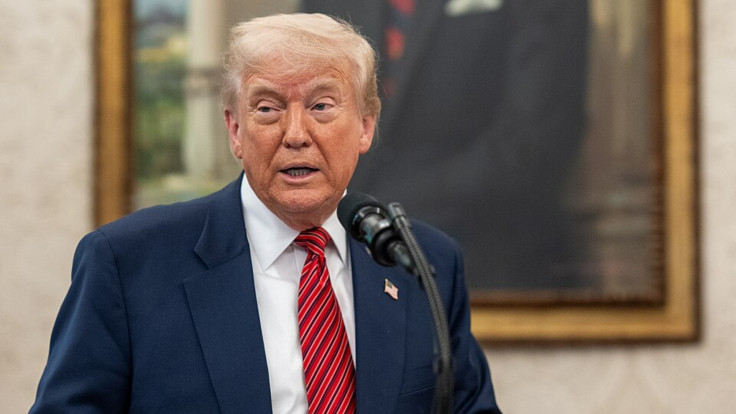
The leader of the Trump administration's AI safety and security organization has quit after three months on the job.
CNBC confirmed that Chris Fall, director of the Center for AI Standards and Innovation (CAISI), has resigned. CAISI is supposed to be the AI industry's "primary point of contact within the U.S. government to facilitate testing and collaborative research related to harnessing and securing the potential of commercial AI systems."
The outlet noted that according to the Commerce Department, Arvind Raman, the director of National Institute of Standards and Technology, will serve as acting director of CAISI for now.
No reason was given for Fall's resignation. His departure continues a trend of instability regarding the White House and the AI industry. Fall had replaced Collin Burns at CAISI. Burns, who previously worked at the AI firm Anthropic, lasted just four days in the job, according to the Washington Post.
The newspaper reported that Burns had been "pushed out" by the White House less than a week into the position because some senior advisors, who had not been briefed on his appointment, were worried about his past close association with an AI company.
Before Burns, the administration's AI and crypto efforts were led by venture capitalist David Sacks. Sacks resigned from the position in March.
The center is supposed to be leading the government's efforts on a number of matters, including developing cybersecurity and safety guidelines, evaluating and assessing the capabilities of U.S. and adversary AI systems, and coordinating with other federal agencies and entities such as the Department of Defense, the Department of Energy, and the Department of Homeland Security.
TechCrunch noted that Fall's departure comes after a weekend of angst over the Chinese AI lab Moonshot's latest open AI model, Kimi. That model performed well against U.S. frontier models.
The AI shakeup comes after the White House announced the cybersecurity project "GOLD EAGLE." The project will create "a clearinghouse that enables unprecedented cybersecurity vulnerability coordination."
"Open-source software partners and American critical infrastructure companies built a coordinated system to receive and patch cyber vulnerabilities at a speed and scale never seen before using the existing authorities and resources of the federal government," the White House said.
© Copyright IBTimes 2026. All rights reserved.