

Moonshot AI Says Kimi K3 Demand Is Pushing Its GPUs To The Limit. Now They’re Eyeing An IPO
The company has reportedly been working with Goldman Sachs and China International Capital Corp. on IPO discussions.

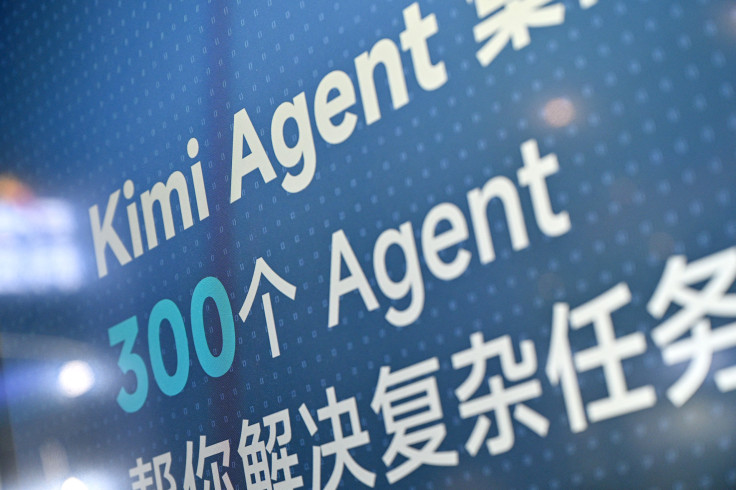
China's artificial intelligence race has produced another breakout moment. Moonshot AI's new product launch brought too much demand for them to handle.
The Beijing-based company has temporarily suspended new paid subscriptions to its recently launched Kimi K3 model after overwhelming demand pushed its computing infrastructure to the limit. The capacity crunch comes as Moonshot pursues fresh funding and lays the groundwork for a potential initial public offering in Hong Kong.
According to a Reuters report, Moonshot is restructuring its offshore corporate holdings in preparation for a Hong Kong listing. The company has reportedly been working with Goldman Sachs and China International Capital Corp. on IPO discussions, although people familiar with the matter cautioned that the timing remains uncertain. Moonshot and Goldman Sachs declined to comment, while CICC did not immediately respond to Reuters' request for comment.
Founded in 2023 by Yang Zhilin, a former Carnegie Mellon University doctoral researcher, Moonshot has quickly become one of China's highest-profile AI startups. Investor enthusiasm has matched that rise.
Reuters reported that the company raised more than $2 billion in May from investors including Meituan, China Mobile and CPE, bringing its total funding to more than $5.5 billion. It has since begun seeking as much as another $2 billion, with its valuation reportedly reaching $30 billion in June.
The company's latest challenge stems from the launch of Kimi K3, unveiled on Friday as what Moonshot describes as the world's largest open-weight AI model, featuring 2.8 trillion parameters. The model focuses heavily on coding and AI agent tasks, two of the fastest-growing applications for generative AI.
Within days of the launch, user demand exceeded the company's projections.
In a statement released Sunday, Moonshot said requests over the previous 48 hours had surged beyond expectations and were approaching the limits of its existing computing clusters.
To preserve service quality, the company immediately suspended new consumer subscriptions while ensuring that existing paid subscribers would continue to receive uninterrupted access.
The startup also announced plans to introduce two separate membership tiers in the future, including one designed specifically for coding tasks. The move is intended to better allocate computing resources based on how customers use the platform.
Moonshot acknowledged the unexpected popularity of the model in a post on X. "Kimi K3 has received far more love than we expected, and our GPUs are feeling it," the company wrote, adding that new subscription slots would reopen gradually as additional computing capacity becomes available.
Kimi K3 has received far more love than we expected, and our GPUs are feeling it.
— Kimi.ai (@Kimi_Moonshot) July 19, 2026
Over the past 48 hours, demand has pushed close to the limits of our current capacity. To protect the experience of existing subscribers, we're temporarily pausing new subscriptions and…
Unlike many consumer AI applications, Kimi K3's advanced capabilities place exceptionally heavy demands on hardware. Coding assistants and autonomous AI agents typically require repeated interactions with the model, significantly increasing inference costs compared with standard chatbot conversations.
Although Kimi K3 is released as an open-weight model, allowing developers to download and customize it, analysts say relatively few organizations are likely to operate the system independently because running a model of that size requires enormous amounts of specialized hardware.
The infrastructure bottleneck also reflects a broader trend across China's rapidly expanding AI sector. Companies, including DeepSeek, have recently sought additional outside funding to expand computing capacity as competition intensifies with U.S. AI leaders.
Chinese developers have accelerated the pace of model releases in recent months. Firms such as Z.ai and MiniMax have introduced increasingly capable systems while lowering operating costs, narrowing what many analysts once viewed as a significant technology gap between Chinese and American AI companies.
Moonshot's own benchmark testing suggests Kimi K3 performs competitively against leading U.S. models on several technical tasks, while independent evaluations have also pointed to strong performance.
Competition continues to intensify as Alibaba, one of Moonshot's investors, announced Sunday that it had released a preview version of Qwen3.8-Max, its new 2.4 trillion-parameter AI model, ahead of a broader open-weight launch.
Qwen3.8 is launching and going open-weight soon!🌐
— Qwen (@Alibaba_Qwen) July 19, 2026
With a massive 2.4T parameters, this model is continuously evolving. We believe it’s one of the most powerful model available today, compatible to leading frontier AI models , second only to Fable 5.
You don't have to wait to… pic.twitter.com/JS3ID73IYS
Despite the rapid innovation, China's AI companies continue to face a major obstacle outside their control. U.S. export restrictions on advanced Nvidia chips have limited access to the high-performance processors needed to train and operate increasingly sophisticated AI models.
© Copyright IBTimes 2026. All rights reserved.