

Beyond the QR Code: Why Cannabis Verification Is Emerging as an Industry Practice
The legal cannabis industry has spent years building trust through licensed cultivation and rigorous lab testing. But as legitimate operators invest in safer products, concerns about counterfeit cannabis have grown alongside the industry.
Today's fake vape packaging is remarkably convincing: logos, colors, materials, even QR codes can closely mirror the real thing. Visual inspection alone often isn't enough.
For cannabis companies, that's more than a branding problem: it's a consumer safety problem.
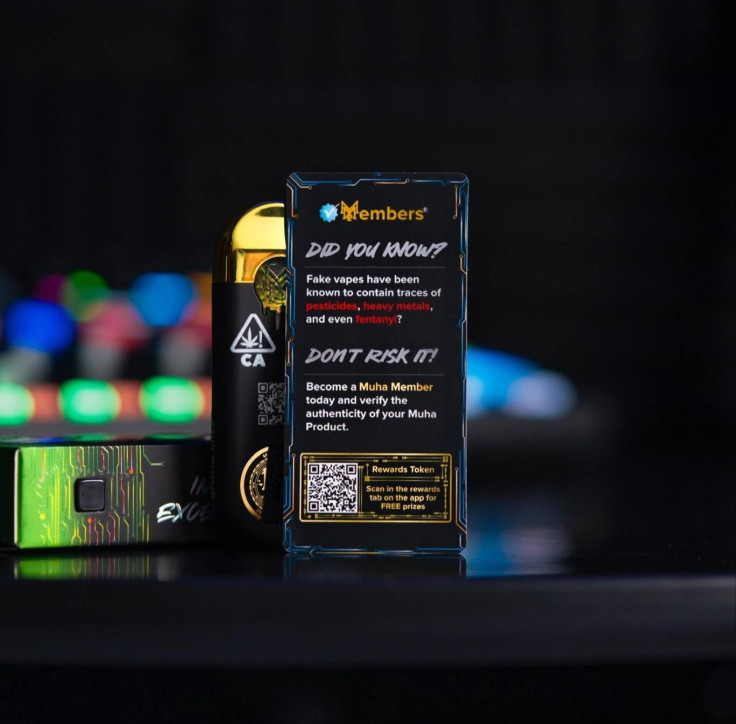
Muha Meds believes verification should happen before the first inhale. That philosophy became the foundation for Muha Members. According to the company, its authentication and rewards app allows consumers to check eligible product information provided by the manufacturer, then earn rewards, unlock exclusive drops, and access member-only events in the process.
The company describes the app as offering more than purchase-based rewards and as reflecting its vision for the future of cannabis.
What's Actually Inside a Counterfeit Vape
As counterfeit cannabis products become more sophisticated, distinguishing authentic products from fake ones is becoming increasingly difficult for consumers. Many closely mimic legitimate brands, making visual inspection alone an unreliable way to verify authenticity.
Public health officials have warned that unregulated vape products might include unwanted contaminants, like cutting agents, for example, Vitamin E acetate, synthetic cannabinoids that are often marketed as Spice or K2, heavy metals such as lead, too much pesticide residue, and leftover solvents that simply would not line up with the licensed manufacturing standards.
These aren't simply lower-quality versions of legitimate products; they can present serious health risks.
The Lab Results Tell a Bigger Story
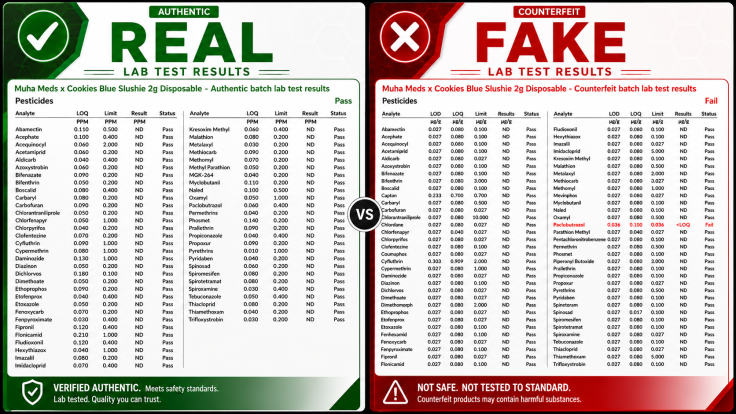
Laboratory testing on several batches of fake Muha Vapes revealed meaningful differences between the authentic and counterfeit products. Independent research into counterfeit vape products, including CDC investigations into e-cigarette lung injury and peer-reviewed studies on metal leaching from cartridge hardware, has linked contaminated vapes to respiratory symptoms and other health risks. This underscores why appearance alone can't confirm what's actually in a cartridge.
Cannabinoid analysis revealed another meaningful difference between authentic and counterfeit samples. The differing cannabinoid concentrations and overall profiles further demonstrated that the counterfeit product did not contain the same formulation as the authentic Muha vape it was designed to imitate.
While these findings apply only to the specific batches tested, they underscore a larger concern: packaging alone cannot reveal a vape's actual cannabinoid content or confirm that what is inside matches what is represented on the label.
Consumers simply cannot determine these differences by appearance alone.
Verification provides confidence before consumption, not after.
When Looks Can Be Deceiving
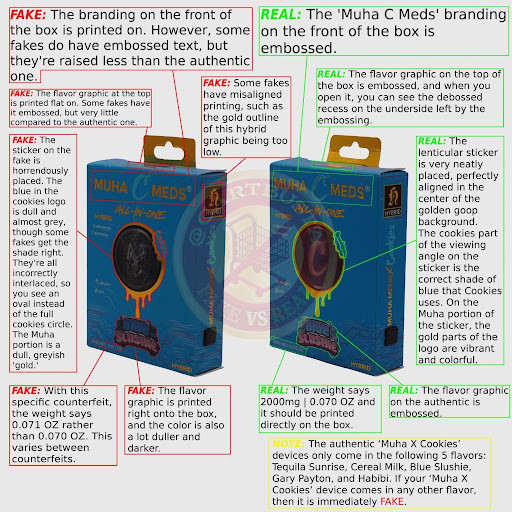
Some counterfeit products replicate packaging, branding and overall presentation down to the smallest details. Careful inspection may reveal inconsistencies, including lower-quality embossing, misaligned graphics, incorrect QR codes, different material finishes and subtle printing flaws, but many of those details could easily go unnoticed by the average consumer.
Social media accounts such as @fakevsreal have also begun bringing greater attention to the issue by sharing laboratory findings with their networks of cannabis consumers and publishing side-by-side comparisons of authentic and faked products. These posts help users recognize subtle visual discrepancies in packaging and hardware, while reinforcing how difficult it can be to determine authenticity based on appearance alone.
Independent consumer education resources play an important role by helping people understand what counterfeit products can look like and why verification matters. Muha Members builds on that awareness by giving Muha customers a direct way to confirm eligible products at the source. Together, education and authentication provide consumers with more information, greater confidence, and a clearer path toward safer purchasing decisions.
A New Relationship Between Brands and Consumers
Historically, the relationship between cannabis brands and consumers often ended at the dispensary checkout. Muha Members takes that relationship further by rewarding consumers who take the extra step to verify their products and make safer, more informed choices.
Each eligible product scan confirms authenticity while connecting members to rewards, limited product drops, exclusive events, educational content, and community experiences. What begins as a simple safety measure evolves into a lasting connection between the consumer and the brand.
Muha Members also extends its commitment to consumer protection by allowing users to report suspected counterfeit products directly within the app. In return, members earn bonus points while helping identify illicit products and protect the wider cannabis community.
This model reflects an important evolution within the industry. Consumers increasingly expect transparency at the point of purchase, direct access to useful information, and meaningful benefits that continue long after the transaction is complete.
For Ali Garawi, CEO and Co-Founder of Muha Meds, Muha Members represents far more than an authentication tool. It is part of a larger vision for how cannabis brands can protect consumers, increase transparency, and build trust through continued engagement.
"Muha Members was developed to give our customers peace of mind by allowing them to verify that the product in their hand is authentic and comes directly from the source," said Garawi. "By pairing that verification with rewards, education and exclusive experiences, we're turning product safety into an ongoing relationship built on trust, transparency and community."
Cannabis products are controlled substances that remain illegal under federal law, regardless of state law. Legality, access, and permissible use vary by state. Cannabis products are intended for use only by individuals who meet the minimum age requirement under the laws of their applicable state or jurisdiction. They have intoxicating effects and may be habit-forming. Do not operate a vehicle or heavy machinery after consuming cannabis products. Keep all cannabis products out of reach of children. Cannabis products may have health risks; consult a physician before use.These statements have not been evaluated by the Food and Drug Administration. This product is not intended to diagnose, treat, cure, or prevent any disease. Must be 18.
© Copyright IBTimes 2026. All rights reserved.