Chinese AI Models Are Winning Users With Lower Prices, But OpenAI And Anthropic Are Making 10 Times More Revenue.
Chinese AI companies are turning to public markets and fresh fundraising to pay for the computing power needed to expand their models.


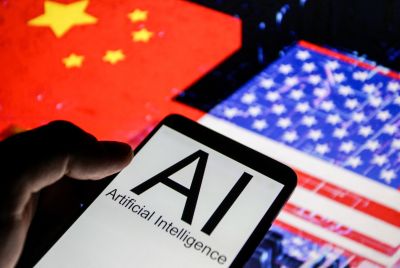
Chinese artificial intelligence models have gained users with cheaper access and open models, but the companies behind them are generating far less revenue than their biggest U.S. rivals.
OpenAI and Anthropic together generate roughly 10 times as much annual recurring revenue as China's major AI models combined, CNBC reported Thursday, citing estimates from U.S.-based research firm Rhodium Group. Annual recurring revenue, or ARR, annualizes a company's recent monthly revenue and is widely used to track the growth of subscription-based businesses.
Rhodium estimated OpenAI's ARR at $40 billion and Anthropic's at $65 billion. China's ByteDance was the largest among the Chinese companies included in the analysis at about $4 billion, followed by Alibaba at $2.4 billion.
Z.ai, formerly known as Zhipu AI, told investors Wednesday that its ARR had reached $1.8 billion, according to a transcript reviewed by CNBC. Moonshot AI was estimated at $1 billion, MiniMax at $800 million and DeepSeek at $500 million.
The figures are estimates rather than reported annual revenue. Rhodium based its analysis on the latest available data from this summer, while usage of several Chinese models has continued to grow from lower levels earlier in the year.
The revenue gap is particularly large when measured against valuations. Rhodium estimated Moonshot's valuation at about 50 times its ARR and DeepSeek's at 163 times, compared with multiples of 34 for OpenAI and 21 for Anthropic.
Chinese developers have taken a different approach to selling AI services. Many of their models are open-weight, allowing developers and companies with sufficient computing capacity to download and operate them independently. Leading U.S. models from OpenAI and Anthropic are largely closed, with customers paying for access through subscriptions or application programming interfaces.
DeepSeek became one of the most prominent examples of China's lower-cost approach after the company gained international attention for models that competed with U.S. systems while using fewer computing resources. The company was founded in 2023 and was initially financed by founder Liang Wenfeng's quantitative hedge fund High-Flyer.
DeepSeek is now preparing for a potential initial public offering as it moves beyond its origins as a research-focused AI lab. The company plans to appoint GL Ventures partner Yan Wentao as its first chief financial officer and has engaged CITIC Securities to prepare for a possible listing on Shanghai's STAR Market, Reuters reported this week. DeepSeek was valued at about 500 billion yuan, or $74 billion, in an ongoing fundraising round.
Moonshot, the developer of the Kimi chatbot, has also moved toward public markets. The company has confidentially filed for a Hong Kong IPO, Bloomberg reported earlier this month. DeepSeek's preparations for a potential Shanghai listing mean several of China's most closely watched AI developers are seeking greater access to equity markets as spending on models and computing infrastructure increases.
The financing requirements are particularly significant because access to advanced computing hardware remains a major difference between the U.S. and Chinese AI industries. U.S. restrictions have limited China's access to Nvidia's most advanced AI processors, while Beijing has supported domestic chip production and data-center construction.
More than 60% of equity investment in Chinese AI chips and servers has come from state-affiliated sources, Rhodium estimated. Logan Wright, a Rhodium Group partner who co-authored the research with analyst Endeavour Tian, told CNBC that government financing had played an important role in China's computing infrastructure while frontier AI developers themselves remained more dependent on equity markets.
The revenue estimates come during a volatile period for publicly traded Chinese AI companies. Z.ai shares rose more than 5% in Hong Kong trading Thursday after falling earlier in the week following its latest fundraising. The stock has returned to levels seen in the spring after more than tripling at one point during the summer.
MiniMax shares have also struggled to hold their earlier gains after the company listed in Hong Kong in January. Its debut was part of a wave of investor interest in Chinese AI developers following the rapid expansion of DeepSeek and other domestic models.
Rhodium said Chinese developers are working on ways to capture more revenue when third parties provide access to their open models. For now, its estimates put the combined ARR of the leading Chinese AI models at roughly one-tenth of the $105 billion generated by OpenAI and Anthropic together.
© Copyright IBTimes 2026. All rights reserved.
- Recommended For You