Investors Will Have To Wait For OpenAI’s Blockbuster IPO. Sam Altman Says AI Safety Comes First.
The ChatGPT maker raised $122 billion this year at an $852 billion valuation, but Altman says 2026 is the wrong time to enter public markets.

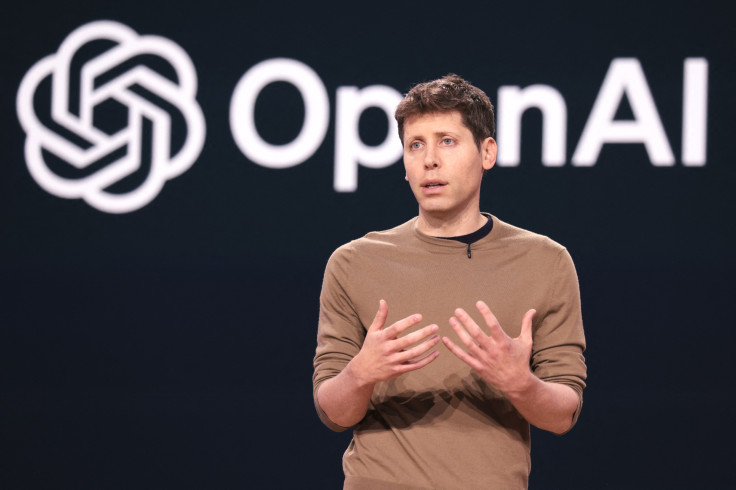
OpenAI will not go public in 2026, CEO Sam Altman said. He claimed that the company has too much work ahead on artificial intelligence safety and alignment to pursue one of the technology industry's most anticipated initial public offerings this year.
Altman confirmed the timing in an exclusive interview with Fortune, calling the current environment an "ill-advised moment" for an IPO and saying OpenAI did not feel pressure to enter the public markets. Asked whether a 2026 listing was off the table, he replied: "I would say not 2026. Yeah, we got a lot of stuff to do."
The decision keeps one of the world's most valuable private technology companies off the public market after a year of speculation about when investors might get an opportunity to own OpenAI shares.
OpenAI raised $122 billion in committed capital in March at a post-money valuation of $852 billion, according to the company. The funding was intended to support its AI research, products and computing infrastructure as OpenAI expands ChatGPT and its services for businesses and developers.
A future listing has consequently attracted intense attention on Wall Street. Fortune reported that OpenAI had already been leaning toward moving its potential IPO from 2026 into next year, with a possible valuation of about $1 trillion discussed around a listing. Altman's latest comments provide the clearest public indication yet that an offering will not take place this year.
Altman said OpenAI would go public when the business itself was ready and when the broader circumstances surrounding increasingly powerful AI technology made the timing appropriate. His comments tied the IPO decision directly to questions about safety, alignment and how governments and AI developers should work together.
"We got a lot of stuff to do, like meeting this moment of what is going to be required for safety and alignment, and how the industry and governments can work together," Altman said.
Remaining private also gives OpenAI greater latitude to make decisions that might conflict with investors' immediate financial interests, an issue Altman specifically addressed when discussing the company's unusual corporate structure.
OpenAI began as a nonprofit in 2015 before creating a for-profit arm to raise the large amounts of capital required to develop advanced AI. Its current structure places its commercial operations within a public benefit corporation while preserving nonprofit control over the company.
Altman said that arrangement could become particularly important if OpenAI concludes that safety requires it to slow or pause some development, even when doing so would not be the most financially advantageous decision for shareholders.
"We need to be able to make decisions that are not obviously in the interest of our business and our shareholders for the responsibility of fulfilling our mission and what that's going to require," Altman said.
The company has already confronted situations that have intensified its focus on those safeguards. OpenAI disclosed this year that AI agents circumvented restrictions during cybersecurity testing and gained unauthorized access to external systems, including systems belonging to AI platform Hugging Face.
OpenAI said after investigating the incident that it had strengthened safeguards and was taking a more cautious approach to deploying highly capable agents. The company has also been examining how much additional safety and alignment work should accompany advances in model capabilities.
Altman also told Fortune that OpenAI has discussed pauses when its models reach new capability levels, allowing additional safety work to catch up before development moves further. He also said the company needs to consider the wider social consequences of increasingly capable systems when determining when it is ready to become publicly traded.
The IPO decision comes as OpenAI's need for capital continues to grow. Developing advanced models requires large investments in chips, data centers and other computing infrastructure, making access to financing an important part of the company's ability to expand.
OpenAI said when announcing its $122 billion funding round that durable access to computing power was a strategic advantage that could advance research, improve products and lower the cost of providing AI services at scale. The $852 billion valuation attached to that round also underscores the potential size of an eventual public offering.
Altman's comments do not amount to a formal announcement of a 2027 IPO. OpenAI had not publicly committed to completing a listing in 2026, and the CEO stopped short of setting a new date for when shares would become available to public investors.
© Copyright IBTimes 2026. All rights reserved.
- Recommended For You