

Fed Chair Kevin Warsh Faces a Crucial Test at Jackson Hole As Treasury Yields Remain High
Warsh's Jackson Hole speech will put him under scrutiny over the Fed's independence from President Donald Trump's administration.

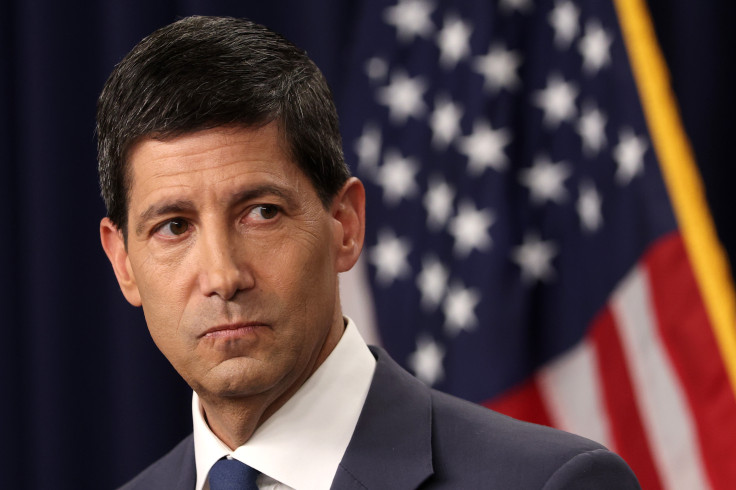
Federal Reserve Chairman Kevin Warsh will arrive at Jackson Hole this week facing a challenge that has become considerably more complicated than simply explaining where interest rates might go next.
Warsh's first keynote address at the Federal Reserve's annual economic symposium in Jackson Hole, Wyoming, comes as bond yields rise, inflation remains stubbornly above the central bank's target and investors question how the Fed will respond to a Treasury Department taking a more active role in financial markets.
The speech, scheduled for Friday, will also put Warsh under scrutiny over the Fed's independence from President Donald Trump's administration. Warsh has so far resisted laying out a detailed policy agenda. After taking over the central bank this spring, he created five task forces and said he wanted to review their recommendations before spelling out broader changes.
Financial markets, however, are not waiting. Inflation has remained above the Fed's 2% target for more than five years, while some Fed policymakers are increasingly concerned that delaying additional rate hikes could eventually force the central bank to raise borrowing costs more aggressively.
"Both the bond market and the FOMC have clearly decided to wake up" to higher inflation and what could become "a secular, multi-year uptrend in interest rates," Adam Posen, president of the Peterson Institute for International Economics, told Reuters.
He has expressed skepticism about "forward guidance," the Fed's practice of signaling how monetary policy could evolve, and suggested after the July 28-29 Fed meeting that his Jackson Hole remarks might focus on larger questions rather than short-term policy.
Jackson Hole has historically provided Fed leaders with a powerful platform for major policy messages. Former Chairman Jerome Powell used the conference both to introduce a new monetary policy framework and, later, to deliver a forceful warning about fighting inflation that helped prepare markets for aggressive rate increases.
Warsh now faces his own defining Jackson Hole moment. One complication is the recent surge in U.S. and global bond yields. Treasury Secretary Scott Bessent has also stepped up government debt buybacks, raising questions about how an increasingly activist Treasury policy could interact with the Fed's management of interest rates.
"We are in a regime where activist Treasury policy is as material — for good and for bad — as central bank policy," Krishna Guha, vice chairman of Evercore ISI and a former New York Fed official, wrote last week. "The interaction of the two will be key to the outlook. "The dollar's decline against other major currencies over the past month could create another headache by increasing inflationary pressure through more expensive imports.
Meanwhile, Warsh is confronting political questions. Democrats on the Senate Banking Committee have requested information about his communications with Trump following a Wall Street Journal report that the two have held regular calls.
Trump, who repeatedly criticized Powell for not cutting rates, has so far refrained from attacking Warsh for keeping borrowing costs elevated. But Warsh's reluctance to publicly discuss potential rate hikes has fueled questions about whether political considerations are influencing his communications.
Minutes from the Fed's July meeting showed policymakers themselves wrestling with the risks. Some officials warned that waiting too long to raise rates could require sharper increases later, while others worried persistently high inflation could undermine public confidence in the Fed's 2% target.
That makes Friday's speech more than a ceremonial Jackson Hole debut. "Markets are wondering what's the Fed going to do to address inflation that's persistently above target," former International Monetary Fund chief economist Maurice Obstfeld told Reuters. For Warsh, Obstfeld said, Jackson Hole offers "a perfect opportunity to clarify his thinking."
© Copyright IBTimes 2026. All rights reserved.