

Florida Primaries Deliver Big Upsets. Trump-Backed Candidates Gets Mixed Results.
Byron Donalds won the Republican nomination for Florida governor, while progressive Angie Nixon scored an upset in the Democratic Senate primary.

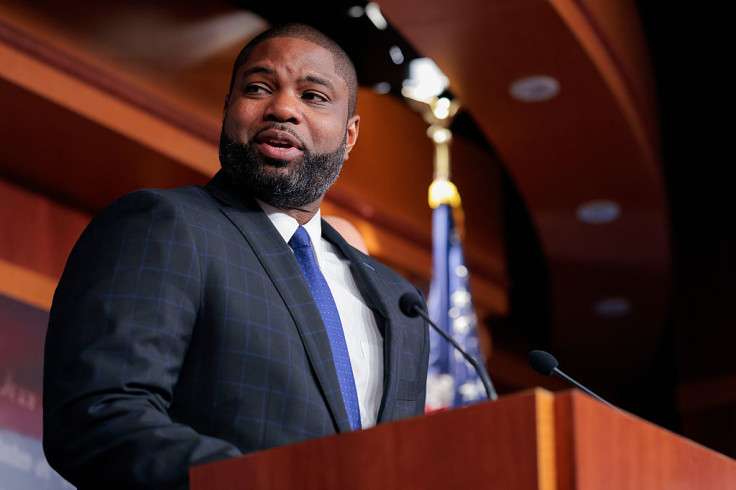
Florida voters delivered several surprises in Tuesday's primaries, including handing progressive state Rep. Angie Nixon an upset victory in the Democratic Senate primary despite being heavily outspent. Republican Rep. Byron Donalds will be the party's gubernatorial candidate.
Overall, voters in Florida, Alaska and Wyoming chose candidates for November's midterm elections, while California held a special congressional election. The contests included incumbent defeats, closely watched Senate races and mixed results for candidates endorsed by President Donald Trump.
In Florida, Donalds won the Republican nomination to succeed term-limited Gov. Ron DeSantis and will face former Republican congressman David Jolly, who won the Democratic nomination. Donalds would become Florida's first Black governor if elected in November.
Donalds, 47, defeated a Republican field that included Lt. Gov. Jay Collins and businessman James Fishback. He had Trump's endorsement but said after his victory that presidential backing alone would not be enough to win the general election.
Jolly, 53, previously served in Congress as a Republican before becoming an independent and later joining the Democratic Party. His nomination marks the second consecutive Florida gubernatorial election in which Democrats have chosen a former Republican as their candidate.
One of the night's biggest surprises came in Florida's Democratic Senate primary, where Nixon defeated retired Army Lt. Col. Alexander Vindman, the former National Security Council official who testified during Trump's first impeachment proceedings.
Vindman had raised more than 16 times as much money as Nixon, who brought in less than $1 million, according to AP's election takeaways. Despite that fundraising gap, Nixon won the nomination and will face Republican Sen. Ashley Moody in November.
Moody, a former Florida attorney general, was appointed by DeSantis after Marco Rubio left the Senate to become secretary of state. The November winner will serve the remaining two years of Rubio's term.
If elected, Nixon would become Florida's first Black U.S. senator. Democrats, however, face a difficult race in a state that has shifted toward Republicans in recent elections. Florida has not elected a Democrat to the Senate since 2012.
Tuesday also brought a victory for longtime Democratic Rep. Debbie Wasserman Schultz after Republican-led redistricting reshaped Florida's congressional districts.
Wasserman Schultz defeated former Rep. Sheila Cherfilus-McCormick and other challengers in the redrawn 20th Congressional District, a plurality-Black district in South Florida. Wasserman Schultz, a former Democratic National Committee chair who has served in Congress since 2005, is seeking a 12th term.
Republican Rep. Cory Mills was among the incumbents who did not survive the primary. Former television reporter Ryan Elijah defeated Mills for the GOP nomination in Florida's 7th Congressional District.
Mills had faced several controversies, including domestic violence allegations involving a former girlfriend, which he has denied. Trump endorsed Mills earlier this year but left him off a final list of Florida endorsements released before the primary, while DeSantis and other state Republicans had withdrawn their support.
Trump also suffered a defeat in the race to replace Donalds in Congress. Catalina Lauf, whom Trump had endorsed, lost the Republican primary to conservative radio station owner Jim Schwartzel. The crowded contest included several candidates who had previously sought office in other states, along with former Reps. Madison Cawthorn and Chris Collins.
The results added to a mixed record for Trump's endorsements in gubernatorial contests this primary season.
In Wyoming, Trump-backed state Superintendent of Public Instruction Megan Degenfelder lost the Republican gubernatorial primary to state Sen. Eric Barlow, a veterinarian, U.S. Marine veteran and former state House speaker.
Trump's preferred candidate fared better in Wyoming's Senate race. Rep. Harriet Hageman easily won the Republican nomination for the seat being vacated by retiring Sen. Cynthia Lummis. Given Wyoming's strong Republican lean, the GOP nominee will enter November as the favorite.
Alaska also set up one of the more closely watched Senate contests of November.
Republican Sen. Dan Sullivan and former Democratic Rep. Mary Peltola advanced from the state's open primary and will compete in its ranked-choice general election. Peltola, who became the first Alaska Native elected to Congress in 2022, would become the state's first Alaska Native senator if she wins.
The Alaska ballot also attracted attention because it featured another candidate with essentially the same name as the incumbent senator. Retired teacher Daniel J. Sullivan Jr. appeared alongside Sen. Dan Sullivan after defeating an effort to remove him from the ballot.
Republicans had alleged that the second Sullivan was running to confuse voters, an accusation he denied. Alaska's system allows candidates from all parties to compete in the same primary, with the top four advancing to November.
The latest contests come as both parties prepare for the final stretch before the Nov. 3 midterms, when control of Congress will be decided.
Republicans currently hold narrow congressional majorities, putting competitive Senate and House races under increased scrutiny.
© Copyright IBTimes 2026. All rights reserved.