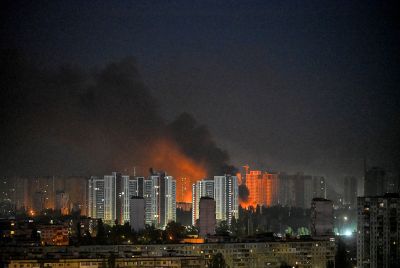
Iran Committed Crimes Against Humanity. Murdered, Maimed, January Protesters: UN Report
The report found that Iran committed crimes against humanity in January when it massacred protesters demonstrating against dire economic conditions in the country.

A United Nations report found that Iran committed crimes against humanity in January when it massacred protesters demonstrating over dire economic conditions in the country.
The document found that Iran had killed thousands of civilians during the protests, including children. The government also sought to maim and injure people, including purposely blinding protesters by targeting their eyes with shotgun blasts. At least 700 people sought treatment for eye injuries at Farabi Hospital between January 8 and January 10.
"Some injuries resulted in severe or total loss of vision. According to one health professional, such injuries indicate that shotgun rounds were fired from close range," the report noted.
The report also noted that it is unknown how many people were killed. However, it concluded that the number was likely "significantly higher" than Iran's claim that it killed 3,038 people and injured 25,000. Iran International reported that the death toll from the January protests was likely over 36,000. The outlet cited internal government documents in making the claim.
According to the UN mission report, the Iranian government, in some instances, used tear gas first to subdue protesters and then used shotguns filled with metal pellets to injure or kill them. Iranian security forces also took elevated positions on rooftops to fire down into crowds.
Many of the protesters were shot in the back, with the report suggesting they were fleeing when shot. Referring to a video of a shooting, the document notes that government forces "appear to be firing towards crowds of people, many of whom are hiding or fleeing, without any indication of return fire or other imminent threat of death or serious injury."
"Security forces also used tear gas in contravention of international norms and standards. Three direct witnesses described security forces using tear gas to force protesters into narrow side alleys in the area between Fardis and Marlik in Karaj city, blocking entry and exit routes before shooting at them," reads another passage of the report.
As many as 17 percent of those attending the protests were children. In some instances, entire classes of students attended the protests together. According to the report, many girls and boys who attended the protests were killed or seriously injured.
"A credible human rights organisation has so far collected the names of at least 221 children who were killed during the protests, including with lethal ammunition. According to the organisation, six of the children were under the age of 10 and two were only two years old. The vast majority of children killed were boys," the report detailed.
In the aftermath of the crackdown, the government refused in many cases to release dead bodies to families, demanding payment to do so or demanding that they sign documents indicating the family member had been killed by "terrorists."
The government also carried out mass arrests, apprehending thousands. The arrests extended beyond individuals who directly participated in the protests: "Credible information indicates that healthcare workers aiding protesters were arrested and lawyers aiding protesters were summoned. Individuals were reportedly arrested and detained for publicly criticising security forces' use of force during the protests," the UN report states.
The report notes that Iran routinely executes prisoners but does not release comprehensive data. However, the report states that at least 58 individuals have been executed since the start of 2026 on security-related charges.
The report concluded that Iran had committed crimes against humanity.
"Many gross human rights violations by Iran amount to the crimes against humanity of murder, imprisonment and other severe deprivation of physical liberty, torture, and other inhumane acts, committed as part of a widespread and systematic attack directed against a civilian population, namely protesters, including children, their supporters and perceived dissenting or opposing actors, including members of political groups, civil society organisations and professional associations," the report said.
© Copyright IBTimes 2026. All rights reserved.
- Recommended For You