JPMorgan’s Dimon Is Warning About Leverage In The Market After Collapse Of Situational Awareness
"Margin debt is the highest it has ever been," Dimon said.


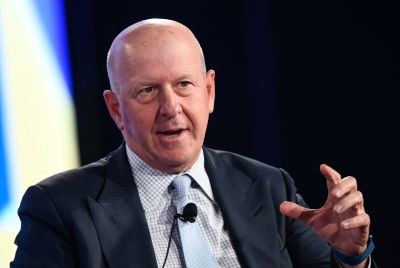
JPMorgan CEO Jamie Dimon warned that high levels of leverage across financial markets have the potential of causing disruption in the markets in the future.
Speaking to CNBC's Leslie Picker, Dimon said "margin debt is the highest it has ever been."
"There's a lot of margin debt you don't see because it's not called margin debt. It's called other things. It's that kind of leverage, some hidden, some public," he added.
Dimon went on to say that such leverage can lead fewer investors to cause broader volatility in the market .
"When you have that, you do have a higher chance that somebody will disrupt the market in a quick way, and people get rattled over it," he said.
The remarks came after the collapse of Leopold Aschenbrenner's Situational Awareness fund last week.
The hedge fund had reportedly grown to approximately $45 billion at the beginning of July before the market downturn eroded the value of its portfolio.
As a result, he ended up selling most of it to Ken Griffin's Citadel, which has seen its profit soar after markets rebounded over the course of the next days.
Citadel's flagship Wellington fund posted 5.9% returns in July, the best since 2022, pushing this year's gains to 12%. Citadel managed some $71 billion in assets on July 1.
Aschenbrenner's fund had bet that the AI boom would drive sustained demand for chips, memory, data centers and electricity. He rose to prominence in 2024 after publishing a series of widely read essays arguing that increasingly capable AI systems would require an unprecedented expansion of computing infrastructure.
His writings emphasized growing demand for advanced semiconductors, high-bandwidth memory, power generation and data centers, themes that became central to both AI investing and Situational Awareness' portfolio construction.
The 25-year-old investor followed an unconventional path into finance. After graduating as valedictorian from Columbia University at just 19 years old, he joined OpenAI's Superalignment team, which focused on long-term AI safety.
His tenure at OpenAI ended in 2024 after the company dismissed him over what it described as an improper disclosure of internal information. Aschenbrenner has disputed that characterization, saying he shared a largely nonconfidential planning document with outside researchers for feedback.
He has also argued that his dismissal followed disagreements over security concerns he raised about OpenAI, while the company has maintained those concerns were unrelated to his departure.
© Copyright IBTimes 2026. All rights reserved.
- Recommended For You