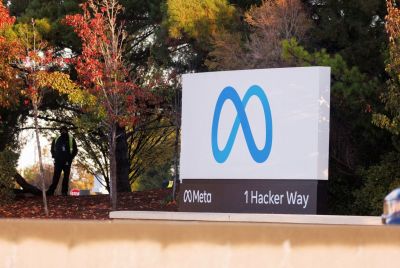
Meta Is Building AI Faster Than Ever. Wall Street Is Skeptical About The Payoff And Its Stock Is Tanking
The social media giant is pouring more money into chips, data centers and power as investors push for clearer answers on how those investments will generate returns.


Meta Platforms is asking investors to look beyond today's cash flow and focus on what it believes will become one of the world's largest artificial intelligence businesses.
The company raised the lower end of its 2026 capital expenditure forecast to between $130 billion and $145 billion after reporting second-quarter results, signaling that spending on AI infrastructure remains a top priority despite mounting investor concerns over the pace of investment. The guidance increase came alongside another quarter of strong revenue growth, but shrinking free cash flow renewed questions about how quickly those investments can begin producing meaningful financial returns. The company's stock is tanking following the results. It dropped close about 9% at 9:53 a.m. ET.
The spending increase reflects Meta's strategy of building AI capacity years before demand fully materializes. During the company's earnings call, Chief Executive Mark Zuckerberg said computing infrastructure has become a strategic asset and revealed that Meta has received offers from businesses willing to pay a premium for access to some of its compute capacity. Rather than positioning Meta as a traditional cloud provider, however, he said the company's long-term objective is to use that infrastructure to power its own AI products and services, reads a passage of the earnings call.
That distinction has become increasingly important as investors compare Meta with rivals that already generate substantial revenue from AI infrastructure. Microsoft, for example, reported accelerating Azure cloud growth driven by enterprise AI adoption, while Alphabet also highlighted continued demand for its cloud services despite lifting its own capital spending outlook earlier this month. Those businesses can offset rising infrastructure costs by selling computing resources directly to corporate customers, a model Meta has yet to establish, CNBC reported.
Analysts said the company's investment profile increasingly resembles that of the world's largest hyperscale cloud providers, while its revenue base remains overwhelmingly tied to digital advertising, Reuters reported.
Meta executives argue that comparison overlooks how the company expects AI to reshape its core business. Zuckerberg said Meta sees consumer AI assistants, personalized recommendations, business automation tools and AI agents as long-term revenue opportunities that could eventually support subscriptions, enterprise services and new commercial products. He added that selling compute capacity could become another business over time, but suggested the higher-margin opportunity lies in selling AI-powered "intelligence" rather than simply renting infrastructure.
Chief Financial Officer Susan Li echoed that view, telling analysts that AI computing capacity remains constrained across the industry after years of underinvestment. She said Meta expects demand to remain elevated for the foreseeable future and believes additional infrastructure can generate returns through multiple channels, including internal AI products, enterprise offerings and selective compute sales. At the same time, the company stopped short of outlining how much of its future capacity would ultimately be reserved for its own AI models versus external customers.
In the meantime, Meta is accelerating construction of some of the largest AI data centers in the industry. Earlier this month, Zuckerberg unveiled plans to expand the company's Hyperion campus in Louisiana into a multi-gigawatt AI computing hub, describing it as one of several large-scale facilities intended to support Meta's next generation of frontier AI models. The project is part of a broader infrastructure buildout that includes advanced networking equipment, high-performance servers and specialized AI chips, Meta said in recent announcements.
Meta's infrastructure push also mirrors a broader race unfolding across Silicon Valley. Amazon, Microsoft and Alphabet have all committed tens of billions of dollars this year to expand AI data centers as demand for generative AI continues to outpace available computing resources. At the same time, those companies have acknowledged that limited electricity supplies, chip availability and construction timelines remain significant constraints on the industry's expansion.
Unlike those rivals, however, Meta enters the AI infrastructure race without a large cloud-computing business that can immediately monetize spare capacity. Nearly all of the company's revenue still comes from advertising across Facebook, Instagram, WhatsApp and Threads, making its AI investments more dependent on future products than existing enterprise customers. That difference has become a recurring theme in analyst discussions throughout this earnings season, with several firms questioning how quickly Meta's AI platform can evolve into a diversified revenue engine, Bloomberg reported.
The debate has also revived memories of Meta's metaverse expansion, when the company invested tens of billions of dollars in Reality Labs before the business generated meaningful commercial returns. Executives have argued that AI represents a fundamentally different opportunity because it is already improving advertising performance and user engagement while opening the door to entirely new categories of digital services. Even so, analysts continue to seek clearer milestones for measuring the return on those investments beyond improvements in advertising efficiency.
© Copyright IBTimes 2026. All rights reserved.
- Recommended For You