

Wall Street Couldn’t Stop Buying Nvidia. Now Apple Is Worth More As AI Bets Shift And Chipmakers Fall
AI momentum helped Nvidia become the first company ever to surpass a $5 trillion market valuation in October.

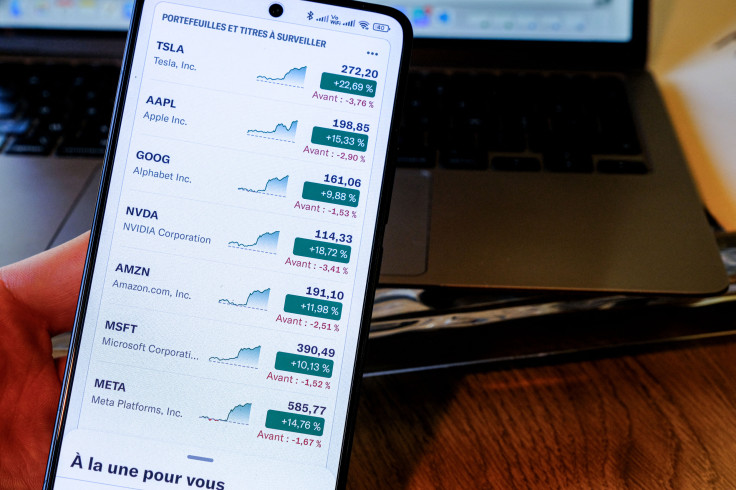
Apple has reclaimed the title of the world's most valuable publicly traded company on Friday, overtaking Nvidia in a symbolic shift that reflects changing investor sentiment about the next phase of the artificial intelligence boom.
Apple's market capitalization reached approximately $4.88 trillion during the session, edging past Nvidia's $4.86 trillion after the AI chipmaker's shares fell 3.5%, according to Reuters. The milestone marks Apple's first return to the top spot since April 2025 and comes as investors broaden their focus beyond the companies that initially dominated the generative AI rally.
The change does not necessarily signal the end of Nvidia's dominance in artificial intelligence infrastructure. Instead, analysts say it reflects a growing belief that the biggest long-term winners in AI may not only be the companies building the technology, but also those best positioned to monetize it.
For much of the past two years, Nvidia has been synonymous with the AI revolution. The company's graphics processing units power many of the world's largest generative AI models, making it one of Wall Street's biggest beneficiaries of soaring investment in AI infrastructure.
That momentum helped Nvidia become the first company ever to surpass a $5 trillion market valuation in October, cementing its place as the dominant force in the semiconductor sector. Apple, meanwhile, spent much of that period facing criticism for moving more cautiously than rivals including Microsoft, Google and OpenAI in rolling out consumer AI products. That perception has started to change.
Last month, Apple unveiled a long-delayed overhaul of Siri, introducing new artificial intelligence capabilities designed to make the voice assistant significantly more useful and competitive with offerings from major technology rivals and AI startups. Analysts also point to one of Apple's biggest competitive advantages: the vast amount of personal data stored securely on hundreds of millions of iPhones worldwide.
The company, however, still faces significant challenges. Apple's emphasis on user privacy means much of that valuable data remains locked inside its operating systems, making it difficult to fully exploit without compromising long-standing privacy commitments. The leadership transition underway at Apple also adds another dimension to the company's future.
CEO Tim Cook is preparing to step down in September after more than a decade leading the company, with hardware chief John Ternus expected to take over. Apple's renewed momentum in artificial intelligence could shape how Cook's final months as chief executive are remembered after years of criticism that the company had fallen behind in the AI race.
Despite Friday's milestone, analysts caution against reading too much into the rankings. "I don't see any meaningful distinction. Nvidia likely to be a significant participant in whatever happens going forward," Benjamin Hall, vice president of alpha research at Segal Marco Advisors, told Reuters.
Nvidia remains central to the AI ecosystem, and its valuation could quickly recover if investor sentiment shifts back toward companies supplying the infrastructure powering artificial intelligence. At the same time, enthusiasm for AI has expanded beyond the so-called Magnificent Seven technology giants.
Memory chipmakers have emerged as some of the market's strongest performers this year. Micron Technology surpassed a $1 trillion market capitalization in May as investors recognized the growing importance of high-bandwidth memory chips used in AI systems. South Korea's SK Hynix has also attracted increased investor attention after its Nasdaq listing earlier this month.
Hall said the arrival of new players could further diversify investor interest beyond the industry's biggest names. The broader semiconductor sector has also experienced increased volatility. The Philadelphia Semiconductor Index has fallen nearly 19% from its all-time high after investors began questioning whether AI-related valuations had become stretched. Even so, Reuters noted that the index has still outperformed Nvidia's stock so far this year.
© Copyright IBTimes 2026. All rights reserved.