Nvidia CEO Predicts a Massive AI Infrastructure Boom. Skilled Trade Workers Could See Six Figure Opportunities.
Global technology companies are expected to spend an estimated $7 trillion on AI infrastructure by the end of the decade.


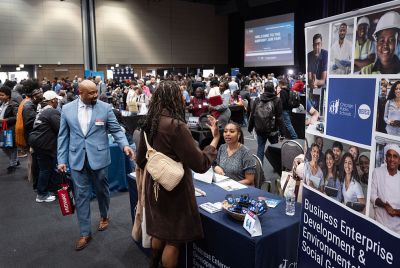
The artificial intelligence boom may be transforming the white-collar job market, but Nvidia CEO Jensen Huang believes it is also creating a surge in demand for skilled trades that could offer six-figure salaries without requiring a college degree.
Speaking during a conversation with BlackRock CEO Larry Fink at the World Economic Forum in Davos, Switzerland, Huang argued that the massive investment pouring into AI infrastructure will fuel one of the largest construction waves in modern history.
Rather than focusing solely on software engineers and computer scientists, he said the next generation of high-paying jobs will include electricians, plumbers, steelworkers, and construction professionals needed to build the data centers powering AI.
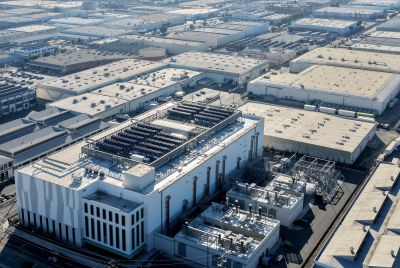
"The largest infrastructure build-out in human history" is underway, Huang said, predicting it will generate "a lot of jobs" across the skilled trades. Global technology companies are expected to spend an estimated $7 trillion on AI infrastructure by the end of the decade as they race to expand computing capacity.
The rapid construction of data centers, semiconductor facilities and AI factories is already reshaping labor demand, with companies competing for workers capable of building and maintaining these highly specialized facilities. "It's wonderful that the jobs are related to tradecraft, and we're going to have plumbers and electricians and construction and steelworkers," Huang said during the Davos discussion.
"Everybody should be able to make a great living. You don't need to have a PhD in computer science to do so." His comments come as many recent college graduates face a difficult labor market. Economic uncertainty, changing corporate hiring strategies and the growing use of artificial intelligence have slowed hiring in several white-collar industries, particularly for entry-level positions.
Meanwhile, demand for skilled labor continues to outpace supply. According to a McKinsey report, the United States will need an additional 130,000 trained electricians, 240,000 construction laborers, and 150,000 construction supervisors between 2023 and 2030 to meet expected demand.
Many of these positions can pay well into six figures, particularly in specialized industrial and infrastructure projects. Huang has consistently argued that AI will not only create new technology jobs but also spark growth across traditional industries.
Ford CEO Jim Farley has repeatedly argued that AI is reducing demand for entry level corporate jobs even as the United States struggles to recruit enough workers for manufacturing and construction.
"There's more than one way to the American Dream, but our whole education system is focused on four-year college education," Farley said during the Aspen Ideas Festival in 2025.
He added that hiring for entry-level positions at technology companies has dropped roughly 50% since 2019. He warned that artificial intelligence could eventually replace "literally half of all white collar workers in the U.S."
Farley has also questioned whether the nation's workforce is prepared for a manufacturing resurgence driven by reshoring and infrastructure investment. "I think the intent is there, but there's nothing to backfill the ambition," he told Axios in 2025. "How can we reshore all this stuff if we don't have people to work there?"
According to Farley, the United States was already facing shortages of approximately 600,000 factory workers and 500,000 construction workers as of mid 2025. BlackRock CEO Larry Fink has echoed similar concerns, particularly regarding electricians, whose expertise is essential for powering and connecting large AI data centers.
© Copyright IBTimes 2026. All rights reserved.
- Recommended For You