Oil Is Moving Through the Strait of Hormuz Again, But Not as Much as Trump Says: Report
Trump said on August 31 that the strait had been averaging "30 ships a night."


President Donald Trump has repeatedly claimed that the Strait of Hormuz is open and that millions of barrels of oil are moving safely through the strategic waterway every day despite the war with Iran. But maritime tracking data suggests that while oil is flowing, it is nowhere near the levels seen before the conflict began.
A new Washington Post report highlights significant differences between figures cited by the Trump administration and estimates from commercial shipping trackers attempting to measure traffic through one of the world's most important energy chokepoints.
Before the war, roughly 20 million barrels of oil and petroleum products passed through the Strait of Hormuz each day. Today, independent estimates generally put flows at well below half that level.
Trump said on August 31 that the strait had been averaging "30 ships a night." If those vessels were all very large crude carriers, which can transport more than 2 million barrels each, that could theoretically represent more than 60 million barrels.
Other administration officials have offered considerably lower numbers. Treasury Secretary Scott Bessent cited a wartime high of more than 17 million barrels in 24 hours. Vice President JD Vance later said about 15 million barrels had passed through the strait in a single day.
Energy Secretary Chris Wright has focused instead on averages, telling Fox News that waterborne shipments were running above 9 million barrels per day. An administration official subsequently told The Post that the seven-day average for oil and petroleum products was slightly above 10 million barrels daily, with another 4 million to 5 million barrels leaving the Gulf through pipelines.
Trump Energy Secretary Chris Wright: "Why would we be lying?" pic.twitter.com/xvIv5WdN3S
— Aaron Rupar (@atrupar) September 6, 2026
Commercial tracking companies are recording less. TankerTrackers reported a 60-day average of 7.85 million barrels per day. Brett Erickson, managing principal of Obsidian Risk Advisors, estimated that flows have consistently averaged about 6.5 million to 7 million barrels per day over a month, although they have recently moved closer to 8 million.
That distinction matters because daily traffic can fluctuate dramatically. One day could see 11 million or 12 million barrels cross the strait, while the following day could fall to 3 million or 4 million.
A single high-volume day, therefore, does not necessarily reflect the broader state of oil exports. Reuters reported Sunday that commodity-vessel traffic through Hormuz remained well below its recent average over the weekend, with only four vessels exiting the Gulf and 10 entering.
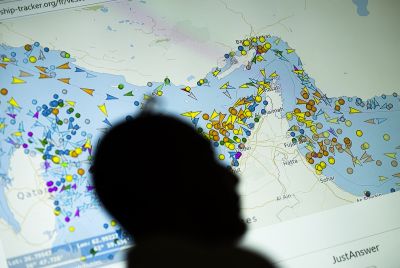
The numbers are also unusually difficult to verify as tankers increasingly switch off their Automatic Identification System transponders while crossing Hormuz to make themselves harder for Iranian forces to track. That means commercial companies can discover previously unseen "dark" crossings days later using satellite imagery and other information.
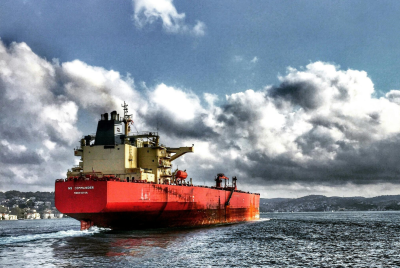
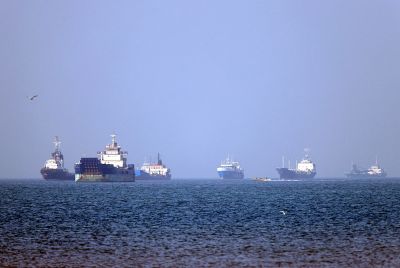
American forces coordinate with tankers preparing to transit Hormuz, guiding timing and procedures while protecting vessels from Iranian missiles and drones from a distance. Navy Capt. Tim Hawkins, a spokesman for U.S. Central Command, told The Post that U.S. forces have assisted more than 1,600 vessels carrying more than 800 million barrels of crude since May.
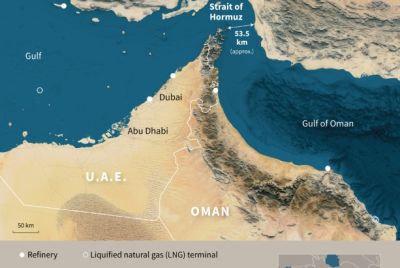
Even with those efforts, however, the strait has not returned to anything resembling normal prewar traffic. The problem could become more acute after a drone attack forced Saudi Arabia to shut its East-West pipeline, an important alternative route that had been moving about 4 million barrels per day around Hormuz. The pipeline is expected to remain largely out of service for several weeks.
Reuters separately reported that roughly one-third of Gulf oil exports remained missing even after accounting for tankers traveling with their transponders turned off. The available data therefore supports a narrower conclusion than simply declaring Hormuz "open."
Oil is moving through the strait, and U.S. military assistance has helped increase those flows. But independent tracking indicates volumes remain substantially below the roughly 20 million barrels per day that moved through the waterway before the war. As one U.S. military official told The Post: "It's not zero, but it's also not at pre-conflict levels."
© Copyright IBTimes 2026. All rights reserved.
- Recommended For You