Trump Promised a Rapid Venezuela Oil Revival. Eight Months Later, American Companies Have Not Seen It.
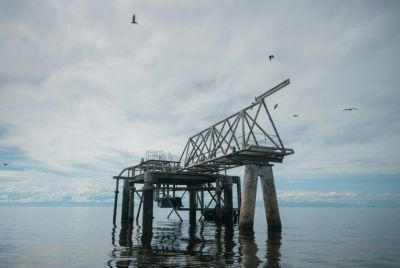
Critics argue that bureaucratic delays have prevented American companies from moving quickly into Venezuela's oil market.


Nearly eight months after President Donald Trump pledged that U.S. companies would "rapidly rebuild" Venezuela's oil industry, no new petroleum agreements have been finalized with the U.S., according to a new report. The delays are fueling criticism from industry executives and government officials, particularly as rising global oil prices renew interest in Venezuela's vast energy reserves.
According to Axios, which cites more than a dozen oil executives, senior U.S. officials and people familiar with negotiations, much of the blame is being directed at the U.S. Department of Energy, which has overseen negotiations with Caracas since Trump's January announcement.
Critics argue that bureaucratic delays have prevented American companies from moving quickly into one of the world's largest untapped oil markets. "We have no new concessions. No new deals. It is absolutely a problem," one senior U.S. official told Axios, adding that the department "has some explaining to do."
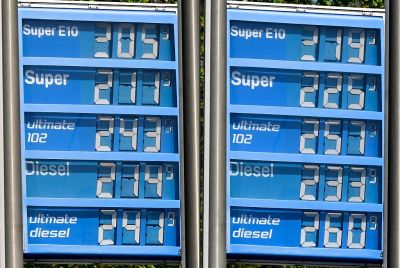
The criticism comes at a pivotal moment for global energy markets. Oil prices have climbed in recent weeks as the conflict involving Iran has tightened global supplies, increasing the strategic importance of Venezuela, which holds the world's largest estimated proven crude oil reserves.
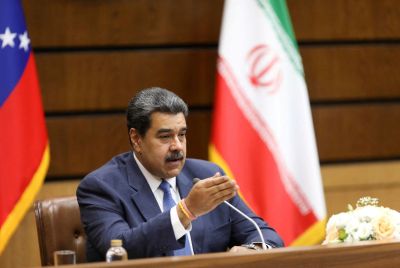
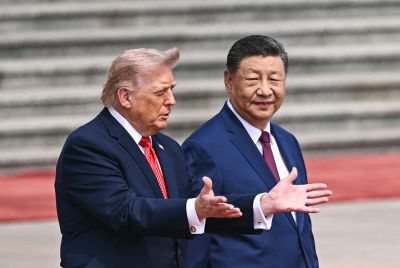
Trump announced shortly after Maduro's removal from power on Jan. 3 that the United States would oversee which American companies would participate in rebuilding Venezuela's battered petroleum sector. Speaking to oil executives days later, Trump said firms would work directly with Washington rather than negotiating independently with Venezuelan authorities.
However, translating that promise into signed contracts has proven far more difficult than anticipated. Major multinational producers such as ExxonMobil and ConocoPhillips have reportedly taken a cautious approach, citing legal and political uncertainty before committing billions of dollars to new projects.
Meanwhile, smaller independent producers, commonly known as wildcatters, have aggressively pushed for faster approvals, arguing they are better positioned to accept higher risks in exchange for earlier access.
Those competing philosophies have been mirrored inside the Trump administration.
According to the outlet, officials aligned with Trump's "America First" agenda favored quickly opening Venezuela's oil fields under internationally recognized industry contracts, allowing smaller American firms to begin drilling as soon as possible.
Career officials at the Department of Energy instead advocated a slower process that emphasized regulatory reforms and coordination with Venezuela's state-owned oil company, PDVSA.
Former Trump adviser on Latin America Mauricio Claver-Carone accused the department of favoring large multinational companies while placing burdensome conditions on independent American producers.
Industry frustration has continued to mount as negotiations drag on. Axios reported that several independent companies submitted documentation showing they repeatedly urged the Energy Department to require PDVSA to adopt standard international contracts commonly used in high-risk drilling operations.
Company representatives claim insufficient action delayed investments that could already be increasing Venezuelan production. "We're months behind," one executive told the outlet, arguing that American output could already be rising had approvals been granted earlier.
The Department of Energy strongly disputes suggestions that it has slowed progress.
Department spokesperson Ben Dieterich said officials continue working with both Venezuelan authorities and American companies "of all sizes" to expand investment opportunities while strengthening Venezuela's legal framework for foreign energy companies.
Complicating matters further, Venezuela is also recovering from two powerful earthquakes that struck on June 28, damaging infrastructure and increasing economic pressure throughout the country.
Today, Venezuela produces approximately 1.2 million barrels of oil per day, modestly above pre-2026 levels but far below the roughly 3.4 million barrels produced in 1998 before Chávez transformed the country's energy sector.
© Copyright IBTimes 2026. All rights reserved.
- Recommended For You