The U.S. And Iran Appear To Move Further Away From a Deal To Reopen Hormuz. Stocks Edge Down.
Oil jumped after President Donald Trump said he would be demanding compensations from Iran for damages sustained as a result of the war.


Stocks edged down on Monday as traders continue assessing the ongoing dispute between the U.S. and Iran.
The S&P 500 fell 0.06%, while the tech-heavy Nasdaq Composite underperformed, declining 0.32%. The Dow Jones Industrial Average decreased by 0.11%.
Oil, in turn, jumped after President Donald Trump said he would be demanding compensations from Iran for damages sustained.
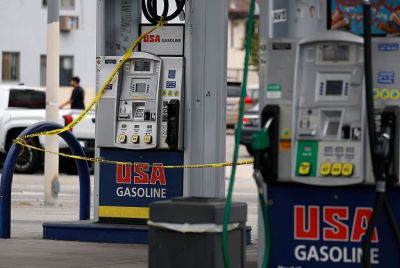
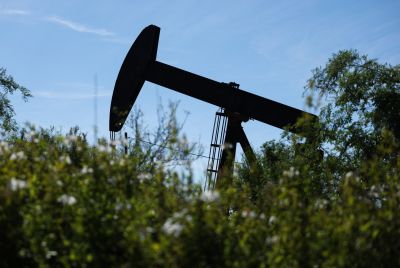
Brent crude climbed almost 5%, standing above $87.50 a barrel at 4:03 p.m., while West Texas Intermediate did so by 5.07% at the same time, clocking in at $82.14 at the same time.
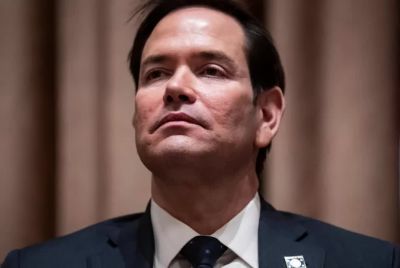
Trump said in a social media publication that said he noticed the requirements from Tehran and, as a result, he is "demanding compensation from Iran, for all of the people that they have killed and gravely wounded with their roadside bombs and many conflicts, for which they are famous, as led initially by General Soleimani, including the families of those killed on the USS Cole, and thousands of others killed in combat."
"Additionally, compensation should be paid to the families of the hundreds of thousands of innocent protestors that Iran has killed over the last 50 years, not to mention the 52,000 that have been killed in the last five months. I have instructed my representatives to put this firmly into any, and all, future negotiations," he added.
Trump had already signaled a shift to economic, rather than military pressure on Monday as a deal with Iran remains elusive.
"We are low-keying it," Trump told Axios on Sunday. "We are only semi-negotiating with them. We are just watching Iran with its huge inflation and the fact they have no money."
The president went on to say that the country is in "very bad shape," claiming that the situation will "work out." "It always works out. It's like a chess game," he said.
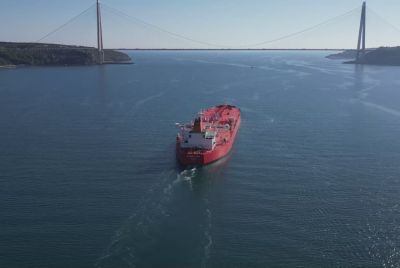
Over the weekend, Iran set out fresh conditions to reopen the waterway. The Supreme National Security Council's secretary, Mohammad Bagher Zolghadr, said conditions include an end of U.S. aggressive behavior, "including any threats to the country's national and religious sanctities."
A permanent end to the "war and aggression against Iran and its allies in Lebanon, Palestine, Yemen and Iraq" is another demand.
Apart from lifting the Naval blockade enforced by the US, Iran has also sought a withdrawal of the US naval and air forces from Iran's neighborhood. A full compensation package "for damages caused by two wars of aggression and imposition," lifting of "unjust and illegal" sanctions and unconditional release of Iranian assets "that were blocked and stolen" completed the terms.
Elsewhere, the Strategic Petroleum Reserve (SPR) fell to its lowest level in more than 40 years as the Strait of Hormuz remains largely closed.
Data from the Department of Energy showed that the SPR stood below 300 million barrels last week, the lowest since January 1983.
It was at about 415 million barrels before the war with Iran bean in late February and has a maximum authorized capacity of 714 million barrels.
A spokesperson for the DoE told CNBC that the minimum amount needed to operate the SPR is 70 million barrels.
© Copyright IBTimes 2026. All rights reserved.
- Recommended For You