

XRP Falls Below $1 for the First Time Since 2024, on Ripple’s Biggest Korea Day

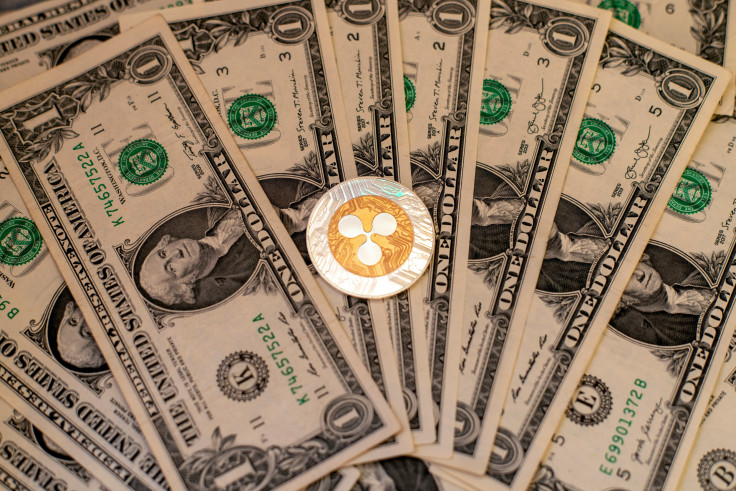
On August 18, Ripple announced that Jeonbuk Bank had become the first regional bank in South Korea to deploy Ripple Payments for cross-border remittances, the company's third Korean institutional deal of 2026.
Within hours, XRP slipped below $1 for the first time since November 2024.
That split-screen is the whole story. The company keeps winning banks. The token keeps losing ground. And on August 19, XRP is testing the $1 line for the ninth consecutive session, with each retest landing weaker than the last.
What the Jeonbuk Deal Actually Delivers
The substance is real. Jeonbuk, founded in 1969 and the dominant lender in its home province under JB Financial Group, will use Ripple Payments to replace multi-day SWIFT transfers with settlement that completes in seconds to minutes and runs around the clock. The target customers are the businesses that feel slow rails the most: import-export firms, IT startups, and online content creators.
The executives framed it as a turning point:
"This partnership reflects the growing momentum we are seeing across Korea's institutional financial sector." - Fiona Murray, Managing Director, Asia Pacific, Ripple
Stack it with April's deals, Kyobo Life Insurance exploring tokenized government-bond settlement through Ripple Custody, and KBank, the internet-only bank serving 15 million users as Upbit's exclusive banking partner, and Ripple now touches custody, payments, and wallet infrastructure across Korea's institutional market.
All of it lands as Seoul finalizes its Digital Asset Basic Act, which is expected to classify stablecoins as payment instruments.
"JB Jeonbuk Bank is ready to move beyond its role as a regional bank and emerge as a digital finance leader that meets global standards." — Park Choon-won, President, Jeonbuk Bank
The Question Ripple Won't Answer
Here's the detail the celebration threads skip. The announcement never says which asset settles the money. Ripple's release describes near real-time "stablecoin cross-border settlement," and when CoinDesk asked directly whether Jeonbuk's flows use XRP, Ripple didn't reply.
The precedent isn't encouraging for token holders. KBank's pilot uses stablecoin-based settlement, not XRP as a bridge, and Ripple has spent the past year pushing RLUSD as its institutional settlement asset.
Every Korean deal so far is confirmed adoption of Ripple's rails and unconfirmed demand for the coin. That gap is exactly why a steady drumbeat of partnership headlines keeps failing to move the price.
XRP Price Today: Nine Sessions on the Ledge
XRP trades around $0.99 on August 19, down roughly 73% from its July 2025 peak of $3.65, with a market cap near $62 billion.
The $1 level that held through every panic since 2024 has flipped from fortress to battleground. Below it, the recent 52-week low at $0.97 to $0.98 is the last defense before the $0.90 zone opens.
Overhead, $1.05 to $1.08 is the first reclaim level, with the real wall at $1.18 to $1.20.

The forecasters haven't capitulated. Standard Chartered still models $12.50 by 2028, Bitwise projects $6.53 for 2026 and $29.32 by 2030, and the XRP faithful read every SWIFT comparison as proof the $10 thesis is alive. But those models all require the thing no Korean deal has yet confirmed: settlement volume actually flowing through the token.
So the question every holder should sit with as $1 buckles: if Ripple can sign a bank a month and the token still can't hold a dollar, what exactly does the market need to see, and how long is it willing to wait to see it?
© Copyright IBTimes 2026. All rights reserved.