Coptic Christians: Egypt’s Besieged Minority
ANALYSIS
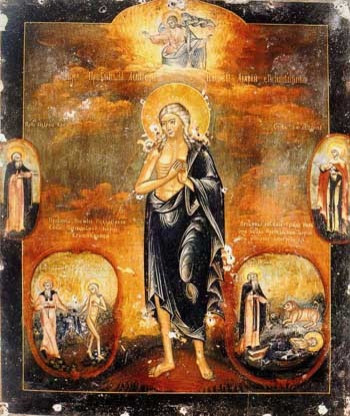
The emergence of conservative Islamist political groups in the wake of the Egyptian revolt has raised fears about the nation's Coptic Christian minority.
Long persecuted by the Muslim majority, tensions between the two factions have intensified in the past year, featuring riots, assaults, arson and other incidences of sectarian strife.
The Christian presence in Egypt stretches as far back to the earliest days of Christendom -- in fact, it was the nation's dominant faith until the Arab Muslim invasions of the 7th century.
Today, the Copts represent at least 5 percent of Egypt's population (perhaps higher), making it the largest Christian community in the Middle East.
The Coptic church itself is quite diversified, including Orthodox, Catholic and even Protestant members – although the Copts are not affiliated in any way with either the Roman Catholic Church of Rome or the various Eastern Orthodox churches.
About 4-million Egyptian Copts are believed to live outside of Egypt, including communities in Sudan, U.S., Canada and Australia.
In 1952, when Gamal Adel Nasser overthrew King Farouk and established a pan-Arab nationalist republic, the status of Coptic Christians became extremely precarious.
Christians, who were resented for their wealth, witnessed the closing of some of their churches and courts and confiscation of properties, prompting many to emigrate.
Meanwhile, Copts who remained in Egypt have faced widespread discrimination, restrictions on church-building and, in the worst cases, assaults and murders by militant Muslims.
Human Rights Watch (HRW) once noted: Egyptians are able to convert to Islam generally without difficulty, but Muslims who convert to Christianity face difficulties in getting new identity papers and some have been arrested for allegedly forging such documents.”
Egyptian authorities have also reportedly under-reported the number of Christians in the country in order to downplay their influence.
However, a number of Copts have reached high positions in government, including Boutros Boutros-Ghali, who served as Egypt's acting foreign minister twice under President Anwar Sadat; and later served as the United Nations Secretary-General.
Now, in 2012, with Islamist parties having performed exceedingly well in post-Hosni Mubarak parliamentary elections (with even the hard-line Salafist candidates scoring some seats), the Copts are again living in fear. (Under Mubarak’s reign, Islamic fundamentalist parties were banned).
The Salafists adhere to the type of harsh, unyielding Islam that is predominant in Saudi Arabia. Salafists have already burned Christian churches and attacked Copts.
One Coptic Christian in Cairo named Girig Szaki told Agence France Presse (AFP): “All Coptics are very worried. We didn’t expect this. We wanted some liberals to be elected. In the other stages, maybe there’ll be a change.”
A Coptic Christian doctor named Eman Seif told AFP: “A lot of Christians are now saying that the Mubarak era was better than now, but I don’t agree. We were surprised but we are still optimistic. This is democracy now and this is the real opinion of Egyptians. The secular section is still fighting.”
Although the more moderate Muslim Brotherhood party has made it clear that it is committed to forming a democratic, multi-party country (in fact, it appointed a Christian as its vice president and includes 100 Copts as founding members), not all Copts are convinced by their overtures.
A Coptic priest told Western media: “Some [Copts] are scared. They [the Brotherhood] have promised they are our brothers and we are one community. We are waiting to see.”
Indeed, some Islamists have openly referred to Christians as kaffirs (heretics), while others demand the re-institution of the dreaded ‘jizya’ – a heavy tax levied on non-Muslims.
One of the most prominent Copts in Egypt, billionaire businessman Naguib Sawiris is facing charges of blasphemy and “insulting Islam” after having posted images of Mickey Mouse and Minnie Mouse donning Muslim clothing on his Twitter account. If convicted, he could face up to a year in prison.
However, according to The New American, at least one prominent Copt figure has insisted that Christians cannot be driven out of Egypt.
Father Filopater Gameel said:”The Copts will be the voice in Egypt that will continue to call for freedom, equality and a civil state. We will remain here and continue the fight for the beautiful and ancient Egyptian civilization. I do not agree with the decision of many Copts to emigrate or flee the country because the Islamists won. This is passive. I think those who leave will be very few. Mass emigration, I believe, will not take place and Egypt will always have its Christians.”
Gameel added: “The biggest problem I have with the Islamists is that they are unclear and have many faces. They say one thing and then later deny it, and when people lie you cannot trust them. I think it also shows that we replaced the Mubarak dictatorship with a new dictatorship, but this time it is religious. However, we Copts will not give up. We will continue in the struggle for our freedom in Tahrir Square and all other squares in the country.”
The near future for Egypt looks very confused, even for the Muslim majority who are seeking relief from decades of repression. For the country’s Christian population, the futire may look even grimmer.
© Copyright IBTimes 2026. All rights reserved.
- MOST READ