

Wikileaks: China to Germany, US diplomacy smacks of quid-pro-quo dealings
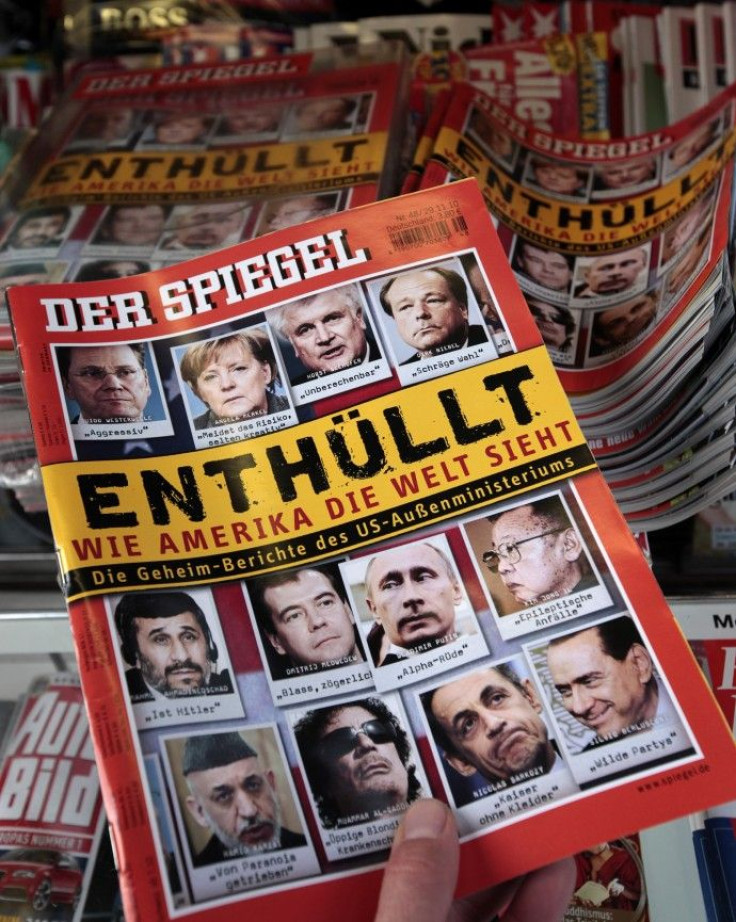
The year 2010 was not good for Google in China and the hacking was, indeed, part of a sabotage attempt carried out with help from the government quarters, reveal the classified U.S. documents released by Wikileaks on Sunday. China to Germany, US diplomacy generally smacks of quid-pro-quo dealings, as ever.
GOOGLE IN CHINA:
There was a flurry of messages going out from the US embassy in Beijing quoting a contact as early as in January that the governing Politburo or the apex body of the Communit Party of China was involved in the Google case, though the Chinese government denied it. Apart from Google, 33 other companies with their offices in China, reported hacking of their computers during the period, reveal the papers. Google has moved its search engine base to Hong Kong, in order to get its Internet Content Provider license renewed, the documents indicate. Otherwise, China used hackers to access Gmail accounts of its human rights activists and they have kept track of Dalai Lama and US companies since 2002.
YEMEN'S SUPPORT:
In other revelations, Yemen has helped the U.S. to target al Qaeda. Yemeni President Ali Abdullah Saleh told General David Petraeus in January 2010, We’ll continue saying the bombs are ours, not yours.” This helped the U.S. tide over the suspicion among the countries in the Middle East and the documents show that the Yemeni President even told a lie in parliament to cover up the US strikes.
SPYING ON UN SECRETARY-GENERAL:
US Secretary of State ordered spying on the members of the UN Security Council, officials including Secretary-General Ban Ki-moon. While the credit-card numbers, flight details, official meetings, emails. cellphone numbers of the UN officials was collected as part of the project, Clinton reportedly requested details on management and decision-making style of Ban Ki-moon and his influence on the UN secretariat. Her predecessor Condoleezza Rice too made similar requests on the UN personnel in July 2009. These revelations show that the United States deprived the world body of its independence and no-interference obligations under a 1946 treaty.
PLEA FOR ATTACK ON IRAN:
Saudi Arabia’s King Abdullah had asked the U.S. repeatedly in 2008 to attack Iran, saying “cut off the head of the snake”. He was suspicious with Iran's controversial nuclear program and called for “severe U.S. and international sanctions on Iran.” Saudi Arabia was not alone as Israel too pressed for action against Iran. In a message sent in June 2009, Israeli Defense Minister Ehud Barak had estimated that in 6 to 18 months it would be possible to stop Iran from acquiring nuclear weapons. Other documents show that Iran might have also acquired advanced missiles capable of carrying nuclear warheads from North Korea.
GUANTANAMO DETAINEES:
U.S. officials were so anxious to send back Guantanamo prisoners that they struck deals with many island nations in the Pacific, show the documents.They offered millions of dollars to Kiribati to provide shelter to the detainees who are of Chinese Muslim origin. They also offered Slovenia to accept a prisoner in return for a meeting with President Barack Obama. They told Belgium that in return for taking these prisoners, it would be allowed to grow in prominence in Europe. German Ambassador Michael Schaefer informed China of the U.S. request to accept some Uighur detainees and had been subsequently warned by China of a heavy burden on bilateral relations if Germany were to accept any detainees, says another cable.
KOREAN REUNIFICATION:
South Korea and the U.S. had discussed Korean reunification plans in February 2010, in case the communit regime in the North collapses. But China, as is ever, was an obstacle for both. The prime interest was to keep a united Korea in alliance with the United States.
GERMANY'S MERKEL:
The German Chancellor Angela Merkel was criticized in one of the documents by former U.S. envoy William Timken for not taking bold steps yet to improve the substantive content of the relationship.” Merkel was perceived as “risk averse and rarely creative” in a 2008 message. German Foreign Minister Guido Westerwelle was found “short on substance,” in these documents.
BERLUSCONI'S 'SHADOWY' TIES WITH PUTIN:
On Italian Prime Minister Silvio Berlusconi was described as freckless, vain, and ineffective as a modern Europen leader by U.S. envoy Elizabeth Dibble in one document while his relationship with Russian Prime Minister Vladimir Putin was found shadowy in another. Clinton wanted the envoys in the two nations to watch out for any business dealings between the two.
INDIA & AFGHAN TALKS:
US was keen to rope in India in Afghan talks, despite Turkish opposition citing Pakistan's objection. But the Bahrain King was positive on Indian involvement in Afghanistan. US also used India's opinion in its Voice of America broadcasts to Iran as a leader in the Nonaligned Movement, the paper show. Indian Foreign Minister S.M. Krishna, had however, said that India was not worried about the leaks though he wanted to know the contents.
PAKISTAN'S NUCLEAR PROGRAM:
The US has had a standoff over the use of enriched uranium in Pakistan and since 2007 it was mounting pressure on Islamabad to, say messages sent by US ambassador Anne W. Patterson in May 2009. He complained that Pakistan was refusing to schedule a visit by American technical experts because, as a Pakistani official said, if the local media got word of the fuel removal, they certainly would portray it as the United States taking Pakistan's nuclear weapons. The documents show that the US is still unsure about real partners in Pakistan to wage a war against al Qaeda bases. It also notes that a lurking rickshaw driver in Lahore might be watching the US consulate.
HOW BRAZIL TACKLES TERRORISTS?
A cable sent by US Ambassador Clifford Sobel says the police and intelligence agencies had arrested some individuals with links to terrorism but charged them on a variety of non-terrorism related crimes to avoid calling attention of the media and the higher levels of the government. Most of them are charged under anti-narcotics and anti-smuggling acts, the message Wikileaks documents reveals. Brazil minister for intelligence Jorge Armando Felix, who met the ambassador in May 2005, was quoted to have said that Brazil was asking moderate, second generation Arabs, to keep a close eye on fellow Arabs who may be influenced by Arab extremists and/or terrorist groups. It was in their own interest that the entire Arab community in the country is not brought under radar, he reportedly told the ambassador. Brazil denies the existence of counter-terrorism operations.
© Copyright IBTimes 2024. All rights reserved.
-
Microsoft Expands Its AI Empire Abroad
-
Oil: 'Mother Of Corruption' In Venezuela
-

'Extreme' Climate Blamed For World's Worst Wine Harvest In 62 Years
-
Macron Warns 'Mortal' Europe Needs Credible Defence
-
Bitcoin And Crypto Price Review - Another Myth Gets Busted?
-
Mass Cancellations Loom Despite French Air Union Cancelling Strike
-
Mired In Crisis, Boeing Reports Another Loss
-
Recycled 'Zombie' Misinformation Targets US Voters
-

Hackers Leak Part Of Source Code Of El Salvador's Bitcoin Wallet
-
Azerbaijan Says 'Closer Than Ever' To Armenia Peace Deal Amid Border Talks


