By Mark Johanson | September 10 2012 12:04 PM
Intel’s 3-D Transistor Looking To Break An ARM
With the introduction of its 3-D transistor technology, Intel has set its sights on a mobile future and its toughest competitor to date: ARM Holdings.
In a press event yesterday in San Francisco, Calif., Intel introduced a revolutionary 3-D transistor that is processed with 22 nanometer technology. Intel says it will be the first mass-produced transistor to go beyond the two-dimensional planar transistor structure. The new transistors, which Intel says is the evolutionary next step in Moore's Law, have 37 percent more performance than its predecessors while using less power.
The 3-D transistor, named Tri-Gate, uses an incredibly thin three-dimensional silicon fin that rises up vertically from the silicon substrate. Unlike the previous generation where control of the current was accomplished through one gate on top, in Tri-Gate it's done by implementing a gate on three sides of the fin.
The big appeal for the smaller, but more powerful transistor is its capabilities in mobile products. During the event, Intel outright predicted the transistor would be huge in smartphones and tablets, which operate using less energy to switch back and forth.
Tri-Gate's possibilities in mobile couldn't come at a better time for Intel, which faces an increasing threat from ARM Holdings. The Cambridge, England-based ARM manufacturers the ARM architecture, a 32-bit processor licensed and used by a significant amount of major semiconductor companies including Qualcomm, Samsung and Nvidia. It has become a popular processor for an increasing amount of smartphones and tablets, including the iPhone and iPad.
ARM's domination in mobile devices could lead to a stronger presence in personal computing. Research firm IDC thinks so; according to their latest report, IDC said by 2015, 13 percent of PC processors will be based on the ARM architecture. This comes after IDC forecasted PC microprocessor units by processor architecture for the first time, and included ARM in that categorization.
Shane Rau, analyst for IDC, told MarketWatch that their predictions come after Microsoft's announcement that the next version of Windows will support ARM's technology.
Analysts, which have been down on Intel's lack of penetration in the mobile market, were impressed by Tri-Gate, with many saying it could overwhelm ARM. UBS analyst, Uche Orji, expressed this sentiment in a note to investors.
Given the potential power consumption advantage, 22nm Atom system-on-chip (SoC) devices for smartphones/tablets could deliver dramatically better performance and close the gap vs competing ARM processors at 28nm, Orji said.
John Pitzer, analyst at Credit Suiss also said the Tri-Gate 3-D transistor will help Intel become successful in non-traditional markets such as tablets, smartphones, and says it will happen within the next 12 months. Furthermore, he says at 22nm, he expects Intel to have better performance at lower power than ARM.
The Tri-Gate 3D transistor will provide a big boost to Intel's x86 architecture against ARM is whatDoug Freedman, analyst at Gleacher & Company, says will happen.. The fact that x86 products will have first access to 3D transistor gate technology will likely help offset to the architecture handicap of x86 vs. ARM in optimizing low-power, Freedman said. We do not view this as game changing, but do see it as heating up the x86 versus ARM battle.
However, Freedman is also cautious not to be too optimistic regarding Intel's new technology. He says ARM has become so embedded in the tablet and smartphone markets that it will not be easy to overcome. Bernstein Research analyst Stacy Rasgon in note had the same exact thoughts as Freedman.
We do not believe the new 22-nanometer technology will accelerate Intel's offerings in the mid-term vis-à-vis ARM in the ultra-mobile space, Rasgon said.
Oil hits 11-month high above $76 a barrel
Oil surged to an 11-month high above $76 a barrel on Friday, closing in on the all-time record as Nigerian disruptions and OPEC output cuts stirred supply concerns amid rising U.S. refiner demand.
London Brent crude, currently seen as a better indicator of the global market, settled up 87 cents at $75.62 a barrel, after touching a session high of $76.01, its highest since August 2006. The rise put Brent within striking distance of the record $78.65 struck last August.
U.S. crude gained $1.00 to $72.81, the highest settlement since August 22, 2006.
The global oil picture is fairly tight in terms of supply and demand growth, said Harry Tchilinguirian, senior oil market analyst at BNP Paribas.
Global oil demand growth is increasing faster than non-OPEC supply in the second half of 2007 while OPEC has met most of its supply cuts and Nigeria's output is being disrupted.
Together, these elements are very supportive of prices, Tchilinguirian said.
NIGERIAN DISRUPTIONS
Some 611,000 barrels per day (bpd) of Nigerian production is shut in after a year and a half of attacks on its oil industry.
A one-month truce by the rebel group responsible for much of the violence directed at the Nigerian oil industry has recently ended. Nigerian rebels have attacked an oil rig and kidnapped a 3-year-old British girl in Port Harcourt in the oil producing Niger Delta.
We think the oil market is in deficit, said Markus Mezger, partner at Tiberius Services AG, a Swiss-based asset manager in commodities futures funds.
The rising (crude) stocks in the U.S. is not representative of the global stock levels. We think OECD inventories saw a drawdown in the last month.
Expectations that summer maintenance will reduce supplies of crude from the North Sea oilfields has also helped keep Brent higher relative to crude in the United States, where supplies are at nine-year highs.
U.S. refinery demand is set to start soaking up the crude stocks. Analysts expect refineries to ramp up crude oil runs in the coming weeks after a spate of lengthy unplanned maintenance shutdowns.
Last week, inputs to U.S. refineries rose in every part of the United States, except for the West Coast, according to U.S. government data.
Gasoline supplies worldwide are also tightening.
Northwest European stock levels have fallen to a two-month low, exports from key Asian exporter China in July will drop to their lowest in 10 months and Japanese stocks this week dipped below year-ago levels for the first time this year.
(Reporting by Felicia Loo in Singapore, Janet McBride in London, Robert Campbell and Matthew Robinson in New York)
The Rise and Fall of the Dominique Strauss-Kahn Case [TIMELINE]
May 14: Dominique Strauss-Kahn arrested in New York, on accusations that he sexually attacked hotel maid. He was arrested after boarding plane en route to Paris at John F. Kennedy Airport in New York.
May 16: Strauss-Kahn is arraigned and pleads not guilty in initial hearing to the charges against him. He is moved from a Manhattan detention center to New York's notorious Rikers Island Prison Facility.
May 17: French journalist Tristane Banon accuses Strauss-Kahn of sexually assaulting her in 2002.
May 19: Strauss-Kahn resigns from his position as head of IMF. He is also formally indicted on seven counts of sexual assault.
May 20: After a new hearing, Strauss-Kahn is released on $1 million bail, and moved to a safe-house to be continuously monitored on house arrest.
May 24: Matching DNA of Strauss-Kahn is found on maid's clothing.
May 25: Strauss-Kahn moved to lavish TriBeCa townhouse to await trial.
June 6: Strauss-Kahn pleads not guilty to sexual assault charges at arraignment in Manhattan.
June 17: Transcripts are released by prosecutors, where Strauss-Kahn initially claimed diplomatic immunity once he was arrested. The transcripts also revealed that he left his cell phone at the hotel, allowing police to detain Strauss-Kahn before he departed for Paris.
June 26: French Finance Minister Christine Lagarde is awarded the Strauss-Kahn's former position as head of the IMF.
July 1: With the prosecutors' case crumbling after the maid's credibility is questioned, Strauss-Kahn is released from bail at New York court hearing.
July 4: Tristane Banon announces that she will file civil charges against Strauss-Kahn.
August 21: Prosecutors set on formally dropping charges against Strauss-Kahn.
China Q1 GDP growth slows to record low
China's annual gross domestic product growth slowed in the first quarter to 6.1 percent from 6.8 percent in the fourth quarter of 2008, the National Bureau of Statistics (NBS) said on Thursday.
That marks the weakest growth since quarterly records began in 1992 and compares with economists' forecasts of a 6.3 percent rise.
The statistics agency did not give a year-on-year figure for the producer price index in March, but said it declined 0.3 percent in March compared with February, a smaller monthly rate of decline than in the previous two months.
China has started to implement a 4 trillion yuan ($585 billion) stimulus package to counter the impact of the global slowdown, helping prompt a surge in lending in the first three months of the year.
The overall national economy showed positive changes, with better performance than expected, the NBS said in a statement distributed ahead of a news conference.
It added that export demand had dropped sharply, causing declining profits for companies, reducing government revenues and increasing employment difficulties.
The national economy is confronted with the pressure of a slowdown, it said.
(We should) continuously improve macroeconomic policies and make efforts to realize sound and fast growth.
-- GDP in the first quarter hit 6.57 trillion yuan ($962 billion at current exchange rates).
-- Urban per-capita incomes were up 11.2 percent from a year earlier in real terms in Q1; rural per-capita incomes were up 8.6 percent in real terms.
-- A total of 1.62 million new jobs were created in urban areas.
(Reporting by Simon Rabinovitch and Zhou Xin; Editing by Jason Subler and Ken Wills)
Currency Trading Summary – 10th June
U.S. Dollar Trading (USD) resumed weakening after a brief period of strengthening as speculation of future rate hikes in the US were dampened. In a survey of the major US bond traders all 16/16 thought the US would not raise rates this year. USD/JPY was lower even as stocks rallied on banking and mining stocks. Oil broke and closed above $70 a barrel. Crude Oil closed up $1.92 to finish the day at $70.01. In US share markets, the Nasdaq was up 17 points or 0.96% and the Dow Jones was down 1 points or -0.02%. Looking ahead, April Trade Balance forecast at -29BN vs. -28Bn previously.
The Euro (EUR) regained above 1.4000 after Goldman Sachs put out a buy recommendation and the USD weakened after traders pared back bets of the US Fed raising rates this year. German Industrial Production was down -1.9% in April vs. 0.0% forecast. O verall the EUR/USD traded with a low of 1.4004 and a high of 1.3804 before closing at 1.3910. Looking ahead, May German CPI is forecast at -0.1%.
The Japanese Yen (JPY) strengthened against the USD as Yields dropped on the above news. Support at 98 gave weigh but crosses continued to provide support on dips so the downside may be limited while risk appetite is strong. Core Machinery Orders fell -5.4% vs. 0.1% forecast. Overall the USDJPY traded with a low of 97.24 and a high of 98.57 before closing the day around 97.40 in the New York session.
The Sterling (GBP) continued the rally that began yesterday on route back above 1.6300 towards year highs above 1.66. Better than expected RICS house price balance helped propel the pair with gains above 1% for the day. O verall the GBP/USD traded with a low of 1.5985 and a high of 1.6365 before closing the day at 1.6330 in the New York session. Industrial Output is forecast at -0.1% vs. 0.0%. Also released, April Trade balance is forecast at -6.4Bn vs. -6.59Bn.
The Australian Dollar (AUD) regained 0.8000 as USD weakened and commodities surged. The major topside target at year highs of 0.8260 could come under threat as June consumer confidence increased the most on record up 12%. O verall the AUD/USD traded with a low of 0.7851 and a high of 0.8046 before closing the US session at 0.8015. Looking ahead, Australian June Unemployment is forecast at -30k vs. +27.2K previously.
Gold (XAU) couldn't rally on the USD weakness with improving risk sentiment and inflation pressures yet to materialize. Overall trading with a low of USD$942 and high of USD$960 before ending the New York session at USD$953 an ounce.
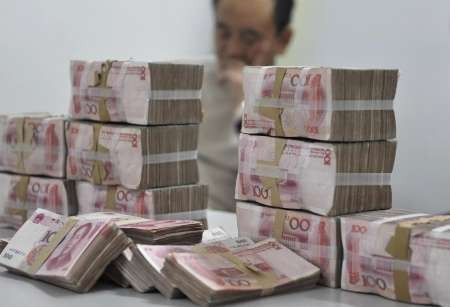
Private, largely unregulated lending booms in China
A private lending sector, largely unfettered by government intervention, is booming in China.
These companies, called micro-credit lenders, grew to 2,614 in number, compared to 1,334 in 2009 and less than 500 in 2008. They collectively issued 120.2-billion yuan (about $20-billion) in new loans in 2010.
As a percentage of total lending, they’re still small at 0.41 percent in 2010 – however, that’s a big jump from just 0.19 percent in 2009.
If this largely unfettered and for-profit industry were allowed to grow further, its influence and implications for the Chinese economy would become quite significant.
It’s already meeting several crucial needs left unfilled by the large, government-dominated banks.
It’s extending loans to small businesses and individuals who may not have easy access to credit from large banks. The loan approval process is also much faster; banks may take up to three months to grant a loan while micro-credit companies can do it in one day, reported Reuters. So for businesses that need cash on a short notice, micro-credit companies are the preferred choice.
Micro-credit companies may also have better incentive structures than big banks. Chinese government-influenced banks are often accused of making lending decisions based on politics rather than financial considerations -- for the lending officers there, the probability of repayment isn’t always the biggest concern.
In contrast, micro-credit companies lend their own (or investor) capital, so the probability of repayment (or the value of the collateral) is the highest priority. Therefore, it’s likely to have fewer non-performing loans.
Moreover, their lending rates may be a truer representation of financial conditions in China compared to the lending rates at big banks.
Micro-credit companies sometimes charge interest rates that are as much as five times higher than the government’s benchmark lending rate, according to Reuters, suggesting that true interest rates in China are quite high.
In the case of loan defaults, micro-credit companies sometimes go to the courts to resolve disputes. Indirectly, their boom may spur reforms and progress in China’s cumbersome and somewhat weak legal system.
Lastly, if micro-credit companies come to represent a significant portion of total lending, the Chinese government would need a different way to regulate credit in the economy because changing interest rates for big banks won’t really affect micro-credit companies.
Email Hao Li at hao.li@ibtimes.com
Click here to follow the IBTIMES Global Markets page on Facebook
Click here to read recent articles by Hao Li
U.S. new jobless claims drop 12,000 last week
The number of U.S. workers filing new claims for jobless aid fell 12,000 last week, Labor Department data showed on Thursday, while so-called continued claims rose to a fresh record as the recession battered employment.
Initial claims for state unemployment insurance benefits declined to a seasonally adjusted 631,000 in the week ended May 16 from a revised 643,000 the prior week, the Labor Department said. New claims have declined in three of the last four weeks.
Analysts polled by Reuters had forecast 630,000 new claims versus a previously reported count of 637,000 the week before.
U.S. stock index futures added to losses after the data, while U.S. government bond prices were higher and the dollar was unchanged.
I think the numbers continue to show a weak economy, said Subodh Kumar, chief investment strategist at Subodh Kumar & Associates in Toronto.
The companies that bring their costs under control will be the first to start hiring, but I don't think we'll see that a lot until the third or fourth quarter, he said.
The most severe U.S. recession in decades has already cost over 5 million jobs since it began in late 2007, and despite recent declines in the claims data suggesting the pace of deterioration in employment conditions is slowing, the labor market remains in dire shape.
The number of people staying on benefit rolls after drawing an initial week of aid increased by 75,000 to a more-then-forecast 6.662 million in the week ended May 9, the most recent week for which data is available. Analysts estimated so-called continued claims would be 6.65 million.
It was the 16th consecutive week that continued claims had risen to a fresh record high and this pushed the seasonally adjusted insured unemployment rate to 5.0 percent from 4.9 percent the week before, the Labor Department said.
But the four-week average of new jobless claims, a closely watched gauge of underlying labor trends because it irons out week-to-week volatility, fell to 628,500 from 632,000 the week before. The four-week average has now dropped in five out of the last six weeks.
I am pleased that we've got the four-week average in jobless claims beginning to move down again, said John Ryding, chief economist at RDQ Economics in New York.
But I still think we need a more convincing decline to signal from the jobless claims perspective that the recession has bottomed out, Ryding said.
A Labor Department official said there were no special factors affecting last week's numbers. A number of states that reported increased claims from automobile industry layoffs the week before showed declining claims last week, he said.
(Additional reporting by Ryan Vlastelica and Burton Frierson in New York; editing by Neil Stempleman)
New research reveals which nations and cities have the biggest appeal in 2013 for lesbian, gay, bisexual and transgender travelers, one of the tourism industry's most valuable niche demographics.
LGBT tourism now accounts for a sizable portion of the overall travel market, and Out Now, one of the world's biggest LGBT market specialists, predicts that LGBT travelers will spend some $165 billion in 2012 and even more the following year.
According to its latest survey of prospective travelers, trends will change slightly over the next year. The United States, for instance, will lose its top spot to France, falling from first to third place as a desired destination country for the more than 6 percent of the total global tourism industry who identify as LGBT. New York City, however, will retain its No. 1 spot as the most popular city for LGBT travelers in 2013.
The United Kingdom, meanwhile, will move up from fourth to second, apparently basking in the post-Olympic glow. London, too, will move ahead of Paris to No. 4 on the list of popular cities.
"This year it seems that Team GB can take credit for a few more wins as both London and the UK have seen significant improvements in their appeal to this market," said Darren Cooper, senior consultant at Out Now, based in London. "When you consider the scale of the LGBT market opportunity, moving up or down a notch can mean hundreds of millions difference in tourism revenues for a destination."
Cooper said tracking global LGBT tourism trends helps the industry stay informed in order to optimally position for what is widely regarded as a lucrative market. He added, however, that there are regional differences between respondent countries.
"India and Turkey were quite different from many of the other countries," Cooper noted. "If you are looking at targeting emerging markets you need to understand these differences if you are to succeed.
"Interestingly, London was the top European destination for many markets such as the U.S. and Australian samples, but respondents from Latin America were generally more interested in Paris than in London. It was also quite noticeable this year that Latin American LGBT respondents in particular have turned away from the United States as a desired travel destination for 2013 and beyond."
The survey also reveals that the euro zone crisis has had little effect on the decision-making process of LGBT tourists. Greece (No. 9) will crack the top 10 for the first time next year, Out Now predicts, joining similarly affected countries like Italy (No. 4) and Spain (No. 5).
Down under, Australia (No. 6) will place the highest in Asia-Pacific, while Argentina (No. 10) will top the list of South American nations. Germany (No. 7) and Canada (No. 8) will also make the top 10.
The survey data from Out Now comes from nearly 100,000 respondents in 24 nations who were asked which countries and cities they wanted to visit in 2013. It is the first data to be released from the "Out Now Global LGBT2020 Tourism Report," to be revealed in full this November at the World Travel Market, a leading global event for the tourism industry.
Click "Start" for a complete look at the most popular cities for LGBT travelers in 2013.
Data Source: Out Now Global LGBT2020 Study www.OutNowBusinessClass.com


![Miss USA 2013: Meet The 51 Contestants Competing In The Beauty Pageant [PHOTOS] Miss USA 2013: Meet The 51 Contestants Competing In The Beauty Pageant [PHOTOS]](http://s1.ibtimes.com/sites/www.ibtimes.com/files/styles/v2_multimedia/public/2013/06/13/miss-usa-contestants_14.jpg)


![Stephen Hester Ousted As Royal Bank Of Scotland (RBS) CEO Following Bank's Talks With UK Treasury [VIDEO] Stephen Hester Ousted As Royal Bank Of Scotland (RBS) CEO Following Bank's Talks With UK Treasury [VIDEO]](http://s1.ibtimes.com/sites/www.ibtimes.com/files/styles/v2_medium/public/2013/06/12/rtr3dngo.jpg)
![Hong Kong House Prices Shoot Up, Greek House Prices Plummet [MAP] Hong Kong House Prices Shoot Up, Greek House Prices Plummet [MAP]](http://s1.ibtimes.com/sites/www.ibtimes.com/files/styles/v2_medium/public/2013/06/11/knight-rank-house-prices.png)


![Turkish Riot Police Enter Taksim Square: Riot Police Clash With Protesters In Attempt To Break Up Protests [PHOTOS] Turkish Riot Police Enter Taksim Square: Riot Police Clash With Protesters In Attempt To Break Up Protests [PHOTOS]](http://s1.ibtimes.com/sites/www.ibtimes.com/files/styles/v2_medium/public/2013/06/11/protester-taking-cover.jpg)
![Flooding In Europe: Floods In Germany, Austria, The Czech Republic, Hungary And Slovakia In Pictures [PHOTOS] Flooding In Europe: Floods In Germany, Austria, The Czech Republic, Hungary And Slovakia In Pictures [PHOTOS]](http://s1.ibtimes.com/sites/www.ibtimes.com/files/styles/v2_medium/public/2013/06/11/flooding-europe-billboard.jpg)
![Robin Thicke Credits Justin Timberlake For Success Of Chart Topping Single 'Blurred Lines' [VIDEO] Robin Thicke Credits Justin Timberlake For Success Of Chart Topping Single 'Blurred Lines' [VIDEO]](http://s1.ibtimes.com/sites/www.ibtimes.com/files/styles/v2_multimedia/public/2011/11/21/193689-singer-robin-thicke-poses-backstage-at-the-2011-american-music-awards-.jpg)


![Fed Chairman Ben Bernanke Press Conference, FOMC Decision: Live Blog [VIDEO] Fed Chairman Ben Bernanke Press Conference, FOMC Decision: Live Blog [VIDEO]](http://s1.ibtimes.com/sites/www.ibtimes.com/files/styles/v2_small/public/2013/06/19/bernanke-news-conference-19june2013.jpg)


![Apple iOS 7: New Features Dazzle At WWDC 2013, Designed To 'Bring Order To Complexity' [PHOTOS] Apple iOS 7: New Features Dazzle At WWDC 2013, Designed To 'Bring Order To Complexity' [PHOTOS]](http://s1.ibtimes.com/sites/www.ibtimes.com/files/styles/v2_small/public/2013/06/10/iphone5-ios-7.jpg)


![Unpaid Intern Lawsuit Against Atlantic Records And Warner Music Group Tests Legality Of Music Industry Internships [EXCLUSIVE] Unpaid Intern Lawsuit Against Atlantic Records And Warner Music Group Tests Legality Of Music Industry Internships [EXCLUSIVE]](http://s1.ibtimes.com/sites/www.ibtimes.com/files/styles/v2_small/public/2013/06/17/wmg.jpg)


Like or Follow us for updates on the biggest stories!