Russians Are Pulling Billions From Banks As Fears Grow That Putin Could Seize Deposits to Fund The War
A senior executive at Sberbank, Russia's largest retail bank, warned that withdrawals for all of 2026 could approach twice the amount withdrawn during that first year of the war.

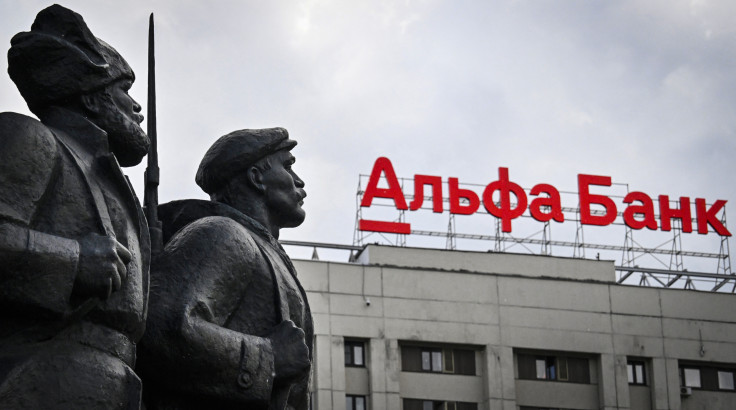
Russians are pulling billions of dollars out of banks at a pace not seen since the early days of the invasion of Ukraine, as drone attacks, mounting economic strains and fears that the Kremlin could eventually tap private deposits to finance the war shake confidence in the country's financial system.
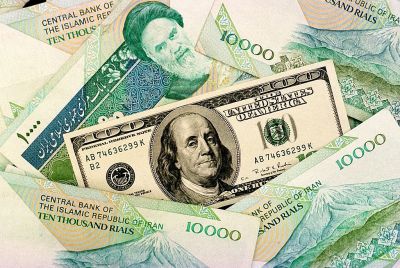
Nearly $3.4 billion, or 286.4 billion rubles, were withdrawn during the first two weeks of August, according to Russian Central Bank data cited by The Washington Post. That followed withdrawals of $7.3 billion in July and more than $4.5 billion in June.
The exodus has already pushed withdrawals this year above the roughly $24.7 billion during the first year after the February 2022 invasion. Taras Skvortsov, a senior executive at Sberbank, Russia's largest retail bank, warned that withdrawals for all of 2026 could approach twice the amount taken out during that first year of war.
This time, however, the pressure is unfolding against a very different economic backdrop. Russian banks have spent years extending government-directed loans to defense industries, while high interest rates, bad debts and a slowing civilian economy have increased strains on the financial sector.
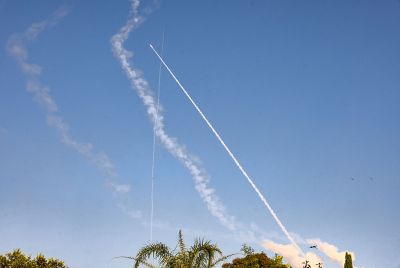
"Drones are flying. Things are burning down. Nervousness is growing," a former senior Russian finance official told The Post, describing a return to the instinct of keeping cash "under their pillow" rather than trusting banks.
Alexandra Prokopenko, a former adviser to Russia's Central Bank, said the withdrawals point to declining confidence that money held inside the banking system will remain untouched, which is potentially more damaging than a temporary demand for cash.
"This is all a consequence of the fear that the government will do something with the banking system, that it could nationalize deposits," Prokopenko told The Post. While she considers outright nationalization unlikely, she said restrictions on withdrawals could not be ruled out.
Businesses are also looking for ways to move capital beyond the reach of Russian authorities. More than $9.4 billion left Russia during the second quarter of 2026, according to Central Bank figures cited by The Post. Executives described brokerage accounts in Kazakhstan, Kyrgyzstan and Armenia as increasingly important routes for moving Russian money into investments elsewhere.
The cash drain is beginning to collide directly with Moscow's ability to finance the war. Russia's Finance Ministry has become increasingly dependent on government bonds to cover a rapidly expanding budget deficit. But banks facing liquidity pressure have less money available to purchase that debt. The ministry was forced to cancel planned bond issues last month after yields on 10-year government debt surged to around 17 percent.
Russia's budget deficit reached 6.46 trillion rubles, approximately $76.1 billion, from January through July. That is already far above the 3.8 trillion rubles the government had projected for the entire year.
The pressure comes as Russia's broader economy loses momentum. GDP expanded just 0.3 percent in the first half of 2026, down from 1.2 percent during the same period a year earlier, according to figures cited by The Post.
Ukraine's expanded drone campaign has added another source of uncertainty, hitting Russian oil infrastructure and other commercial facilities. Rising global oil prices have provided Moscow with some relief, with state oil and gas revenue jumping 60 percent year over year in July, although revenue for January through July remained 11 percent lower than during the same period in 2025.
Signs of concern are now emerging publicly from within Russia's establishment. Sberbank chief German Gref said in June that everyone wanted the war to end as quickly as possible, while Moscow Mayor Sergei Sobyanin recently warned against sacrificing the civilian economy in pursuit of the war effort. "If there's no economy of peaceful life itself, there will be no taxes, no income for the population," Sobyanin said.
© Copyright IBTimes 2026. All rights reserved.
- Recommended For You